
Biomarkers - List of Manufacturers, Suppliers, Companies and Products

Biomarkers Product List

1~3 item / All 3 items

Displayed results

Tohoku University Technology: Prognostic Biomarker for Cancer Patients: T20-3069

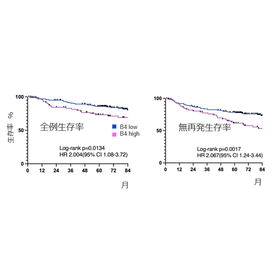
The expression level of LILRB4 can accurately predict the prognosis of cancer patients.

The immunosuppressive receptor LILRB4 (B4) is one of the immune checkpoint (CP) molecules that has garnered attention in cancer treatment, particularly represented by PD-1, but its true ligand has remained unknown. In the prior application of the inventors (related literature 1), a novel immune CP inhibitor and a therapeutic agent containing it were provided based on the discovery of the physiological ligand fibronectin (FN) for B4 and the finding that immune regulation is possible by inhibiting B4-FN binding. In this invention, a monoclonal antibody that inhibits FN binding to B4 was uniquely produced, and the prognostic prediction of lung cancer patients using B4 as a biomarker was validated. Specifically, by early identification of poor prognosis groups, it is possible to support appropriate choices such as treatment with immune checkpoint inhibitors.

Added to bookmarks

Bookmarks list

Bookmark has been removed

Bookmarks list

You can't add any more bookmarks

By registering as a member, you can increase the number of bookmarks you can save and organize them with labels.

Free membership registration

Hirosaki University Technology: Diagnostic Biomarker for Urothelial Carcinoma: K23-016

Discovery of N-linked glycan mutations in serum Ig specific to urothelial carcinoma.

The present invention relates to a urinary tract urothelial carcinoma diagnostic biomarker based on serum immunoglobulin (Ig) N-binding glycan structural variations. The diagnosis of urinary tract urothelial carcinoma (bladder cancer and renal pelvis/ureter cancer) is performed through urine cytology, imaging diagnostics, and invasive procedures such as cystoscopy and ureteroscopy with biopsy. However, both sensitivity and specificity are insufficient, and there is a demand for novel non-invasive markers that can detect urinary tract urothelial carcinoma at an early stage. Therefore, the inventors identified urinary tract urothelial carcinoma-specific glycan variations and demonstrated that the disease can be detected with high accuracy by scoring the associated glycans (see right figure). Additionally, they identified two types of lectins capable of distinguishing upper urinary tract urothelial carcinoma using a lectin array, allowing the entire process from serum collection to analysis to be completed in four hours. 【Advantages over prior art】 - As a serum marker, it is less invasive than cystoscopy. - Diagnostic accuracy far exceeds that of urine cytology, with AUC > 0.9. - Intended for use as an early diagnostic marker for urinary tract urothelial carcinoma.

Added to bookmarks

Bookmarks list

Bookmark has been removed

Bookmarks list

You can't add any more bookmarks

By registering as a member, you can increase the number of bookmarks you can save and organize them with labels.

Free membership registration

Tohoku Univ. Technology:Investigation method of breast disease:T11-183

Cyclophilin A levels can be used to determine the likelihood of developing breast disease

 Mastitis in dairy cattle is considered to be one of the most intractable diseases in livestock, and it is known that it leads to a decrease in milk production and an increase in treatment costs, resulting in a large economic loss. In order to reduce the economic loss, early detection of mastitis is essential. However, the PL test, which is an existing mastitis detection method, does not lead to early detection because mastitis already showing degeneration is used as a sample. Therefore, a Chemical Luminescence measurement method is regarded as promising. However, a special apparatus is required to measure the Chemical Luminescence ability, and from the viewpoint of economy and difficulty, it is not suitable as a routine method for each dairy farmer.  The present invention makes it possible to provide a method and a biomarker that contribute to the early detection of mastitis in a simple and rapid manner. The present invention is characterized by comprising a step of detecting cyclophilin A in milk collected from the udder of a subject and a step of determining the occurrence or possibility of occurrence of a mammary gland disease based on the amount of cyclophilin A. When the amount of cyclophilin A in milk is larger than that collected from a healthy udder, it is determined that a mammary gland disease has occurred or is likely to occur in the udder of the subject.

Added to bookmarks

Bookmarks list

Bookmark has been removed

Bookmarks list

You can't add any more bookmarks

By registering as a member, you can increase the number of bookmarks you can save and organize them with labels.

Free membership registration