sampling - List of Manufacturers, Suppliers, Companies and Products | IPROS

sampling Product List

1~4 item / All 4 items

Displayed results

In-situ frozen sampling

Enables high-precision ground response analysis! Introducing high-quality sand and gravel sampling techniques.

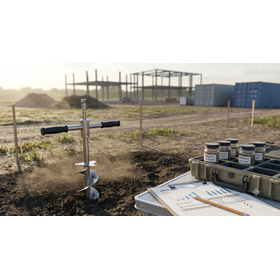
"Original Position Freezing Sampling" is a technique for collecting undisturbed samples from sandy and gravelly soil layers. Sampling is conducted in a frozen state through core drilling from the frozen ground. Furthermore, by handling the samples in a frozen state from the time of sampling until just before the soil tests, we can provide high-quality samples with minimal disturbance effects. This technique is applicable to non-cohesive soils such as sandy soils, gravelly soils, and rock materials. [Ground Conditions and Sampling Conditions] ■ Ground with high saturation necessary for freezing ■ Ground with low fine particle content ■ Ground that can achieve moderate confining pressure ■ Freezing occurs in a state where pore water can escape outward from the freezing pipe ■ Sampling is conducted from areas away from the freezing pipe *For more details, please refer to the PDF document or feel free to contact us.

  • Site and ground investigation
  • Geological Survey
  • sampling

Added to bookmarks

Bookmarks list

Bookmark has been removed

Bookmarks list

You can't add any more bookmarks

By registering as a member, you can increase the number of bookmarks you can save and organize them with labels.

Free membership registration

Tube sampling

Collect samples without disturbing the target ground! Sampling using a borehole.

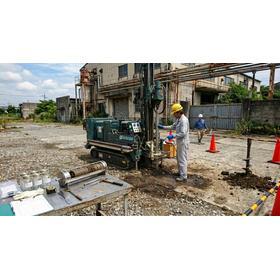
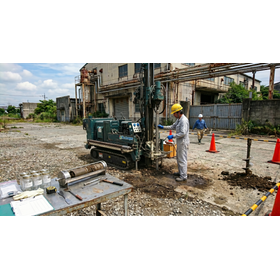
When designing structures and predicting ground deformation, it is necessary to confirm the strength characteristics, deformation characteristics, and consolidation characteristics of the ground. To verify these, there are methods to conduct investigations in situ, but it is common practice to collect undisturbed samples from the ground under consideration and perform appropriate laboratory soil tests. "Tube sampling" is one method of collecting undisturbed samples by lowering a sampler to the bottom of a borehole and either pressing it in or rotating it to obtain the sample. [Types of Samplers (Partial)] ■ Fixed piston type thin-wall sampler ・Hydraulic type / Extension rod type ■ Rotary double-tube sampler ■ Rotary triple-tube sampler ■ Rotary sleeve-integrated double-tube sampler *For more details, please refer to the PDF document or feel free to contact us.

  • Site and ground investigation
  • Geological Survey
  • sampling

Added to bookmarks

Bookmarks list

Bookmark has been removed

Bookmarks list

You can't add any more bookmarks

By registering as a member, you can increase the number of bookmarks you can save and organize them with labels.

Free membership registration

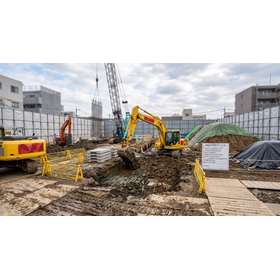
Soil Survey: Appropriate Sample Collection and Soil Sampling Methods Based on Root Cutting Depth

Build evidence with appropriate sampling techniques based on root excavation depth! Streamline waste disposal with sampling that complies with official methods such as dry drilling.

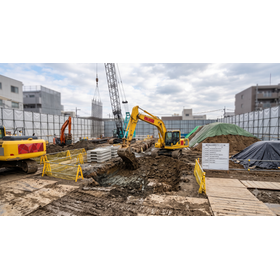
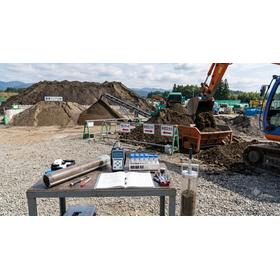
Proper disposal of construction-generated soil arising from the excavation process is a critical issue directly linked to the project's profit margins and adherence to deadlines. Our company provides high-precision official analysis and sampling services as a designated investigation agency under the Soil Contamination Countermeasures Act, ensuring full compliance with strict residual soil regulations and individual acceptance criteria at disposal sites nationwide. Even within tight schedules before construction begins, we clarify the procedures for pre-specification confirmation that clients and construction managers need to know, and we ensure comprehensive layer sampling according to excavation depth. We cover not only standard hazardous substances but also additional analysis items unique to disposal sites, such as oil content and dioxins, completely eliminating issues of acceptance refusal due to lack of evidence. Furthermore, we respond to the increasingly strict principle of "no reuse of existing data" in public works projects in the city, rapidly creating and supporting the latest registration documentation tailored to the specific lot of the relevant site. We deliver optimal residual soil disposal solutions that ensure construction never stops.

  • photo8.png
  • photo1.png
  • photo2.png
  • photo6.png
  • ジオテック.jpg
  • Site and ground investigation
  • Dismantling and moving
  • Other civil engineering services
  • sampling

Added to bookmarks

Bookmarks list

Bookmark has been removed

Bookmarks list

You can't add any more bookmarks

By registering as a member, you can increase the number of bookmarks you can save and organize them with labels.

Free membership registration

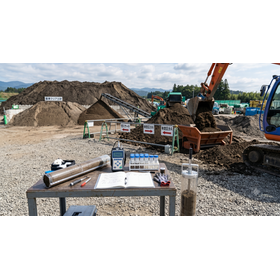
Appropriate sample collection and sampling according to excavation depth for civil engineering and construction.

Build evidence with appropriate sampling techniques according to root excavation depth!

In the civil engineering and construction industry, the proper disposal of construction-generated soil that occurs during the excavation process is a critical issue directly linked to project profit margins and adherence to schedules. In particular, high-precision analysis and sampling are required to meet residual soil regulations and the specific acceptance criteria of disposal sites. Ensuring comprehensive all-layer sampling according to excavation depth and covering additional analysis items unique to disposal sites is essential to avoid acceptance rejection issues. 【Usage Scenarios】 - Disposal of residual soil in the excavation process of construction work - Compliance with local government residual soil regulations (such as in Chiba Prefecture) - Meeting the unique acceptance criteria of disposal sites - Addressing the principle of "no reuse of existing data" in public works 【Benefits of Implementation】 - Elimination of troubles related to residual soil disposal - Improvement of project profit margins and adherence to schedules - Rapid preparation of evidence documents for submission to authorities and disposal sites - Reduction of risks associated with work interruptions

  • photo8.png
  • photo1.png
  • photo2.png
  • photo6.png
  • ジオテック.jpg
  • Site and ground investigation
  • Dismantling and moving
  • Other civil engineering services
  • sampling

Added to bookmarks

Bookmarks list

Bookmark has been removed

Bookmarks list

You can't add any more bookmarks

By registering as a member, you can increase the number of bookmarks you can save and organize them with labels.

Free membership registration