For Tokyo, where is Ginza in Osaka? The answer from AI changes with data.
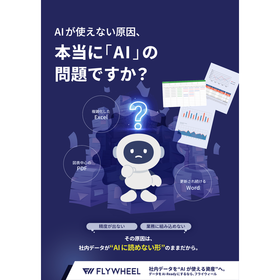
Despite implementing generative AI, the responses are not as expected. The cause may lie not in the AI's performance but in the "data." This document will clearly explain the mechanism by which AI understands the meaning of words, known as "vectorization," using the examples of "apple" and "orange." Furthermore, it will analyze the question, "What is to Ginza in Tokyo, what is it to Osaka?" using Japanese data and overseas data, demonstrating with real examples how differing training data can lead to different AI responses. [What you can learn from this document] - The mechanism of vectorization that converts words into "meaningful numbers." - The reason why AI's answers can change based on the reference data, even for the same question. - The five conditions for an optimal data environment to fully leverage AI. [Recommended for] - Those who have implemented generative AI but feel there are challenges with the accuracy of responses. - Those who want to prepare to utilize internal data with AI.

Inquire About This Product
basic information
"Five Conditions for an Optimal Data Environment to Leverage AI" ■ Clear Structure: Structuring, Modeling ■ Appropriate Meaning: Vectorization, Labeling ■ High Quality: Data with Few Errors and Biases ■ Unified Management: Governance, Security ■ Continuous Improvement: Monitoring & Feedback *For more details, please download the PDF or feel free to contact us.
Price range
Delivery Time
Applications/Examples of results
【Main Uses】 - Consideration of data organization to improve the response accuracy of generative AI and internal RAG. - Preparation to make internal documents and files usable by AI. *For more details, please download the PDF or feel free to contact us.*
catalog(1)
Download All Catalogs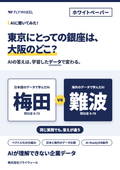
Company information
Our company develops and provides solutions utilizing data and artificial intelligence, and offers consulting related to data and product development. We provide a data utilization platform called "Conata," which transforms siloed, personalized, and unstructured data that companies face into a format that is easier for AI to handle. We aspire to be a "flywheel" that accelerates the proactive use of data and artificial intelligence by businesses and individuals, enhancing the efficiency of work and tasks.