
Early understanding of the effects of improved ground and enhancement of quality control.
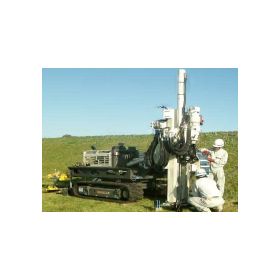
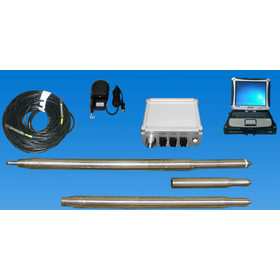
In the construction industry, accurate understanding of the improvement range and strength is required for quality control in ground improvement work. Particularly in chemical grouting and cement-based ground improvement methods, variability in improvement effects and uncertainty in the improvement range can pose challenges. The GeoRegister method addresses these issues by simultaneously conducting dynamic cone penetration tests and electrical resistivity surveys immediately after construction, allowing for early estimation of improvement strength and range. 【Application Scenarios】 - Quality evaluation of improved ground where chemical grouting is difficult - Cement-based ground improvement methods such as deep mixing treatment and soft ground treatment - Investigation of narrow areas where boring core sampling is impossible and facilities in use 【Benefits of Implementation】 - Early quality and shape management - Visualization of improvement range and strength - Potential for shortening construction time and reducing costs
Inquire About This Product
basic information
【Features】 - Testing conducted immediately after construction - Early estimation of improvement strength and range - Adaptable to various ground conditions - Investigations possible in narrow spaces and facilities in use 【Our Strengths】 Since our founding in 1958, we have built a track record in various civil engineering works, including ground improvement projects. We utilize specialized techniques and uniquely developed methods to meet our customers' needs.
Price range
Delivery Time
Applications/Examples of results
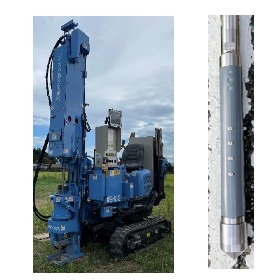
The Geo-Register method is a composite investigation technique that conducts dynamic cone penetration tests and electrical resistivity surveys at the same borehole. By using the Nd value obtained from the dynamic cone and the electrical resistance ratio R obtained from the electrical resistivity survey, it is possible to clearly identify the improvement range of ground improvement methods such as chemical grouting and to accurately assess the ground improvement strength in situ. It can also be used for general liquefaction investigations. [Applications] - Proper evaluation of the improvement effects of chemical grouting methods - Use in cement-treated ground - Use in liquefaction investigations
Company information

Our company was founded in 1958 and specializes in underground special civil engineering works such as underground continuous walls, underground obstacle removal, ground improvement, and pipeline construction. In recent years, we have expanded our business operations to include slope work and construction. There is a growing social demand for securing the natural environment, seismic reinforcement, liquefaction prevention, restoration of structures, and urban redevelopment, which have become pressing issues in recent years. In response to these social needs, we have developed seismic reinforcement and liquefaction countermeasure methods such as the "Ultra Multi-Point DP Method" and the "High Grip Grout Method." For structural restoration, we utilize our in-house developed restoration method called "Suiheikun," and for urban redevelopment, we are conducting research and development of new methods such as the "Hiro Work Kmigty Method," "Bauer Method," and "Super Top Method," aimed at underground obstacle removal. Additionally, as part of our eco-friendly initiatives, we are researching and developing methods that use bubble drilling fluid to reduce industrial waste, striving to contribute to society through high-quality construction and services. We aim to continue responding to the needs of the times by deploying a variety of specialized techniques and uniquely developed methods.
![[Construction Example] Cast-in-Place Pile Construction Using Full Circle Rotating All-Casing Method](https://image.www.ipros.com/public/product/image/d2b/2000969638/IPROS58339482558976258527.png?w=280&h=280)
![[Construction Example] Laundry Factory: Filling Work for Loose Ground Under Machinery Foundation](https://image.www.ipros.com/public/product/image/b89/2001202612/IPROS07347687335971919882.png?w=280&h=280)