iPROS Urban Planning
  • Search for products by classification category

    • Building Materials
      Building Materials
      36302items
    • Facilities
      Facilities
      56736items
    • Lighting and Interior
      Lighting and Interior
      17442items
    • Common materials
      Common materials
      37235items
    • Civil Engineering Materials
      Civil Engineering Materials
      9860items
    • Construction, work and methods
      Construction, work and methods
      28336items
    • Surveys, Measurements, and Services
      Surveys, Measurements, and Services
      29662items
    • IT/Software
      IT/Software
      36604items
    • others
      others
      79592items
    • Store and facility supplies
      Store and facility supplies
      4516items
    • Office and commercial supplies
      Office and commercial supplies
      11638items
    • Hospital and welfare facility supplies
      Hospital and welfare facility supplies
      977items
    • Logistics Equipment
      Logistics Equipment
      7049items
    • Energy and Resources
      Energy and Resources
      11742items
  • Search for companies by industry

    • Information and Communications
      7316
    • others
      7150
    • Building materials, supplies and fixtures manufacturers
      6586
    • Service Industry
      4686
    • Trading company/Wholesale
      3007
    • Other construction industries
      2433
    • Electrical equipment construction business
      639
    • Interior Design
      521
    • Facility Design Office
      490
    • Construction Consultant
      462
    • retail
      361
    • Architectural design office
      358
    • Warehousing and transport related industries
      323
    • Electricity, Gas and Water Industry
      286
    • General contractors and subcontractors
      280
    • Interior construction business
      278
    • Medical and Welfare
      275
    • Educational and Research Institutions
      256
    • Building Management
      251
    • Renovation and home construction industry
      222
    • Water supply and drainage construction business
      203
    • Housing manufacturers and construction companies
      182
    • Transportation
      160
    • Real Estate Developers
      154
    • Fisheries, Agriculture and Forestry
      126
    • Structural Design Office
      65
    • Finance, securities and insurance
      38
    • Restaurants and accommodations
      30
    • self-employed
      30
    • Mining
      26
    • Public interest/special/independent administrative agency
      20
    • Police, Fire Department, Self-Defense Forces
      17
    • Store and building owners
      9
    • Property Owner
      8
    • Government
      8
    • Individual
      8
  • Special Features
  • Ranking

    • Overall Products Ranking
    • Overall Company Ranking
Search for Products
  • Search for products by classification category

  • Building Materials
  • Facilities
  • Lighting and Interior
  • Common materials
  • Civil Engineering Materials
  • Construction, work and methods
  • Surveys, Measurements, and Services
  • IT/Software
  • others
  • Store and facility supplies
  • Office and commercial supplies
  • Hospital and welfare facility supplies
  • Logistics Equipment
  • Energy and Resources
Search for Companies
  • Search for companies by industry

  • Information and Communications
  • others
  • Building materials, supplies and fixtures manufacturers
  • Service Industry
  • Trading company/Wholesale
  • Other construction industries
  • Electrical equipment construction business
  • Interior Design
  • Facility Design Office
  • Construction Consultant
  • retail
  • Architectural design office
  • Warehousing and transport related industries
  • Electricity, Gas and Water Industry
  • General contractors and subcontractors
  • Interior construction business
  • Medical and Welfare
  • Educational and Research Institutions
  • Building Management
  • Renovation and home construction industry
  • Water supply and drainage construction business
  • Housing manufacturers and construction companies
  • Transportation
  • Real Estate Developers
  • Fisheries, Agriculture and Forestry
  • Structural Design Office
  • Finance, securities and insurance
  • Restaurants and accommodations
  • self-employed
  • Mining
  • Public interest/special/independent administrative agency
  • Police, Fire Department, Self-Defense Forces
  • Store and building owners
  • Property Owner
  • Government
  • Individual
Special Features
Ranking
  • Overall Products Ranking
  • Overall Company Ranking
  • privacy policy
  • terms of service
  • About Us
  • Careers
  • Advertising
  1. Home
  2. Other construction industries
  3. チタンネクストジャパン
  4. Product/Service List
Other construction industries
  • Added to bookmarks

    Bookmarks list

    Bookmark has been removed

    Bookmarks list

    You can't add any more bookmarks

    By registering as a member, you can increase the number of bookmarks you can save and organize them with labels.

    Free membership registration

チタンネクストジャパン

EstablishmentSeptember 2009
capital500Ten thousand
number of employees15
addressTokyo/Edogawa-ku/4-20-3-302 Nakakasai
phone03-5667-1201
  • Official site
last updated:Mar 09, 2026
チタンネクストジャパンlogo
  • Contact this company

    Contact Us Online
  • Company information
  • Products/Services(68)
  • catalog(12)
  • news(0)

チタンネクストジャパン List of Products and Services

  • category

46~68 item / All 68 items
Displayed results

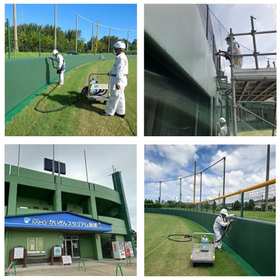
class="retina-image"

This is an example of photocatalytic treatment for anti-contamination and anti-mold measures in bathing facility premises.

The decomposition of organic contaminants using photocatalysts and self-cleaning creates a clean environment by breaking down substances that cause dirt, odors, bacteria, and mold both inside and outside buildings.

By applying a titanium dioxide aqueous solution, which is the raw material for photocatalysts, to the ceilings and walls of buildings, it exhibits effects such as dirt resistance, deodorization, antibacterial properties, antiviral properties, and mold prevention. When light hits the surface of the indoor photocatalyst, reactive oxygen species are generated, which decompose organic substances that cause dirt and odors into harmless water and carbon dioxide. Additionally, the surface of the outdoor photocatalyst, when exposed to rain, utilizes a hydrophilic effect that spreads water thinly beneath the dirt, allowing for self-cleaning as the dirt flows away with the water, contributing to the maintenance of the building's aesthetics and reducing cleaning costs. Since the raw material for the photocatalyst, titanium dioxide, is inorganic, it does not degrade due to ultraviolet rays or other factors, and its effectiveness continues for a long time.

  • Photocatalysts and various wall materials (exterior and interior walls, etc.)

Added to bookmarks

Bookmarks list

Bookmark has been removed

Bookmarks list

You can't add any more bookmarks

By registering as a member, you can increase the number of bookmarks you can save and organize them with labels.

Free membership registration

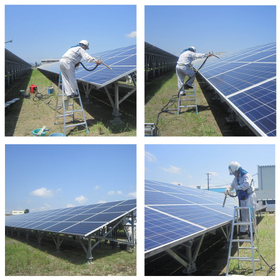
This is a case study of photocatalytic treatment for anti-dirt measures on solar panels.

The hydrophilic effect of photocatalysts (self-cleaning effect) makes it easier for rain to wash away dirt from building exteriors and glass, creating a clean environment.

By applying a titanium dioxide aqueous solution, which serves as the raw material for photocatalysts, to the ceilings and walls of buildings, it exhibits effects such as anti-soiling, deodorization, antibacterial properties, antiviral properties, and mold prevention. When light hits the surface of the indoor photocatalyst, reactive oxygen species are generated, which decompose organic substances that cause dirt and odors into harmless water and carbon dioxide. Additionally, the surface of the outdoor photocatalyst, when exposed to rain, utilizes a hydrophilic effect that allows water to spread thinly beneath the dirt, contributing to self-cleaning as the dirt flows away with the water, thereby maintaining the aesthetic of the building and reducing cleaning costs. Since the raw material for the photocatalyst, titanium dioxide, is inorganic, it does not degrade due to ultraviolet rays or other factors, and its effects continue for a long time.

  • Photocatalysts and various wall materials (exterior and interior walls, etc.)

Added to bookmarks

Bookmarks list

Bookmark has been removed

Bookmarks list

You can't add any more bookmarks

By registering as a member, you can increase the number of bookmarks you can save and organize them with labels.

Free membership registration

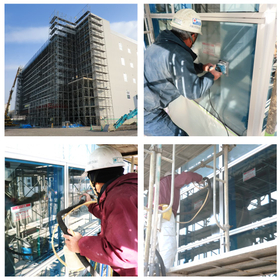
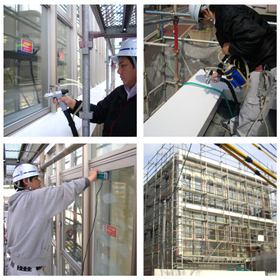
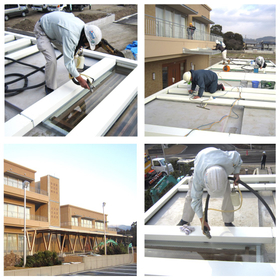
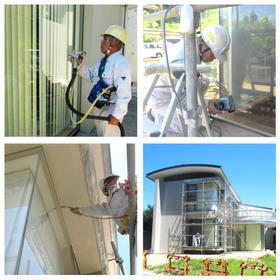
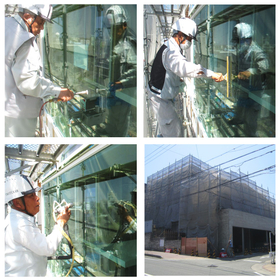
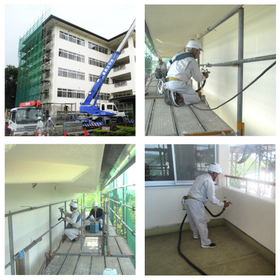
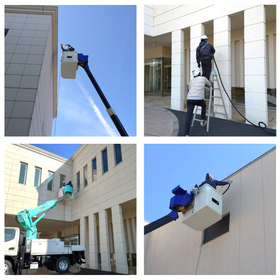
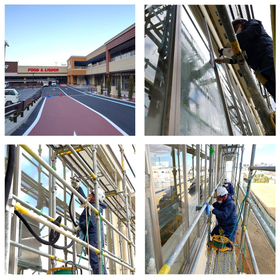
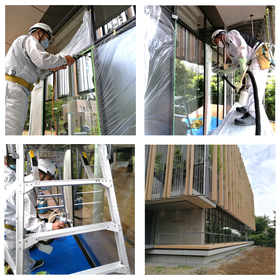
This is a case study of photocatalytic application for anti-fouling measures on glass at a construction company research facility.

The hydrophilic effect of photocatalysts (self-cleaning effect) makes it easier for rain to wash away dirt from building exteriors and glass, creating a clean environment.

By applying a titanium dioxide aqueous solution, which is the raw material for photocatalysts, to the ceilings and walls of buildings, it exhibits effects such as anti-soiling, deodorization, antibacterial properties, antiviral properties, and mold prevention. When light hits the surface of the indoor photocatalyst application, reactive oxygen species are generated on the surface, decomposing organic substances that cause dirt and odors into harmless water and carbon dioxide. Additionally, the surface of the outdoor photocatalyst application has a hydrophilic effect that allows water to spread thinly beneath the dirt when it rains, contributing to self-cleaning as the dirt flows away along with the water, thus maintaining the aesthetic of the building and reducing cleaning costs. Since the raw material for the photocatalyst, titanium dioxide, is inorganic, it does not degrade due to ultraviolet rays or other factors, and its effects continue for a long time.

  • Photocatalysts and various wall materials (exterior and interior walls, etc.)

Added to bookmarks

Bookmarks list

Bookmark has been removed

Bookmarks list

You can't add any more bookmarks

By registering as a member, you can increase the number of bookmarks you can save and organize them with labels.

Free membership registration

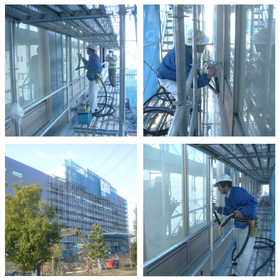
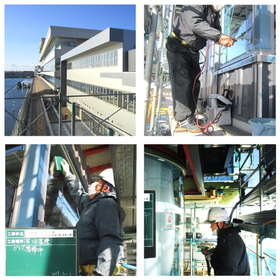
This is a case study of photocatalytic application for anti-soiling measures on glass at a waste treatment facility.

The decomposition of organic dirt using photocatalysts and self-cleaning creates a clean environment by breaking down substances that cause dirt, odors, bacteria, and mold both inside and outside the building.

By coating a titanium dioxide aqueous solution, which is the raw material for photocatalysts, on the ceilings and walls of buildings, it exhibits effects such as dirt resistance, deodorization, antibacterial properties, antiviral properties, and mold prevention. When light hits the surface of the indoor photocatalyst, reactive oxygen species are generated on the surface, decomposing organic substances that cause dirt and odors into harmless water and carbon dioxide. Additionally, the surface of the outdoor photocatalyst, when exposed to rain, utilizes a hydrophilic effect that spreads water thinly beneath the dirt, allowing for self-cleaning as the dirt flows away with the water, contributing to the maintenance of the building's aesthetics and reducing cleaning costs. Since the raw material for the photocatalyst, titanium dioxide, is inorganic, it does not degrade due to ultraviolet rays or other factors, and its effects continue for a long time.

  • Photocatalysts and various wall materials (exterior and interior walls, etc.)

Added to bookmarks

Bookmarks list

Bookmark has been removed

Bookmarks list

You can't add any more bookmarks

By registering as a member, you can increase the number of bookmarks you can save and organize them with labels.

Free membership registration

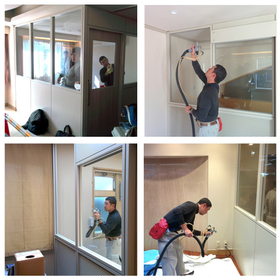
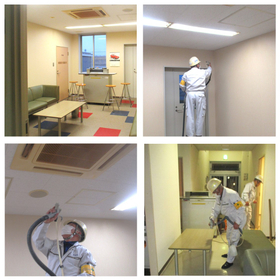
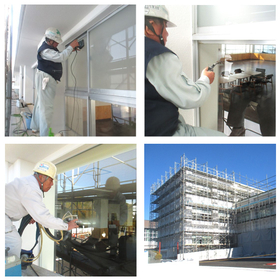
This is a case study of photocatalytic treatment for deodorization, antibacterial, and antiviral measures in offices.

The photocatalytic oxidation power decomposes and suppresses/reduces the substances causing odors, bacteria, and viruses in the room, creating a clean environment.

By applying a titanium dioxide aqueous solution, which is the raw material for photocatalysts, to the ceilings and walls of buildings, it exhibits effects such as anti-soiling, deodorization, antibacterial properties, antiviral properties, and mold prevention. When light hits the surface of the indoor photocatalyst application, reactive oxygen species are generated on the surface, breaking down organic substances that cause dirt and odors into harmless water and carbon dioxide. Additionally, the surface of the outdoor photocatalyst application utilizes a hydrophilic effect, where rainwater spreads thinly beneath the dirt, allowing for self-cleaning as the surface dirt washes away, contributing to the maintenance of the building's aesthetics and reducing cleaning costs. Since the raw material for the photocatalyst, titanium dioxide, is inorganic, it does not degrade due to ultraviolet rays or other factors, and its effects continue for a long time.

  • Photocatalysts and various wall materials (exterior and interior walls, etc.)

Added to bookmarks

Bookmarks list

Bookmark has been removed

Bookmarks list

You can't add any more bookmarks

By registering as a member, you can increase the number of bookmarks you can save and organize them with labels.

Free membership registration

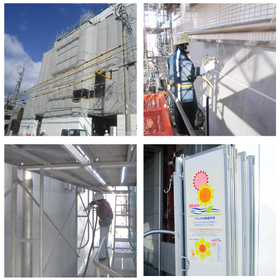
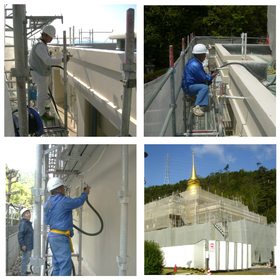
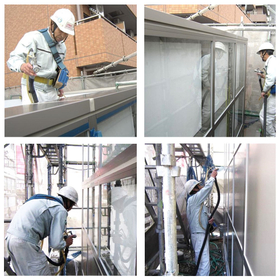
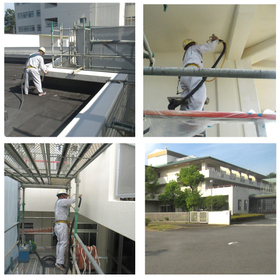
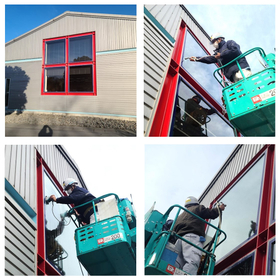
This is a case study of photocatalytic treatment for factory exterior walls.

The decomposition of organic contaminants using photocatalysts and self-cleaning creates a clean environment by breaking down substances that cause dirt, odors, bacteria, and mold both inside and outside buildings.

By coating a titanium dioxide aqueous solution, which is the raw material for photocatalysts, on the ceilings and walls of buildings, it exhibits effects such as dirt resistance, deodorization, antibacterial properties, antiviral properties, and mold prevention. When light hits the surface of the indoor photocatalyst, reactive oxygen species are generated, which decompose organic substances that cause dirt and odors into harmless water and carbon dioxide. Additionally, the surface of the outdoor photocatalyst, when exposed to rain, utilizes a hydrophilic effect that spreads water thinly beneath the dirt, allowing for self-cleaning as the dirt flows away with the water, contributing to the maintenance of the building's aesthetics and reducing cleaning costs. Since the titanium dioxide used as the raw material for photocatalysts is inorganic, it does not degrade due to ultraviolet rays or other factors, and its effectiveness continues for a long time.

  • Photocatalysts and various wall materials (exterior and interior walls, etc.)

Added to bookmarks

Bookmarks list

Bookmark has been removed

Bookmarks list

You can't add any more bookmarks

By registering as a member, you can increase the number of bookmarks you can save and organize them with labels.

Free membership registration

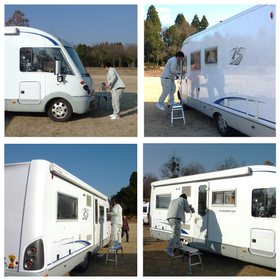
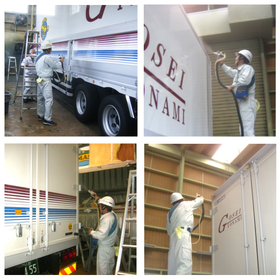
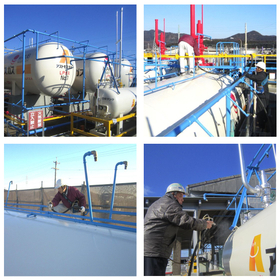
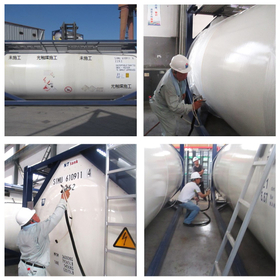
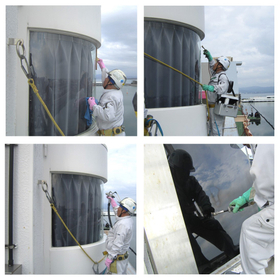
This is a case study of photocatalytic application for anti-fouling measures on industrial gas tanks.

The decomposition of organic dirt using photocatalysts and self-cleaning creates a clean environment by breaking down substances that cause dirt, odors, bacteria, and mold both inside and outside buildings.

By applying a titanium dioxide aqueous solution, which is the raw material for photocatalysts, to the ceilings and walls of buildings, it exhibits effects such as dirt resistance, deodorization, antibacterial properties, antiviral properties, and mold prevention. When light hits the surface of the indoor photocatalyst application, reactive oxygen species are generated on the surface, decomposing organic substances that cause dirt and odors into harmless water and carbon dioxide. Additionally, the surface of the outdoor photocatalyst application has a hydrophilic effect that causes water to spread thinly beneath the dirt when it rains, contributing to self-cleaning as the dirt flows away with the water, thus maintaining the aesthetic of the building and reducing cleaning costs. Since the raw material for the photocatalyst, titanium dioxide, is inorganic, it does not degrade due to ultraviolet rays or other factors, and its effectiveness continues for a long time.

  • Photocatalysts and various wall materials (exterior and interior walls, etc.)

Added to bookmarks

Bookmarks list

Bookmark has been removed

Bookmarks list

You can't add any more bookmarks

By registering as a member, you can increase the number of bookmarks you can save and organize them with labels.

Free membership registration

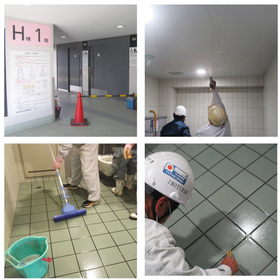
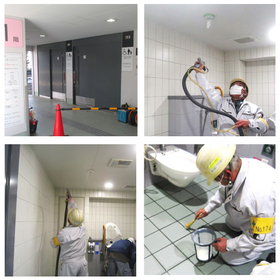
This is a case study of photocatalytic treatment for anti-soiling, deodorization, and antibacterial measures in public restrooms (Chengdu, China).

The photocatalytic oxidation power decomposes and suppresses/reduces odor, bacteria, viruses, and other causative substances in the room, creating a clean environment.

By applying a titanium dioxide aqueous solution, which is the raw material for photocatalysts, to the ceilings and walls of buildings, it exhibits effects such as dirt resistance, deodorization, antibacterial properties, antiviral properties, and mold prevention. When light hits the surface of the indoor photocatalyst, reactive oxygen species are generated, which decompose organic substances that cause dirt and odors into harmless water and carbon dioxide. Additionally, the surface of the outdoor photocatalyst, when exposed to rain, utilizes a hydrophilic effect that allows water to spread thinly beneath the dirt, contributing to self-cleaning as the dirt flows away with the water, thus maintaining the aesthetic of the building and reducing cleaning costs. Since the raw material for the photocatalyst, titanium dioxide, is inorganic, it does not degrade due to ultraviolet rays or other factors, and its effects continue for a long time.

  • Photocatalysts and various wall materials (exterior and interior walls, etc.)

Added to bookmarks

Bookmarks list

Bookmark has been removed

Bookmarks list

You can't add any more bookmarks

By registering as a member, you can increase the number of bookmarks you can save and organize them with labels.

Free membership registration

This is a case study of photocatalytic treatment for stain prevention and odor removal in smoking rooms of resort hotels.

The photocatalytic oxidation power decomposes and suppresses/reduces the causes of indoor odors, bacteria, and viruses, creating a clean environment.

By applying a titanium dioxide aqueous solution, which serves as the raw material for photocatalysts, to the ceilings and walls of buildings, it exhibits effects such as anti-soiling, deodorization, antibacterial properties, antiviral properties, and mold prevention. When light hits the surface of the indoor photocatalyst application, reactive oxygen species are generated on the surface, decomposing organic substances that cause dirt and odors into harmless water and carbon dioxide. Additionally, the surface of the outdoor photocatalyst application utilizes a hydrophilic effect, where rainwater spreads thinly beneath the dirt, contributing to self-cleaning as the dirt flows away with the water, thus maintaining the aesthetic of the building and reducing cleaning costs. Since the raw material for the photocatalyst, titanium dioxide, is inorganic, it does not degrade due to ultraviolet rays or other factors, and its effectiveness continues for a long time.

  • Photocatalysts and various wall materials (exterior and interior walls, etc.)

Added to bookmarks

Bookmarks list

Bookmark has been removed

Bookmarks list

You can't add any more bookmarks

By registering as a member, you can increase the number of bookmarks you can save and organize them with labels.

Free membership registration

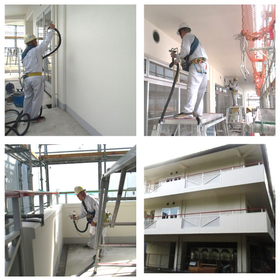
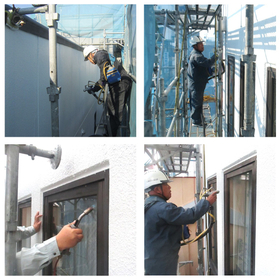
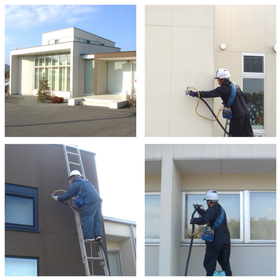
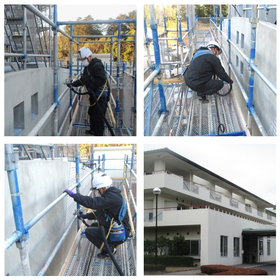
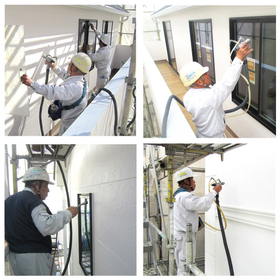
This is an example of photocatalytic treatment for anti-dirt measures on the exterior wall of a dental clinic.

The hydrophilic effect of photocatalysts (self-cleaning effect) makes it easier for rain to wash away dirt from the exterior walls of dental clinics, creating a clean environment.

By applying a titanium dioxide aqueous solution, which is the raw material for photocatalysts, to the ceilings and walls of buildings, it exhibits effects such as dirt resistance, deodorization, antibacterial properties, antiviral properties, and mold prevention. When light hits the surface of the indoor photocatalyst, reactive oxygen species are generated, which decompose organic substances that cause dirt and odors into harmless water and carbon dioxide. Additionally, the surface of the outdoor photocatalyst, when exposed to rain, utilizes a hydrophilic effect that spreads water thinly beneath the dirt, allowing for self-cleaning as the dirt flows away with the water, contributing to the maintenance of the building's appearance and reducing cleaning costs. Since the raw material for the photocatalyst, titanium dioxide, is inorganic, it does not degrade due to ultraviolet rays or other factors, and its effects continue for a long time.

  • Photocatalysts and various wall materials (exterior and interior walls, etc.)

Added to bookmarks

Bookmarks list

Bookmark has been removed

Bookmarks list

You can't add any more bookmarks

By registering as a member, you can increase the number of bookmarks you can save and organize them with labels.

Free membership registration

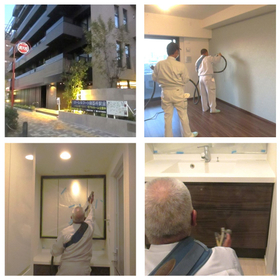
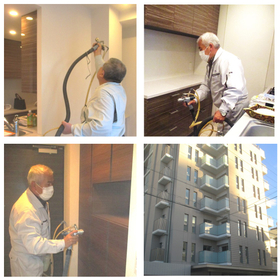
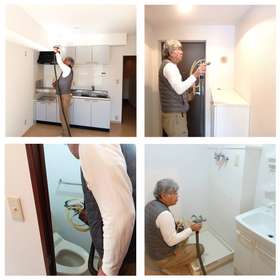
This is an example of photocatalytic treatment for deodorization and antibacterial measures inside an apartment.

The photocatalytic oxidation power suppresses and reduces the causes of indoor odors, bacteria, and viruses, creating a clean environment.

By applying a titanium dioxide aqueous solution, which serves as the raw material for photocatalysts, to the ceilings and walls of buildings, it exhibits effects such as dirt resistance, deodorization, antibacterial properties, antiviral properties, and mold prevention. When light hits the surface of the indoor photocatalyst application, reactive oxygen species are generated on the surface, decomposing organic substances that cause dirt and odors into harmless water and carbon dioxide. The surface of the outdoor photocatalyst application utilizes a hydrophilic effect, where rainwater spreads thinly beneath the dirt, contributing to self-cleaning as the surface dirt flows away, thus maintaining the aesthetic of the building and reducing cleaning costs. Since the raw material for the photocatalyst, titanium dioxide, is inorganic, it does not deteriorate due to ultraviolet rays or other factors, and its effectiveness lasts for a long time.

  • Photocatalysts and various wall materials (exterior and interior walls, etc.)

Added to bookmarks

Bookmarks list

Bookmark has been removed

Bookmarks list

You can't add any more bookmarks

By registering as a member, you can increase the number of bookmarks you can save and organize them with labels.

Free membership registration

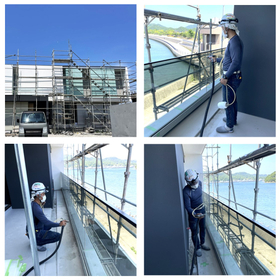
This is a case study of photocatalytic treatment for anti-dirt measures on solar panels.

The hydrophilic effect of photocatalysts (self-cleaning effect) makes it easier for rain to wash away dirt from the glass of detached houses, creating a clean environment.

By applying a coating of titanium dioxide aqueous solution, which serves as the raw material for photocatalysts, to the ceilings and walls of buildings, it exhibits effects such as dirt resistance, deodorization, antibacterial properties, antiviral properties, and mold prevention. The surface of the exterior photocatalyst, when exposed to rain, utilizes a hydrophilic effect that allows water to spread thinly beneath the dirt, contributing to self-cleaning as it flows away along with the surface dirt, thus helping to maintain the building's appearance and reduce cleaning costs. Since the raw material for the photocatalyst, titanium dioxide, is inorganic, it does not degrade due to ultraviolet rays or other factors, and its effects continue for a long time.

  • Photocatalysts and various wall materials (exterior and interior walls, etc.)

Added to bookmarks

Bookmarks list

Bookmark has been removed

Bookmarks list

You can't add any more bookmarks

By registering as a member, you can increase the number of bookmarks you can save and organize them with labels.

Free membership registration

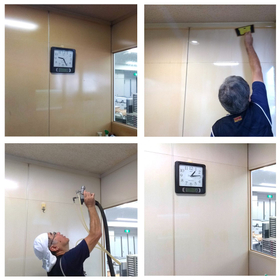
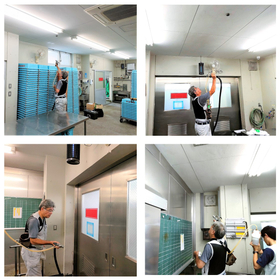
This is a case study of photocatalytic antibacterial and antiviral treatment in the office of a beverage factory.

Using the oxidative decomposition power of photocatalysts, we suppress and reduce the causes of bacteria and viruses in the office, creating a clean environment.

By coating the ceilings and walls of buildings with a titanium dioxide aqueous solution, which is the raw material for photocatalysts, it exhibits effects such as anti-soiling, deodorization, antibacterial properties, antiviral properties, and mold prevention. When light hits the surface of the indoor photocatalyst application, reactive oxygen species are generated on the surface, breaking down organic substances that cause dirt and odors into harmless water and carbon dioxide. Additionally, the surface of the outdoor photocatalyst application has a hydrophilic effect, where rainwater spreads thinly beneath the dirt, contributing to self-cleaning as it washes away the surface dirt, thus maintaining the building's aesthetic and reducing cleaning costs. Since the raw material for the photocatalyst, titanium dioxide, is inorganic, it does not degrade due to ultraviolet rays or other factors, and its effectiveness lasts for a long time.

  • Photocatalysts and various wall materials (exterior and interior walls, etc.)

Added to bookmarks

Bookmarks list

Bookmark has been removed

Bookmarks list

You can't add any more bookmarks

By registering as a member, you can increase the number of bookmarks you can save and organize them with labels.

Free membership registration

This is an example of photocatalytic treatment for anti-dirt measures on the exterior walls of a dental clinic.

The hydrophilic effect of photocatalysts (self-cleaning effect) makes it easier for rain to wash away dirt from the glass of detached houses, creating a clean environment.

By applying a titanium dioxide aqueous solution, which is the raw material for photocatalysts, to the ceilings and walls of buildings, it exhibits effects such as dirt resistance, deodorization, antibacterial properties, antiviral properties, and mold prevention. When light hits the surface of the indoor photocatalyst application, reactive oxygen species are generated on the surface, breaking down organic substances that cause dirt and odors into harmless water and carbon dioxide. Additionally, the surface of the outdoor photocatalyst application utilizes a hydrophilic effect, where rainwater spreads thinly under the dirt, contributing to self-cleaning as the dirt flows away with the water, thus maintaining the building's aesthetic and reducing cleaning costs. Since the raw material for the photocatalyst, titanium dioxide, is inorganic, it does not degrade due to ultraviolet rays or other factors, and its effectiveness continues for a long time.

  • Photocatalysts and various wall materials (exterior and interior walls, etc.)

Added to bookmarks

Bookmarks list

Bookmark has been removed

Bookmarks list

You can't add any more bookmarks

By registering as a member, you can increase the number of bookmarks you can save and organize them with labels.

Free membership registration

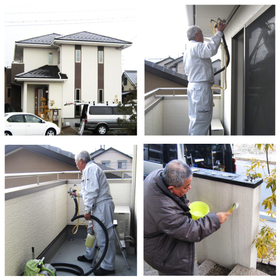
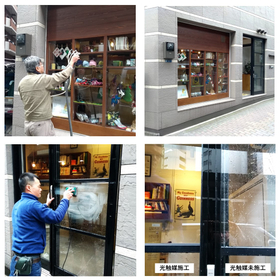
This is a case study of photocatalytic treatment for dirt prevention on glass in detached houses.

The hydrophilic effect of photocatalysts makes it easier for rain to wash away dirt from the glass of detached houses, creating a clean environment.

By coating the titanium dioxide aqueous solution, which is the raw material for photocatalysts, on the ceilings and walls of buildings, it exhibits effects such as dirt resistance, deodorization, antibacterial properties, antiviral properties, and mold prevention. The surface of the outdoor photocatalyst, when exposed to rain, utilizes hydrophilic effects that cause water to spread thinly beneath the dirt, contributing to self-cleaning as the surface dirt flows away, thus maintaining the aesthetic of the building and reducing cleaning costs. When light hits the surface of the indoor photocatalyst, reactive oxygen species are generated, which decompose organic substances that cause dirt and odors into water and carbon dioxide, rendering them harmless. Since the raw material of the photocatalyst, titanium dioxide, is inorganic, it does not degrade due to ultraviolet rays or other factors, and its effectiveness continues for a long time.

  • Photocatalysts and various wall materials (exterior and interior walls, etc.)

Added to bookmarks

Bookmarks list

Bookmark has been removed

Bookmarks list

You can't add any more bookmarks

By registering as a member, you can increase the number of bookmarks you can save and organize them with labels.

Free membership registration

This is a case study of photocatalytic treatment for deodorization and antibacterial measures in public facility restrooms.

The photocatalytic oxidation power suppresses and reduces the substances causing unpleasant odors in the toilet, creating a clean environment.

By coating a titanium dioxide aqueous solution, which serves as the raw material for photocatalysts, on the ceilings and walls of buildings, it exhibits effects such as dirt resistance, deodorization, antibacterial properties, antiviral properties, and mold prevention. When light hits the surface of the indoor photocatalyst, reactive oxygen species are generated, which decompose organic substances that cause dirt and odors into harmless water and carbon dioxide. Additionally, the surface of the outdoor photocatalyst, when exposed to rain, utilizes a hydrophilic effect that allows water to spread thinly beneath the dirt, contributing to self-cleaning as the dirt flows away with the water, thus maintaining the aesthetic of the building and reducing cleaning costs. Since the raw material for the photocatalyst, titanium dioxide, is inorganic, it does not degrade due to ultraviolet rays or other factors, and its effects continue for a long time.

  • Photocatalysts and various wall materials (exterior and interior walls, etc.)

Added to bookmarks

Bookmarks list

Bookmark has been removed

Bookmarks list

You can't add any more bookmarks

By registering as a member, you can increase the number of bookmarks you can save and organize them with labels.

Free membership registration

[Explanatory Material] Explanation of Causes and Countermeasures for Mold on Ceilings and Other Areas

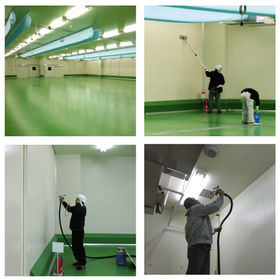
Isn't the mold on the ceiling noticeable? We remove mold that occurs on tough store ceilings and other areas, and we implement sterilization and anti-mold coating for prevention!

In the high-temperature and high-humidity environment of Japan, the occurrence of mold caused by condensation and other factors is increasing. Mold particularly proliferates rapidly during the rainy season and the period when there are many rains and typhoons. If mold is left untreated, it will continue to spread, so early intervention is recommended. Mold removal and anti-mold agent application are carried out in three stages: mold removal, disinfection, and anti-mold treatment. [Contents] - About ceiling mold removal and anti-mold agent coating application - Causes of mold occurrence on store ceilings - Case studies of ceiling applications in food supermarket sales areas - Case studies in food manufacturing facilities and hospitals - Cases requiring corrective construction in buildings

  • Waterproof tape, adhesive, drain, protective panel
  • Renovation and repair methods

Added to bookmarks

Bookmarks list

Bookmark has been removed

Bookmarks list

You can't add any more bookmarks

By registering as a member, you can increase the number of bookmarks you can save and organize them with labels.

Free membership registration

Information on ceiling mold removal and anti-mold agent coating.

Mold removal and anti-mold treatment after closing, without interfering with store operations! A clean condition lasts for a long time.

We would like to introduce our photocatalytic coating service. We perform mold removal and anti-mold treatment after store closing hours, ensuring that there is no disruption to business operations. The estimated area we can cover in a day is 150 to 200 m². We apply a specialized mold removal agent to eliminate mold, and then we apply an anti-mold agent using specialized painting machines, rollers, and brushes. The clean state lasts for a long time after the treatment. 【Features】 - Mold is removed by applying a specialized mold removal agent. - The anti-mold agent is applied using specialized painting machines, rollers, and brushes. - The clean state lasts for a long time after treatment. - Work is conducted after closing and before opening. - The estimated area we can cover in a day is 150 to 200 m². *For more details, please refer to the PDF document or feel free to contact us.

  • Photocatalysts and various wall materials (exterior and interior walls, etc.)

Added to bookmarks

Bookmarks list

Bookmark has been removed

Bookmarks list

You can't add any more bookmarks

By registering as a member, you can increase the number of bookmarks you can save and organize them with labels.

Free membership registration

Photocatalyst Construction Example: Anti-Soiling Measures for Solar Panels

Power generation efficiency improved by 7.7%! A case where the decline in power generation due to panel dirt was improved through photocatalytic treatment.

We would like to introduce a case study of photocatalytic application as a measure to prevent dirt on solar panels. On the rooftop of a spinning factory, photocatalytic treatment was applied to one of three panels of the same specification, resulting in a 7.7% improvement in power generation efficiency for the photocatalytic panel. The degradation of power generation due to panel dirt was improved through the photocatalytic application. Additionally, it has been verified that the light transmittance of glass increased by over 3%. In the PDF materials, you can also see examples where the introduction of cleaning machines significantly improved the cleaning condition before the photocatalytic application. 【Case Overview】 ■ Location: Rooftop of a spinning factory in Jimo City, Shandong Province, China ■ Area of application: 600m2 ■ Date of application: End of September 2017 ■ Conducted by our group company *For more details, please refer to the PDF materials or feel free to contact us.

  • Photocatalysts and various wall materials (exterior and interior walls, etc.)

Added to bookmarks

Bookmarks list

Bookmark has been removed

Bookmarks list

You can't add any more bookmarks

By registering as a member, you can increase the number of bookmarks you can save and organize them with labels.

Free membership registration

[Construction Example] Toilet Anti-Soiling and Deodorization Measures

Decomposing odor-causing substances and improving maintenance! Introducing examples of installation on floors, ceilings, and walls.

We would like to introduce a case where UDD catalytic glass coating and photocatalytic coating were applied for anti-soiling and deodorization measures in the restroom. The floor was coated with UDD catalytic glass coating, which has antibacterial, deodorizing, and anti-mold functions. The inorganic and durable glass film provides long-term anti-soiling, waterproofing, deodorization, and antibacterial properties, suppressing the growth of bacteria and moisture absorption in the coated areas, thereby improving maintainability. The walls and ceiling were coated with photocatalytic material that has anti-soiling, antibacterial, deodorizing, and anti-mold functions. The organic decomposition function of titanium oxide breaks down the substances causing unpleasant odors, reducing and eliminating bad smells lingering in the restroom for an extended period. 【Features of UDD Catalytic Glass Coating】 - Has antibacterial, deodorizing, and anti-mold functions - Provides long-term anti-soiling, waterproofing, deodorization, and antibacterial properties due to the inorganic and durable glass film, suppressing the growth of bacteria and moisture absorption in the coated areas, thereby improving maintainability. *For more details, please refer to the PDF document or feel free to contact us.

  • Photocatalysts and various wall materials (exterior and interior walls, etc.)

Added to bookmarks

Bookmarks list

Bookmark has been removed

Bookmarks list

You can't add any more bookmarks

By registering as a member, you can increase the number of bookmarks you can save and organize them with labels.

Free membership registration

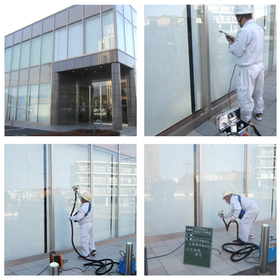
Photocatalyst Construction Examples: Glass Anti-Soiling Measures

Polishing treatment with glass substrate processing polishing agent! Introduction of construction examples for cleaning, polishing, and photocatalytic coating.

We would like to introduce a case study of photocatalytic treatment as a glass anti-soiling measure. First, we remove oil stains and attached debris through cleaning with detergent. After cleaning, we perform polishing treatment using a glass substrate processing abrasive. With regular cleaning alone, the glass surface remains in a water-repellent state with unevenness, but this process results in a smooth, hydrophilic state without any unevenness on the glass surface. Finally, we coat the glass with a photocatalytic aqueous solution using a specialized painting machine. 【Polishing Features】 ■ Before Polishing - Water does not flow and remains as droplets. - Dirt adheres to these droplets, causing deterioration of the glass. ■ After Polishing - The glass surface becomes a smooth, hydrophilic state without any unevenness. *For more details, please refer to the PDF document or feel free to contact us.

  • Photocatalysts and various wall materials (exterior and interior walls, etc.)

Added to bookmarks

Bookmarks list

Bookmark has been removed

Bookmarks list

You can't add any more bookmarks

By registering as a member, you can increase the number of bookmarks you can save and organize them with labels.

Free membership registration

Photocatalytic coating

When exposed to light, reactive oxygen species are generated on the surface! Combined with the self-cleaning effect, it provides excellent dirt-repellent properties.

"Photocatalyst" is an ecological product that creates a clean environment by decomposing and removing harmful substances that cause dirt and odors using titanium dioxide and the power of light. When light hits the coated surface of the main ingredient, titanium dioxide, reactive oxygen is generated on the surface, oxidizing and decomposing various harmful substances (organic matter) such as dirt, odors, viruses, and bacteria into water and carbon dioxide. Additionally, it exhibits excellent anti-soiling effects combined with a self-cleaning effect due to its hydrophilicity. [Features] ■ When light hits the photocatalyst-coated surface, reactive oxygen is generated, and dirt is decomposed. ■ The self-cleaning effect due to hydrophilicity makes it easier to remove dirt. ■ The coated surface maintains a clean state even after several years. ■ It suppresses the growth of mold that occurs indoors. ■ It decomposes and removes bacteria and viruses brought in from outside. *For more details, please refer to the PDF document or feel free to contact us.

  • Photocatalysts and various wall materials (exterior and interior walls, etc.)

Added to bookmarks

Bookmarks list

Bookmark has been removed

Bookmarks list

You can't add any more bookmarks

By registering as a member, you can increase the number of bookmarks you can save and organize them with labels.

Free membership registration

[Case Study] Ceiling Mold Removal & Anti-Mold Coating

Isn't the mold on the ceiling noticeable? Even tough ceiling mold can be completely removed and coated to restore a bright white ceiling!

"Photocatalytic coating" is a coating agent that not only prevents dirt but also has deodorizing, antibacterial, and mold-resistant effects. Are you troubled by mold on the ceiling caused by temperature differences? Our company performs removal and prevention work for such stubborn mold. ■ Mold removal work ■ Coating with mold-resistant agents ⇒ It can prevent mold for a long period of time! The catalog introduces examples from food supermarkets. For more details, please contact us or download the catalog.

  • Other interior and exterior systems and units
Added to bookmarks

Bookmarks list

Bookmark has been removed

Bookmarks list

You can't add any more bookmarks

By registering as a member, you can increase the number of bookmarks you can save and organize them with labels.

Free membership registration
Prev 12 Next
  • なぜあの現場で事故は起きたのか? 最新 事故事例セミナー 無料 4.10(金)-5.15(金) 期間中いつでも視聴可能 年間200箇所の工場を巡回する安全のプロが解説!
    • Contact this company

      Contact Us Online

    Products

    • Search for Products

    Company

    • Search for Companies

    Special Features

    • Special Features

    Ranking

    • Overall Products Ranking
    • Overall Company Ranking

    support

    • site map
    IPROS
    • privacy policy Regarding external transmission of information
    • terms of service
    • About Us
    • Careers
    • Advertising
    COPYRIGHT © 2001-2026 IPROS CORPORATION ALL RIGHTS RESERVED.
    Please note that the English text on this page is automatically translated and may contain inaccuracies.