1~2 item / All 2 items
Displayed results
Added to bookmarks
Bookmarks listBookmark has been removed
Bookmarks listYou can't add any more bookmarks
By registering as a member, you can increase the number of bookmarks you can save and organize them with labels.
Free membership registrationContact this company
Contact Us Online1~2 item / All 2 items
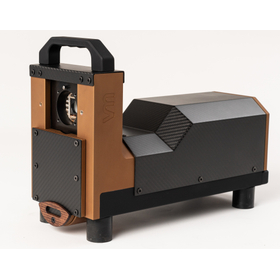
There is a Junker vibration test according to the German industrial standard DIN65151 (or DIN25151). It is said to be the world's most rigorous vibration test conducted under the worst conditions for bolt joints. The clamping axial force refers to the force that remains in the fastener after the applied clamping torque has been lost due to friction resistance at the bolt/nut bearing surface and the threaded part; it is the force that the fastener exerts during tightening. This axial force sensor allows the Junker vibration test to determine how much axial force is lost due to vibration and to identify and establish the point at which the axial force is completely lost. We have a demo unit of the J160, so please feel free to contact us.
Added to bookmarks
Bookmarks listBookmark has been removed
Bookmarks listYou can't add any more bookmarks
By registering as a member, you can increase the number of bookmarks you can save and organize them with labels.
Free membership registration
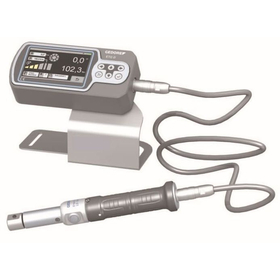
In the low torque range of 0.25Nm - 6Nm, a screwdriver handle type is used to apply subtle torque loads. In the ranges of 2.0Nm - 12Nm and 6.0Nm - 60Nm, a wrench handle type is employed. Torque can be measured very accurately using a torsion bar and ultra-precision strain gauge, while the angle is measured precisely at the center of the driver bit or socket of the attachment tool using a small gyroscope.
Added to bookmarks
Bookmarks listBookmark has been removed
Bookmarks listYou can't add any more bookmarks
By registering as a member, you can increase the number of bookmarks you can save and organize them with labels.
Free membership registration