1~45 item / All 93 items
Displayed results
Filter by category

Added to bookmarks
Bookmarks listBookmark has been removed
Bookmarks listYou can't add any more bookmarks
By registering as a member, you can increase the number of bookmarks you can save and organize them with labels.
Free membership registration
Contact this company
Contact Us Online1~45 item / All 93 items
Filter by category

In architectural spaces, "ranma" is not just a decoration. As a traditional fixture that enhances the space with light and shadow while maintaining daylight and ventilation, it is being reevaluated in today's modern Japanese homes and renovations. However, during the design, ordering, and construction phases, various considerations such as insulation, airtightness, and fitting adjustments come into play. This article will start by explaining "what ranma is," followed by a comprehensive discussion of the characteristics of different types, such as carvings, openwork, kumiko, and shoji, as well as price ranges, possibilities for remaking and purchasing second-hand, design examples, and key points during ordering and construction. Additionally, it will touch upon the advantages of Sakumiru, which supports core business functions for construction companies (such as estimating, scheduling, customer, and billing management), providing practical information that can be immediately useful. *For detailed content of the article, please refer to the PDF document. For more information, feel free to contact us.*
Added to bookmarks
Bookmarks listBookmark has been removed
Bookmarks listYou can't add any more bookmarks
By registering as a member, you can increase the number of bookmarks you can save and organize them with labels.
Free membership registration
"What is the difference between special construction business and general construction business?" "In the end, do we need to apply for a special construction business?" Do you have such concerns? Obtaining a construction business license is essential when starting or expanding a construction business. However, there are two types of licenses: "general construction business" and "special construction business," and if you do not fully understand their differences, requirements, and necessary situations, it could lead to problems later on. This article will carefully explain the differences between special construction business and general construction business, as well as the conditions for obtaining a license. It will be useful for those who are unsure about their application decisions or are considering future applications. Please read to the end. *You can view the detailed content of the article in the PDF document. For more information, please feel free to contact us.*
Added to bookmarks
Bookmarks listBookmark has been removed
Bookmarks listYou can't add any more bookmarks
By registering as a member, you can increase the number of bookmarks you can save and organize them with labels.
Free membership registration
The Telecommunications Chief Engineer is the "network supervisor" that operators are required to appoint under the Telecommunications Business Act. Among the national exams held twice a year, the next one is scheduled for July 13, 2025, with a pass rate of approximately 30%, indicating a mid to advanced level of difficulty. By utilizing the subject exemption system, you can significantly reduce your study load. Obtaining this qualification will fulfill the placement requirements in telecommunications carriers and the construction industry, and you can also expect practical benefits such as an increase in annual income and meeting the technical requirements for public works bidding. This article comprehensively covers the exam overview, difficulty, study methods, and how to leverage your career after passing, providing thorough support for obtaining the Telecommunications Chief Engineer qualification. *For detailed content of the article, please refer to the PDF materials. Feel free to contact us for more information.*
Added to bookmarks
Bookmarks listBookmark has been removed
Bookmarks listYou can't add any more bookmarks
By registering as a member, you can increase the number of bookmarks you can save and organize them with labels.
Free membership registration
In the electrical construction industry, the low profit margin has been a long-standing issue. The main factors include rising material and outsourcing costs, increasing labor expenses, and intensified price competition. To address these challenges, it is essential to thoroughly manage costs and establish an efficient construction system. Additionally, providing high-value-added services and setting appropriate prices are also important strategies. This article explains the current average profit margin and cost ratio in the electrical construction industry and introduces specific methods for improving profit margins. Let's aim for improved profitability through efficient cost management and project management. *For detailed content of the article, please refer to the PDF document. For more information, feel free to contact us.*
Added to bookmarks
Bookmarks listBookmark has been removed
Bookmarks listYou can't add any more bookmarks
By registering as a member, you can increase the number of bookmarks you can save and organize them with labels.
Free membership registration
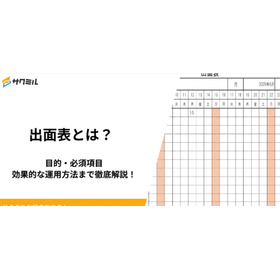
The "Attendance Sheet" at construction sites visualizes who worked, when, and where, serving as a foundational document for labor, wages, and safety management. This article organizes the purpose and items to be recorded in the attendance sheet, and through points on utilizing Excel templates and comparing paper and digital operations, it provides a detailed explanation of the use of "Sakumiru" as an entry point for efficient site digital transformation (DX). *For more detailed information, you can view the PDF materials. Please feel free to contact us for more details.*
Added to bookmarks
Bookmarks listBookmark has been removed
Bookmarks listYou can't add any more bookmarks
By registering as a member, you can increase the number of bookmarks you can save and organize them with labels.
Free membership registration
The final discount is a "last discount" that returns the surplus created through corporate efforts to customers in the form of rounding adjustments and other methods. In this article, we will clearly explain the meaning in the construction industry, four benefits, the timing of presentation, the correct way to write estimates and invoices, and the relationship with antitrust laws and subcontracting laws. *You can view the detailed content of the article in the PDF document. For more information, please feel free to contact us.
Added to bookmarks
Bookmarks listBookmark has been removed
Bookmarks listYou can't add any more bookmarks
By registering as a member, you can increase the number of bookmarks you can save and organize them with labels.
Free membership registration
In the construction industry, properly managing the income and expenses of projects is a crucial element that supports the foundation of management. Among these, the "execution budget" is positioned as an indispensable tool for ensuring the profitability of projects and conducting appropriate cost management. In recent years, the construction industry has faced various management challenges, such as labor shortages and soaring material prices. In particular, the rise in raw material costs and increases in labor costs have a significant impact on the profitability of projects. In such circumstances, more meticulous budget management has become essential to secure stable profits. This article will provide a detailed explanation of the basic concepts of execution budgets, specific methods for creating them, and how to utilize convenient templates and construction management systems. *For detailed content of the article, please refer to the PDF document. For more information, feel free to contact us.*
Added to bookmarks
Bookmarks listBookmark has been removed
Bookmarks listYou can't add any more bookmarks
By registering as a member, you can increase the number of bookmarks you can save and organize them with labels.
Free membership registration
Many people may feel unsure about construction site management, related documents, what to do and how to prepare for it. Do you have any concerns regarding the preparation of the construction procedure manual? - "I don't understand what a construction procedure manual is, or its specific content and role." - "The differences between the construction procedure manual, construction plan, and work procedure manual are unclear and I get them confused." - "I am anxious because the steps for creating the construction procedure manual, submission deadlines, and checkpoints are not clear." This article provides information to help resolve these concerns. We will deeply explain the basic definition of the construction procedure manual, its differences from related documents, creation steps, submission deadlines, and checkpoints. Additionally, we will introduce methods to streamline construction management. *You can view the detailed content of the article in the PDF document. For more information, please feel free to contact us.*
Added to bookmarks
Bookmarks listBookmark has been removed
Bookmarks listYou can't add any more bookmarks
By registering as a member, you can increase the number of bookmarks you can save and organize them with labels.
Free membership registration
Although there are many opportunities to see or hear the term "san" at construction sites, there may be surprisingly few people who fully understand its exact meaning and distinctions. In this article, we will carefully explain the basics of "san," its differences from "sanmoku," its types, roles, dimensions, materials, how to choose it, and even points to note regarding its notation and reading, all from a practical perspective. By reading this, any confusion regarding "san" will be resolved, leading to more accurate material selection and specification instructions on site. *For detailed content of the article, please refer to the PDF document. For more information, feel free to contact us.*
Added to bookmarks
Bookmarks listBookmark has been removed
Bookmarks listYou can't add any more bookmarks
By registering as a member, you can increase the number of bookmarks you can save and organize them with labels.
Free membership registration
In the construction industry, as digitalization accelerates, the introduction of construction ledger software has become the key to improving operational efficiency. Traditional management using paper or Excel is cumbersome and presents challenges in information sharing and updates. This article will explain the basic roles of construction ledger software and the benefits of its implementation in detail, as well as provide clear guidance on what points to focus on when selecting one. Additionally, for those who are wondering, "I want to implement software, but I don't know which one to choose," we will also introduce recommended construction ledger software. If you are considering "wanting to improve operational efficiency," "wanting to reduce management burdens," or "wanting to achieve cost reductions," please read on until the end. *For detailed content of the article, you can view it in the PDF document. For more information, please feel free to contact us.*
Added to bookmarks
Bookmarks listBookmark has been removed
Bookmarks listYou can't add any more bookmarks
By registering as a member, you can increase the number of bookmarks you can save and organize them with labels.
Free membership registration
At construction sites, it is important to document the progress and completion of work with photographs. Construction photos not only help accurately understand the site conditions and prevent potential issues, but they also serve as valuable materials for explaining to customers and confirming the details of the work. Furthermore, in some cases, the recording of construction photos is legally mandated, making it essential to comply. Inadequate documentation can lead to issues of liability due to lack of evidence, and in the worst case, there is a risk of administrative guidance or penalties. Therefore, proper photographing and management of construction photos are indispensable tasks for maintaining the reliability of site operations. This article will provide a detailed explanation of the risks associated with not taking construction photos, the correct procedures for taking them, and efficient management methods. Additionally, we will introduce items and tools that make construction photo shooting even more convenient, so please make use of them to enhance your daily work efficiency. *For detailed content of the article, you can view the PDF materials. For more information, please feel free to contact us.*
Added to bookmarks
Bookmarks listBookmark has been removed
Bookmarks listYou can't add any more bookmarks
By registering as a member, you can increase the number of bookmarks you can save and organize them with labels.
Free membership registration
The "site representative" is responsible for a wide range of tasks at construction sites, including construction management, schedule coordination, and safety management. Do you have a correct understanding of their role, the necessary qualifications, and how they differ from other engineers? This article will provide a detailed explanation of the definition of a site representative, their job responsibilities, required skills, placement obligations under the Construction Business Act, and the differences between chief engineers and supervising engineers. We will provide useful information for those aiming to become site representatives or considering career advancement in the construction industry. *You can view the detailed content of the article in the PDF document. For more information, please feel free to contact us.*
Added to bookmarks
Bookmarks listBookmark has been removed
Bookmarks listYou can't add any more bookmarks
By registering as a member, you can increase the number of bookmarks you can save and organize them with labels.
Free membership registration
Have you ever heard the term "site management costs" in the construction industry? Site management costs are the expenses necessary for smoothly and safely progressing actual construction work, and they are an important cost item that is included in estimates and contracts. However, many people may have questions about the specifics of site management costs, how they differ from general management costs, and what percentage should be set. This article comprehensively explains the definition of site management costs, their differences from general management costs, breakdown items, calculation guidelines, and methods. It is a valuable reference for construction business owners, site managers, and anyone who will be involved in the construction industry. *For detailed content of the article, you can view it in the PDF document. Please feel free to contact us for more information.
Added to bookmarks
Bookmarks listBookmark has been removed
Bookmarks listYou can't add any more bookmarks
By registering as a member, you can increase the number of bookmarks you can save and organize them with labels.
Free membership registration
When planning a construction project, the "building confirmation application" is an important procedure that you will encounter first. This article comprehensively explains the definition of the application, its legal background, necessary documents, costs, processes, and even "cases where application is not required." Additionally, we will introduce the benefits of hiring an architect and methods for improving efficiency using the cloud tool "Sakumiru." This is a practical guide for those about to start construction and for businesses responsible for application tasks. *You can view the detailed content of the article in the PDF document. For more information, please feel free to contact us.*
Added to bookmarks
Bookmarks listBookmark has been removed
Bookmarks listYou can't add any more bookmarks
By registering as a member, you can increase the number of bookmarks you can save and organize them with labels.
Free membership registration
Creating construction estimates is one of the important tasks in the construction industry. By making accurate estimates, companies can control their profits and prevent losses. On the other hand, vague estimates can lead to an incorrect understanding of costs, which may ultimately pressure profits. This article will provide a detailed explanation of the basic role of construction estimates, the content that should be included, and the actual methods for creating them, aimed at those who say, "I don't know how to create a construction estimate," "I have concerns about the content of the items listed," or "I want to improve the efficiency of creating estimates." Additionally, we will introduce a recommended software for streamlining the estimate creation process, "Sakumiru." *For detailed content of the article, you can view it in the PDF document. Please feel free to contact us for more information.*
Added to bookmarks
Bookmarks listBookmark has been removed
Bookmarks listYou can't add any more bookmarks
By registering as a member, you can increase the number of bookmarks you can save and organize them with labels.
Free membership registration
For everyone working at construction sites, the summer "heat" is a matter of life and death. Due to regulatory changes effective June 1, 2025, at sites where the WBGT (Wet Bulb Globe Temperature) exceeds 28°C, or the temperature exceeds 31°C, and continuous work above a certain threshold occurs, systems, procedures, and awareness have been mandated by law (Ministry of Health, Labour and Welfare "Heatstroke countermeasures will be mandatory from June 2025"). This article organizes the key points of this mandate and provides detailed explanations of practical measures that can be used on-site, including WBGT measurement, plans for breaks and hydration with salt, initial responses in emergencies, a checklist for managers, and low-cost equipment and IoT utilization. Especially for small construction businesses with fewer than 50 employees, balancing "safety of human life" and "business continuity" is essential. We provide a wide range of know-how that site managers and business owners can implement immediately. *For detailed content of the article, please refer to the PDF materials. For more information, feel free to contact us.*


Added to bookmarks
Bookmarks listBookmark has been removed
Bookmarks listYou can't add any more bookmarks
By registering as a member, you can increase the number of bookmarks you can save and organize them with labels.
Free membership registration
In the construction industry, in order for the main contractor and subcontractor to build a healthy business relationship, it is essential to set an appropriate estimation period at the request stage and accurately convey the necessary information. The Construction Business Act specifically stipulates the estimation period and its notification method, and neglecting this can lead to administrative guidance or a risk of losing credibility. This article will provide a detailed explanation of the minimum number of days for the estimation period based on Article 20 of the Construction Business Act and the enforcement order, the rules for the starting date, the conditions under which a reduction is permitted in unavoidable circumstances, and actions that are considered an abuse of superior bargaining position. Additionally, it will cover internal rules, checklists, and key points for manualization to prevent troubles in advance, offering practical tips for everyone involved in the construction industry to engage in estimation request tasks with peace of mind. *For detailed content of the article, please refer to the PDF document. For more information, feel free to contact us.*
Added to bookmarks
Bookmarks listBookmark has been removed
Bookmarks listYou can't add any more bookmarks
By registering as a member, you can increase the number of bookmarks you can save and organize them with labels.
Free membership registration
Construction sites involve high-altitude work and the use of heavy machinery, making them industries with a high risk of accidents. This is where workers' compensation insurance becomes essential, but many people have questions such as, "What is a consolidated fixed-term project?" "Are the procedures different for general contractors and subcontractors?" "How far does the insurance coverage extend?" This article is aimed at construction business owners, site supervisors, and independent contractors considering going solo, and it clearly summarizes: - The structure and types of workers' compensation insurance - The requirements and benefits of "consolidated fixed-term projects" for small-scale construction - Common pitfalls in the application process and key checkpoints By reading this article, you will grasp all the basics and important points to avoid confusion in practice. *For detailed content of the article, you can view it in the PDF document. Please feel free to contact us for more information.*
Added to bookmarks
Bookmarks listBookmark has been removed
Bookmarks listYou can't add any more bookmarks
By registering as a member, you can increase the number of bookmarks you can save and organize them with labels.
Free membership registration
Independent contractors and small businesses in the construction industry often find that as their annual contracts increase in value, the burden of consumption tax and stamp duty becomes heavier, leading to a decrease in the profits they retain. This article provides a gentle explanation of legal and practical tax-saving techniques for business owners facing such concerns. It covers everything from expense management, savings on stamp duty through electronic contracts, the use of blue return filing and small-scale depreciation, to regular equal salaries and company housing systems, all aimed at minimizing the burden of consumption tax, income tax, and business tax while maximizing available funds. The content is easy to understand for beginners and progresses step by step, making it accessible even for those who are not confident in accounting. We encourage you to read this as the first step in creating a system that allows you to efficiently retain cash and focus on your work on-site. *For detailed content of the article, please refer to the PDF materials. For more information, feel free to contact us.*
Added to bookmarks
Bookmarks listBookmark has been removed
Bookmarks listYou can't add any more bookmarks
By registering as a member, you can increase the number of bookmarks you can save and organize them with labels.
Free membership registration
In the construction industry, the serious labor shortage and the promotion of work style reforms have made improving productivity a pressing issue. It has become necessary to implement comprehensive improvements, not only in the efficiency of on-site work but also in administrative tasks, information sharing, and organizational management. However, many companies are struggling with issues such as "I don't know where to start" and "We introduced tools, but they haven't been adopted." This article will broadly explain the structural reasons why productivity in the construction industry tends to decline, specific improvement measures that can be implemented starting today, actual success stories, and considerations for choosing tools. *For detailed content of the article, please refer to the PDF document. For more information, feel free to contact us.*
Added to bookmarks
Bookmarks listBookmark has been removed
Bookmarks listYou can't add any more bookmarks
By registering as a member, you can increase the number of bookmarks you can save and organize them with labels.
Free membership registration
The construction industry continues to face a serious labor shortage, which is impacting productivity and project timelines on-site. Several factors are intricately intertwined in this issue, including the aging population, challenges related to wage levels, and a labor shortage due to expanding demand. This article will organize the fundamental reasons behind the labor shortage in the construction industry and provide a detailed explanation of specific measures that companies and sites can implement. Additionally, it will touch upon examples of system reforms and the use of digital transformation tools, introducing initiatives that are necessary for the future of the construction industry. For business owners and site managers struggling with labor shortages, we hope this serves as a useful reference for considering future measures. *For more detailed information, please refer to the PDF document. Feel free to contact us for further inquiries.*
Added to bookmarks
Bookmarks listBookmark has been removed
Bookmarks listYou can't add any more bookmarks
By registering as a member, you can increase the number of bookmarks you can save and organize them with labels.
Free membership registration
The attendance sheet is a fundamental document for managing attendance in the construction industry. In the construction sector, where site conditions and working hours can easily become complex, accurate record-keeping and the establishment of a management system are essential. By utilizing Excel templates, you can streamline operations through automatic calculations and customization while keeping initial costs low. However, it is also necessary to consider challenges such as formula errors and security risks. In this article, in addition to how to utilize attendance sheet templates, we will also introduce the software "Sakumiru," which enables high-precision attendance management. If you want to enhance the reliability of your records, please take a look. *For detailed content of the article, you can view the PDF materials. For more information, feel free to contact us.*
Added to bookmarks
Bookmarks listBookmark has been removed
Bookmarks listYou can't add any more bookmarks
By registering as a member, you can increase the number of bookmarks you can save and organize them with labels.
Free membership registration
In the construction industry, there are numerous structural challenges that pressure cash flow, such as "taking several months from invoicing to payment," "advance payments for material and labor costs," and "delays in receivables collection." Moreover, the difficulty of cost management for each project and the strict lending assessments by financial institutions contribute to the ongoing risk of cash shortages and bankruptcies faced by companies. This article organizes the unique cash flow structure and key points of cash flow management in the construction industry, and broadly introduces practical improvement measures and funding methods, including the creation of cash flow statements, selection of profitable projects, contract negotiations for advance and interim payments, and the utilization of various lending systems and factoring. Additionally, it explains how to use the cloud service "Sakumiru," which supports the visualization of funds and stable management for small and medium-sized construction companies with fewer than 50 employees. *For detailed content of the article, please refer to the PDF document. For more information, feel free to contact us.
Added to bookmarks
Bookmarks listBookmark has been removed
Bookmarks listYou can't add any more bookmarks
By registering as a member, you can increase the number of bookmarks you can save and organize them with labels.
Free membership registration
In the construction industry, while many may have heard the term "construction management ledger," there are likely many who do not fully understand its necessity, the specific projects for which it is required, or its exact purpose. The construction management ledger is one of the important documents stipulated by the Construction Business Act, and neglecting its creation or management can lead to guidance or penalties. On the other hand, as the number of sites and subcontractors increases, management can become complicated, leading to the perception that it is "quite a challenging document." This article will clearly explain the basic meaning of the construction management ledger, the obligation to create it, its contents, format, penalties, and efficient management methods from the perspective of construction industry practice. *For detailed content of the article, please refer to the PDF document. For more information, feel free to contact us.*
Added to bookmarks
Bookmarks listBookmark has been removed
Bookmarks listYou can't add any more bookmarks
By registering as a member, you can increase the number of bookmarks you can save and organize them with labels.
Free membership registration
In the construction industry, it is often thought that "having a lot of overtime is unavoidable" and "long working hours are normal because it's fieldwork." However, in recent years, due to the serious labor shortage and issues like the 2024 problem, it has become difficult to continue business without reevaluating traditional working methods. In this article, we will systematically explain the real reasons why overtime in the construction industry does not decrease, specific measures to reduce overtime that can be started today, considerations for utilizing IT, and common traits of successful companies. For business owners and managers who are thinking, "I don't know where to start" or "I don't want to reduce sales while cutting down on overtime," we will provide practical hints. *For detailed content of the article, please refer to the PDF document. For more information, feel free to contact us.*
Added to bookmarks
Bookmarks listBookmark has been removed
Bookmarks listYou can't add any more bookmarks
By registering as a member, you can increase the number of bookmarks you can save and organize them with labels.
Free membership registration
In the construction industry, customer relationships can often be long-term, so it is necessary to closely coordinate with project management and site management. However, managing information with Excel or paper can lead to information being dispersed, causing issues with information sharing among sales, site, and administrative teams. This article will provide a detailed explanation of how to choose an appropriate customer management system for the construction industry, along with recommendations for 15 systems, both free and paid. We will particularly focus on how small to medium-sized construction companies, contractors, and electrical contractors can select a customer management system that can collaborate with the site. *For detailed content of the article, please refer to the PDF document. For more information, feel free to contact us.*
Added to bookmarks
Bookmarks listBookmark has been removed
Bookmarks listYou can't add any more bookmarks
By registering as a member, you can increase the number of bookmarks you can save and organize them with labels.
Free membership registration
Recently, risks that threaten business continuity, such as earthquakes, typhoons, and outbreaks of infectious diseases, have been increasing. The construction industry, in particular, is susceptible to external factors such as on-site work and material procurement, and the presence or absence of a BCP (Business Continuity Plan) in times of crisis directly affects the stability of management. However, many construction business owners may be wondering, "What is a BCP?" and "How do I create one?" This article will clearly explain the necessity of BCP in the construction industry, specific formulation steps, industry-specific points, and practical examples in an easy-to-understand manner for beginners. Please make use of this information to develop a BCP that protects your business during disasters and enhances trust from your business partners. *You can view the detailed content of the article in the PDF document. For more information, please feel free to contact us.*
Added to bookmarks
Bookmarks listBookmark has been removed
Bookmarks listYou can't add any more bookmarks
By registering as a member, you can increase the number of bookmarks you can save and organize them with labels.
Free membership registration
The construction industry is facing challenges such as labor shortages, aging workforce, and work style reforms, leading to a rapid increase in expectations for efficiency improvements and safety enhancements through AI implementation. This article specifically introduces examples such as Kajima Corporation's "Kajima ChatAI," Obayashi Corporation's "AiCorb," and NTT West Japan's AI-OCR implementation case. Furthermore, taking into account practical concerns such as the cost trends of estimation AI and the IT skills required for acquisition, we will organize practical decision-making points for managers and site supervisors of small and medium-sized construction companies (with 50 or fewer employees). *For detailed content of the article, please refer to the PDF document. For more information, feel free to contact us.*
Added to bookmarks
Bookmarks listBookmark has been removed
Bookmarks listYou can't add any more bookmarks
By registering as a member, you can increase the number of bookmarks you can save and organize them with labels.
Free membership registration
For businesses that have obtained construction industry permits, the "Financial Statement Change Notification" (End of Business Year Notification) is a statutory document that must be submitted every period. This notification is based on Article 11 of the Construction Business Act, and failing to submit it may result in penalties and restrictions on participation in management evaluations, which could significantly hinder business operations. In this article, we will clearly explain the overview of the Financial Statement Change Notification, submission deadlines, how to fill it out, and how to obtain the necessary documents, providing practical guidance from the basics to specific details. *You can view the detailed content of the article in the PDF materials. For more information, please feel free to contact us.*
Added to bookmarks
Bookmarks listBookmark has been removed
Bookmarks listYou can't add any more bookmarks
By registering as a member, you can increase the number of bookmarks you can save and organize them with labels.
Free membership registration
In recent years, digital transformation (DX) has been attracting attention across various industries, and its importance is similarly increasing in the construction industry. The construction industry has faced challenges such as labor shortages, aging workforce, and low labor productivity for many years. Therefore, the introduction of DX, particularly in construction, is expected to be a means to address these industry challenges and achieve more efficient and sustainable business operations. This article will begin with "What is Construction DX?" and will explain the challenges faced by the construction industry that necessitate DX, the current state of construction DX, as well as the reasons why construction DX is not progressing and examples of construction DX. *For detailed content of the article, please refer to the PDF materials. For more information, feel free to contact us.*
Added to bookmarks
Bookmarks listBookmark has been removed
Bookmarks listYou can't add any more bookmarks
By registering as a member, you can increase the number of bookmarks you can save and organize them with labels.
Free membership registration
For those working as sole proprietors in the construction industry, the choice of health insurance is an important decision that affects future peace of mind. Many people struggle with whether to choose "municipal national health insurance" or "construction industry health insurance." This is because each has different characteristics, and it is necessary to comprehensively compare insurance premiums, benefits, and eligibility requirements. This article will clearly explain the differences between the two and support sole proprietors in choosing the right insurance. Let's create an environment where you can work with peace of mind by selecting insurance that fits your working style and family structure. *For detailed content of the article, you can view the PDF materials. Please feel free to contact us for more information.*
Added to bookmarks
Bookmarks listBookmark has been removed
Bookmarks listYou can't add any more bookmarks
By registering as a member, you can increase the number of bookmarks you can save and organize them with labels.
Free membership registration
"Even though I created a schedule, the overall timeline collapsed due to rain delays." Have you ever had such an experience? While bar charts for project schedules are simple and easy to read, they make it difficult to see dependencies and carry the risk that a small deviation can lead to significant delays. In this article, we will explain in detail the definition of bar chart schedules, the differences from Gantt charts and network schedules, their advantages and disadvantages, steps for beginners to create them without making mistakes, and how to utilize free Excel templates. Additionally, we will introduce "Sakumiru," a cloud-based site management tool that allows for the management of schedules and immediate sharing with stakeholders. By the time you finish reading this article, you should have gained confidence in managing project schedules smartly, from the basics of schedule creation to practical improvement strategies. *You can view the detailed content of the article in the PDF materials. For more information, please feel free to contact us.*
Added to bookmarks
Bookmarks listBookmark has been removed
Bookmarks listYou can't add any more bookmarks
By registering as a member, you can increase the number of bookmarks you can save and organize them with labels.
Free membership registration
To all managers, site supervisors, and DX promoters involved in the construction industry: Are you facing challenges such as "not being able to focus on the site due to time spent on creating and submitting necessary labor and safety documents (commonly known as 'Green Files')" or "having many errors in the documents"? The Green Site, which is particularly effective for small-scale construction businesses, streamlines complex tasks such as document generation, submission, deadline management, entry and exit management, and CCUS integration in the cloud, contributing to improved labor and safety management standards. In this article, we will gently explain the specific registration procedures, the time and costs involved, common troubles and their solutions from the perspective of businesses with 50 or fewer employees, and finally introduce the site management DX tool "Sakumiru" as a further perspective for promoting DX. By implementing the Green Site, let's gain "time and peace of mind" for both the site and management. *For detailed content of the article, you can view it in the PDF document. Please feel free to contact us for more information.
Added to bookmarks
Bookmarks listBookmark has been removed
Bookmarks listYou can't add any more bookmarks
By registering as a member, you can increase the number of bookmarks you can save and organize them with labels.
Free membership registration
In the construction industry, many projects involve multiple tasks progressing simultaneously, increasing the importance of process management. Within this context, the "Gantt chart schedule," which allows for a visual understanding of work progress, is gaining attention as a useful tool for schedule management and resource optimization. This article will provide a detailed explanation of the Gantt chart schedule, including its overview, advantages and disadvantages, how to create it, and points to consider when utilizing it. If you want to streamline project management in the construction industry, please refer to this information. *For detailed content of the article, you can view it in the PDF document. For more information, please feel free to contact us.*
Added to bookmarks
Bookmarks listBookmark has been removed
Bookmarks listYou can't add any more bookmarks
By registering as a member, you can increase the number of bookmarks you can save and organize them with labels.
Free membership registration
Energy managers play a crucial role in companies and society as professionals who promote the rational use of energy based on the Energy Conservation Act. In recent years, as measures against global warming and the reduction of energy costs have become necessary, the demand for energy managers has been increasing. This article provides detailed information useful for those aiming to obtain the qualification, including an overview of the energy manager exam, its difficulty, pass rates, annual income, and career paths. Additionally, we will introduce study methods and how to utilize the subject pass system, so please use this as a reference. *For more detailed information, you can view the PDF materials. Feel free to contact us for more details.
Added to bookmarks
Bookmarks listBookmark has been removed
Bookmarks listYou can't add any more bookmarks
By registering as a member, you can increase the number of bookmarks you can save and organize them with labels.
Free membership registration
The HVAC (Heating, Ventilation, Air Conditioning) industry is experiencing rapid changes due to technological innovation and environmental considerations. Participating in exhibitions where the latest technologies can be grasped all at once is crucial for the growth strategy of small and medium-sized enterprises. Many business owners searching for keywords like "HVAC exhibition 2025" and "HVAC&R Japan 2026" are likely aiming to understand technological trends, secure business negotiation opportunities, and strengthen their customer attraction strategies. This article provides a detailed overview of the "HVAC&R JAPAN 2026," one of the largest refrigeration, air conditioning, and heating exhibitions in Japan, including the benefits of exhibiting and attending the exhibition, as well as preparations and strategies for success. It incorporates information directly related to the capital investment plans of small and medium-sized enterprises and the expansion of new business transactions, making it essential reading. It is presented in a practical manner for business owners who want to improve their performance through effective use of exhibitions. *For more detailed information, please refer to the PDF document. Feel free to contact us for further inquiries.*
Added to bookmarks
Bookmarks listBookmark has been removed
Bookmarks listYou can't add any more bookmarks
By registering as a member, you can increase the number of bookmarks you can save and organize them with labels.
Free membership registration
The estimation work in the construction industry is a crucial process that is time-consuming and allows no room for error. This is where specialized estimation software for the construction industry comes into focus. With features such as detailed management by trade, real-time visualization of costs and profits, and smartphone compatibility, it dramatically improves operational efficiency with functionalities not found in general software. In this article, we will clearly explain our top 7 recommended estimation software for 2025, the benefits of implementation, and key points for selection. Let's take the first step towards efficiency together. *For detailed content of the article, please refer to the PDF document. For more information, feel free to contact us.*
Added to bookmarks
Bookmarks listBookmark has been removed
Bookmarks listYou can't add any more bookmarks
By registering as a member, you can increase the number of bookmarks you can save and organize them with labels.
Free membership registration
"The terms and conditions seem complicated and difficult... Could it be that the troubles on site are due to not properly reading the terms and conditions?" Many people involved in the construction industry share these concerns and experiences. In construction work, understanding the "Construction Contract Terms and Conditions" is crucial to prevent disputes regarding contract details. However, the content is often filled with legal jargon and specialized expressions, making it challenging for first-time readers. This article will carefully explain the basic purposes and structure of the construction contract terms and conditions, key points to pay special attention to in practice, as well as common trouble cases that may arise on site and their countermeasures, using illustrations and concrete examples. We encourage you to read through to the end as a way to deepen your understanding of the contract details and enhance your on-site response capabilities. *For detailed content of the article, you can view it in the PDF document. Please feel free to contact us for more information.*
Added to bookmarks
Bookmarks listBookmark has been removed
Bookmarks listYou can't add any more bookmarks
By registering as a member, you can increase the number of bookmarks you can save and organize them with labels.
Free membership registration
When placing orders or requests for construction work, the "Construction Order Form (Construction Request Form)" and "Order Acknowledgment" are essential. However, when you actually try to create them, you may have many questions and concerns, such as: - What is the difference between the Construction Order Form (Construction Request Form) and the Order Acknowledgment? - Should I affix a revenue stamp? - Where can I find templates? - What are the writing etiquette guidelines? This article provides a comprehensive explanation for those in the construction industry, covering the basics of the "Construction Order Form" and "Construction Acknowledgment," as well as practical templates and handling of revenue stamps. *You can view the detailed content of the article in the PDF document. For more information, please feel free to contact us.*
Added to bookmarks
Bookmarks listBookmark has been removed
Bookmarks listYou can't add any more bookmarks
By registering as a member, you can increase the number of bookmarks you can save and organize them with labels.
Free membership registration
In the construction industry, improving efficiency and reducing costs are urgent priorities. To address these challenges, many companies are beginning to implement construction management systems. This article will detail how construction management systems are transforming on-site operations, their benefits, and specific use cases. The main points covered in this article are as follows: 1. How to achieve efficient construction management through construction management systems and apps 2. Key points to consider when selecting a system (app) 3. The actual effects of implementing a system (app) By leveraging digital tools, smoother and more cost-effective construction operations become possible. Understanding how to effectively utilize construction management systems and having a concrete image of how operations can be improved through their implementation will lead to better management. *For detailed content of the article, please refer to the PDF document. For more information, feel free to contact us.*
Added to bookmarks
Bookmarks listBookmark has been removed
Bookmarks listYou can't add any more bookmarks
By registering as a member, you can increase the number of bookmarks you can save and organize them with labels.
Free membership registration
Safety management at construction sites is one of the important elements for smoothly progressing construction work. Particularly, the prevention of occupational accidents is essential not only for protecting the lives and health of workers but also for preventing delays in construction schedules and the occurrence of additional costs. The construction safety and health plan is a fundamental document for such safety management, serving as a "blueprint" to identify potential risks that may arise on-site and to implement appropriate measures. However, many may be creating this for the first time or may have concerns about how to fill it out. This article will provide detailed information useful for practical work, covering the basic purposes of the construction safety and health plan, specific examples of how to fill it out, and points to consider during its creation. It will be helpful not only for those who plan to create a plan but also for those who have already created one but wish to make its content more effective. *For detailed content of the article, please refer to the PDF document. For more information, feel free to contact us.*
Added to bookmarks
Bookmarks listBookmark has been removed
Bookmarks listYou can't add any more bookmarks
By registering as a member, you can increase the number of bookmarks you can save and organize them with labels.
Free membership registration
Daily work reports in the construction industry are fundamental business tools that support progress management and information sharing on site. Since they also relate to safety measures and process management, accurate and continuous recording is required. That said, there may be moments when you wonder, "What should I write and how much?" In this article, we will introduce the role of daily work reports, key points for writing, tips on how to write them, and ready-to-use example sentences. Start by recording even a short sentence. Small accumulations will enhance the accuracy of reports and eventually lead to improved work quality for the entire team. If you want to work on efficient management, please also check the section titled "Tools to Make Daily Report Creation Easier." *You can view the detailed content of the article in the PDF document. For more information, please feel free to contact us.
Added to bookmarks
Bookmarks listBookmark has been removed
Bookmarks listYou can't add any more bookmarks
By registering as a member, you can increase the number of bookmarks you can save and organize them with labels.
Free membership registration
The construction work notification is a legal document that must be submitted to the designated administrative agency when constructing, expanding, renovating, or relocating buildings that exceed 10m2. Starting from January 1, 2025, a new format will be applied, which includes the unification of usage classifications and the establishment of a new section for responsible personnel information, resulting in a significant revision of the format. This article will clearly explain the basic knowledge of construction work notifications, how to adapt to the new format, specific examples of filling out the forms, and the differences from building confirmation applications, making it easy for beginners to understand. If you want to grasp the new submission rules and proceed with accurate procedures, please refer to this information. *For detailed content of the article, you can view it in the PDF document. For more information, please feel free to contact us.
Added to bookmarks
Bookmarks listBookmark has been removed
Bookmarks listYou can't add any more bookmarks
By registering as a member, you can increase the number of bookmarks you can save and organize them with labels.
Free membership registration
In the construction industry, creating invoices is one of the important tasks in daily operations. However, with the introduction of the invoice system and changes in legal regulations, many people may be wondering "how should I write an invoice?" or "which template should I use?" In this article, we will introduce free invoice templates that can be immediately used for the construction industry, along with a comprehensive explanation of how to write them, points to note, and methods of sending them. At the end, we will also introduce ways to improve operational efficiency using Sakumiru. *For detailed content of the article, you can view it in the PDF document. For more information, please feel free to contact us.*
Added to bookmarks
Bookmarks listBookmark has been removed
Bookmarks listYou can't add any more bookmarks
By registering as a member, you can increase the number of bookmarks you can save and organize them with labels.
Free membership registration
The use of a "schedule" (construction schedule) is essential for smooth progress at construction sites. A schedule is an important tool for visualizing the progress of construction and managing whether the work is proceeding as planned. Once actual construction begins, there are often cases where the schedule established during the planning phase does not match the conditions on site. By utilizing the schedule, it becomes possible to manage these discrepancies flexibly and appropriately, ensuring the smooth progress of the entire construction project. So, what exactly is a schedule, and what role does it play? In this article, we will first deepen our basic understanding of the roles and types of schedules, then explain the elements that make up a schedule, how to create one, and tips for efficient utilization. We will also introduce recommended apps for creating schedules and templates that can be used in Excel. *For detailed content of the article, you can view it in the PDF document. Please feel free to contact us for more information.*
Added to bookmarks
Bookmarks listBookmark has been removed
Bookmarks listYou can't add any more bookmarks
By registering as a member, you can increase the number of bookmarks you can save and organize them with labels.
Free membership registration