46~69 item / All 69 items
Displayed results
Filter by category

Added to bookmarks
Bookmarks listBookmark has been removed
Bookmarks listYou can't add any more bookmarks
By registering as a member, you can increase the number of bookmarks you can save and organize them with labels.
Free membership registrationContact this company
Contact Us Online46~69 item / All 69 items
Filter by category
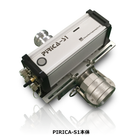
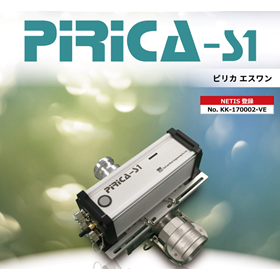
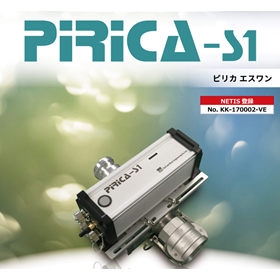
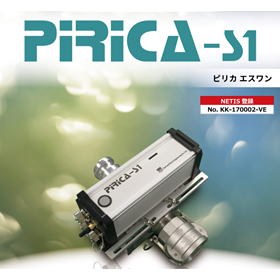
In the chemical plant industry, quality control and efficiency of manufacturing processes are crucial. In particular, managing the density of reactants and products is not only essential for product quality but also vital for safe operations. Traditional measurement methods have faced challenges, such as the time and effort required for sampling and analysis, making real-time situational awareness difficult. The piping RI density meter 'PIRICA-S1' uses RI technology to continuously measure the fluid density within pipes in a non-destructive and non-contact manner. This allows for the early detection of process anomalies and enables rapid responses. 【Application Scenarios】 - Density management of slurries and mixed liquids - Monitoring of product quality - Detection of anomalies in substances within pipes 【Benefits of Implementation】 - Rapid process control through real-time data acquisition - Improvement in product quality and yield - Enhanced safety and reduced risks - Optimization of processes through recording and analysis of measurement data *Please consult us in advance regarding applicability.
Added to bookmarks
Bookmarks listBookmark has been removed
Bookmarks listYou can't add any more bookmarks
By registering as a member, you can increase the number of bookmarks you can save and organize them with labels.
Free membership registration
The pipe density meter "PIRICA-S1" utilizes radioactive isotopes (RI) to continuously measure the density of substances (liquids, slurries, etc.) flowing inside pipes in a non-destructive and non-contact manner. 【Features】 ■ Compatible with pipe diameters of 1 to 8 inches (*For pipe diameters of 10 to 16 inches, please consider the PIRICA-L1.) ■ Uses a sealed source of Barium-133 with an activity of 1MBq - no notification procedures to the Nuclear Regulation Authority are required ■ Can be installed on pipes without tools, unless under special conditions ■ Mechanical specifications are designed for field use, featuring a waterproof and dustproof (IP65) structure ■ Measurements can be taken without a 100V power supply thanks to the built-in rechargeable battery ■ Wireless remote measurement (up to 100m) is possible with Bluetooth Class 1 ■ Supports remote monitoring via internet connection (optional: SRENET) ■ In addition to the general-purpose PIRICA-S1, we also offer battery-less, wireless external models for factory equipment (PIRICA-S2) and explosion-proof models (PIRICA-S3) (inquiries required) *For more details, please download the PDF or contact us.
Added to bookmarks
Bookmarks listBookmark has been removed
Bookmarks listYou can't add any more bookmarks
By registering as a member, you can increase the number of bookmarks you can save and organize them with labels.
Free membership registration
In the wind power generation industry, accurate ground surveys are essential for the stable operation of wind turbines. Particularly when conducting large-scale foundation work, it is important to accurately understand the ground density and moisture content, and to manage embankments appropriately. Inadequate ground surveys or embankment management can lead to subsidence or collapse of structures. SRID enables rapid and accurate ground surveys through a wide measurement range and non-contact distance sensor correction functions, contributing to the safe construction and operation of wind power plants. 【Usage Scenarios】 - Ground surveys at wind power plant construction sites - Quality control of large-scale embankments - Measurement of ground density and moisture content 【Benefits of Implementation】 - Shortened construction time due to rapid measurements - Safe construction of structures based on accurate data - Stable measurements unaffected by unevenness
Added to bookmarks
Bookmarks listBookmark has been removed
Bookmarks listYou can't add any more bookmarks
By registering as a member, you can increase the number of bookmarks you can save and organize them with labels.
Free membership registration
In the solar power generation industry, quality management of the foundation ground is crucial for the long-term stable operation of facilities. In particular, the density and moisture content of the ground are important factors in preventing settlement and differential settlement of structures. Inadequate ground management can lead to damage to facilities and a decrease in power generation efficiency. SRID is suitable for managing embankments of coarse-grained materials, achieving more than ten times the measurement area of conventional methods. The non-contact distance sensor automatically corrects for unevenness, eliminating the need for ground shaping work during measurement. 【Usage Scenarios】 - Quality management of ground in foundation work for solar power generation facilities - Compaction management in embankment construction - Rapid ground investigation at construction sites 【Benefits of Implementation】 - Shortened construction period due to reduced measurement time - Improved quality through accurate data acquisition - Cost reduction through optimization of ground improvement
Added to bookmarks
Bookmarks listBookmark has been removed
Bookmarks listYou can't add any more bookmarks
By registering as a member, you can increase the number of bookmarks you can save and organize them with labels.
Free membership registration
In the landfill of the industrial waste disposal industry, proper quality management of landfill materials is essential for environmental conservation and safety assurance. In particular, the density and moisture content of landfill materials are important factors in evaluating ground stability and permeability, and improper management can increase the risk of ground subsidence and the leakage of harmful substances. SRID enables rapid and accurate measurements in the quality management of landfill materials, addressing these challenges. 【Usage Scenarios】 * Measurement of landfill density and moisture content * Quality management of embankments * Compaction management of landfill materials 【Benefits of Implementation】 * Efficient quality management through expanded measurement areas * Automatic correction of unevenness, improving measurement work efficiency * Early detection of quality issues through rapid measurements
Added to bookmarks
Bookmarks listBookmark has been removed
Bookmarks listYou can't add any more bookmarks
By registering as a member, you can increase the number of bookmarks you can save and organize them with labels.
Free membership registration
In earthworks, quality control of embankments is essential to ensure the safety and durability of structures. Particularly with embankments made of coarse-grained materials, proper compaction is crucial, and management of density and moisture content is required. Inadequate management can lead to differential settlement and insufficient ground strength, potentially resulting in serious accidents. The SRID achieves over ten times the measurement range compared to conventional RI density moisture meters, enabling rapid and extensive measurements. 【Application Scenarios】 - Quality control of embankments at earthwork construction sites - Soil testing at construction sites - Embankment work for dams, roads, and developed land 【Benefits of Implementation】 - Improved efficiency in quality control through extensive measurements - Accurate measurements that are less affected by unevenness - Optimization of process management through rapid measurements
Added to bookmarks
Bookmarks listBookmark has been removed
Bookmarks listYou can't add any more bookmarks
By registering as a member, you can increase the number of bookmarks you can save and organize them with labels.
Free membership registration
In the harbor construction industry, quality control of embankment fill is crucial to ensure the stability of the revetment. Particularly with embankments using coarse-grained materials, proper compaction and management of density and moisture content are essential for maintaining the long-term stability of revetment structures. Inadequate compaction can lead to ground subsidence and damage to the revetment. The SRID achieves more than ten times the measurement range compared to traditional RI density moisture meters, enabling rapid and extensive measurements. This allows for efficient quality control of revetment fill and enhances the safety of structures. 【Application Scenarios】 - Compaction management in revetment fill construction - Quality control of reclaimed land - Construction projects for breakwaters and jetties 【Benefits of Implementation】 - Improved efficiency of quality control through extensive measurements - Accurate measurements that are less affected by unevenness - Shortened construction periods due to rapid measurements - Assurance of long-term stability of structures
Added to bookmarks
Bookmarks listBookmark has been removed
Bookmarks listYou can't add any more bookmarks
By registering as a member, you can increase the number of bookmarks you can save and organize them with labels.
Free membership registration
In the evaluation of subgrade in railway construction, quality management of embankments is crucial to ensure the safe operation of trains. In particular, the density and moisture content of the subgrade significantly affect its strength and durability; improper management can lead to subsidence or deformation of the subgrade, ultimately resulting in derailment accidents. The SRID achieves more than ten times the measurement range compared to conventional RI density moisture meters, enabling rapid and extensive measurements. This allows for efficient management of subgrade quality, contributing to safe railway operations. 【Application Scenarios】 - Quality management of subgrade in new railway construction - Quality assessment in repair and improvement work of existing subgrades - Compaction management of embankments 【Effects of Implementation】 - Improved efficiency in quality management through extensive measurements - Automatic correction of unevenness effects using non-contact distance sensors - Shortened construction periods due to rapid measurements - Assurance of safe railway operations
Added to bookmarks
Bookmarks listBookmark has been removed
Bookmarks listYou can't add any more bookmarks
By registering as a member, you can increase the number of bookmarks you can save and organize them with labels.
Free membership registration
In airport construction, ground improvement work is crucial for ensuring the safety of runways and parking areas, making the quality control of embankments extremely important. Particularly with embankments made of coarse-grained materials, proper compaction is essential, and accurate measurements of density and moisture content are required. Inadequate compaction can lead to ground subsidence or differential settlement, which may seriously impact the safety of the facilities. The SRID achieves more than ten times the measurement range compared to conventional RI density moisture meters, and its non-contact distance sensor provides a function for correcting the effects of unevenness, enabling rapid and accurate measurements. 【Application Scenarios】 - Quality control of embankments in runway construction - Quality control of embankments in parking area construction - Ground improvement work around airports 【Benefits of Implementation】 - Conducting extensive measurements in a short time - Reducing ground shaping work - Streamlining quality control of embankments - Enhancing safety
Added to bookmarks
Bookmarks listBookmark has been removed
Bookmarks listYou can't add any more bookmarks
By registering as a member, you can increase the number of bookmarks you can save and organize them with labels.
Free membership registration
In dam construction, quality control of embankment fill is essential to ensure the safety and durability of the structure. Particularly in settlement prediction, it is important to accurately understand the density and moisture content of the fill material. Inadequate management of the fill can increase the risk of early deterioration or failure of the dam. SRID enables rapid and accurate measurements across a wide range of measurement areas, strongly supporting the quality control of embankment fill. 【Usage Scenarios】 - Quality control of embankment fill at dam construction sites - Measurement of density and moisture content for settlement prediction - Quality control of embankment fill using coarse-grained materials 【Benefits of Implementation】 - Reduction and efficiency of measurement time - Accurate measurements unaffected by unevenness - Improvement of fill quality and assurance of safety
Added to bookmarks
Bookmarks listBookmark has been removed
Bookmarks listYou can't add any more bookmarks
By registering as a member, you can increase the number of bookmarks you can save and organize them with labels.
Free membership registration
In the road construction industry, the quality of embankment significantly affects the durability of the road. If compaction is insufficient, differential settlement and cracking may occur, leading to early deterioration of the road. The SRID achieves more than ten times the measurement range compared to conventional RI density gauges, enabling rapid and extensive compaction management. 【Usage Scenarios】 * Compaction management of road embankments * Quality control at construction sites * Quality management of thick embankments 【Benefits of Implementation】 * Reduction in measurement time * Extensive quality management * Automatic correction of unevenness effects
Added to bookmarks
Bookmarks listBookmark has been removed
Bookmarks listYou can't add any more bookmarks
By registering as a member, you can increase the number of bookmarks you can save and organize them with labels.
Free membership registration
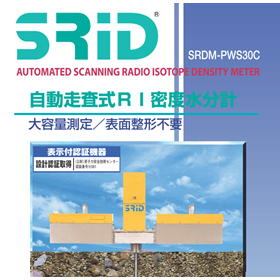
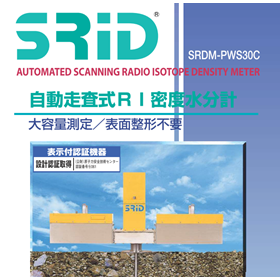
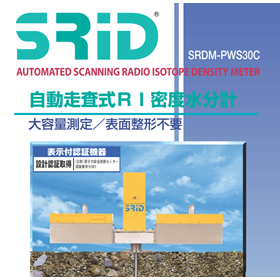
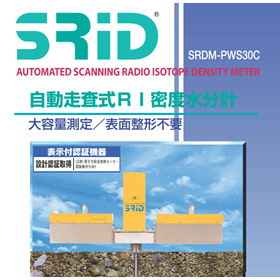
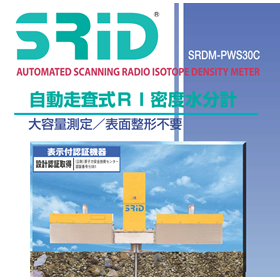
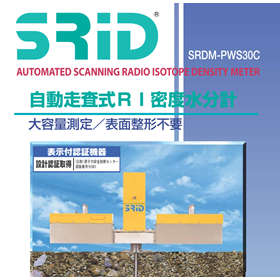
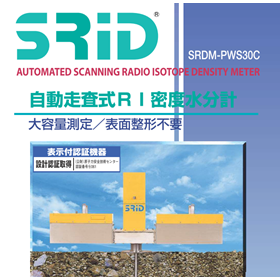
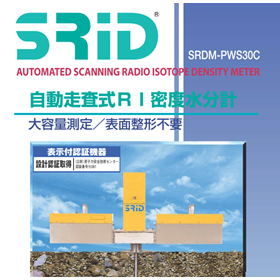
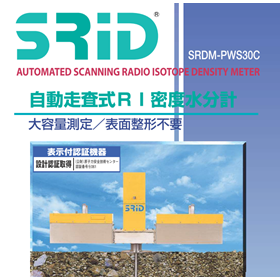
The automatic scanning RI density moisture meter "SRID" adopts a 360-degree scanning measurement method (1 rotation/min) around a source rod, achieving more than 10 times the measurement area compared to conventional methods (based on our company’s comparison). Furthermore, it features an automatic correction function for uneven surfaces using a non-contact distance sensor, eliminating the need for ground leveling work. 【Features】 ■ As it is a floating automatic scanning type (floating height of 5cm), it is unaffected by surface unevenness. ■ It measures by rotating within a circumference of 80cm, achieving more than 10 times the measurement area compared to our ANDES. ■ The measurement time is a total of 2 minutes, with 1 minute for BG measurement at one location and 1 minute for on-site RI measurement. ■ Standard measurement is unnecessary as it automatically corrects for source attenuation. *For more details, please download the PDF or contact us.
Added to bookmarks
Bookmarks listBookmark has been removed
Bookmarks listYou can't add any more bookmarks
By registering as a member, you can increase the number of bookmarks you can save and organize them with labels.
Free membership registration
When used in conjunction with RI instruments (such as our products ANDES and SRID), the simple drilling machine assists in the driving work, greatly contributing to labor reduction and time savings. Additionally, it can handle hard ground, making drilling easy for anyone.
Added to bookmarks
Bookmarks listBookmark has been removed
Bookmarks listYou can't add any more bookmarks
By registering as a member, you can increase the number of bookmarks you can save and organize them with labels.
Free membership registration
In research institutions, accurate data collection is essential for studies related to concrete quality control and mix design. In particular, fluctuations in the unit water content significantly affect the strength and durability of concrete, necessitating real-time measurement. COARA continuously measures the unit water content of fresh concrete and can obtain data on the total amount poured in real time. This enables researchers to conduct analyses based on more detailed data, contributing to the advancement of concrete technology. 【Application Scenarios】 - Research on concrete mix design - Data collection in material testing - Research on long-term durability 【Effects of Implementation】 - Enables research based on accurate data - Improves efficiency and accuracy of research - Contributes to paper presentations and technological development
Added to bookmarks
Bookmarks listBookmark has been removed
Bookmarks listYou can't add any more bookmarks
By registering as a member, you can increase the number of bookmarks you can save and organize them with labels.
Free membership registration
In the plant industry, optimizing the mix is essential for quality control of ready-mixed concrete. In particular, fluctuations in the unit water content significantly affect the strength and durability of concrete, making accurate measurement and appropriate management crucial. COARA supports the optimization of the mix by continuously measuring the unit water content in real-time when installed in the piping section of a ready-mixed concrete pump truck. 【Usage Scenarios】 - Quality control at ready-mixed concrete plants - Quality improvement through mix adjustments - Production of long-lasting durable concrete 【Benefits of Implementation】 - Strengthened quality control through real-time monitoring of unit water content - Reduction in material costs through optimization of the mix - Quality assurance through the use of traceability data
Added to bookmarks
Bookmarks listBookmark has been removed
Bookmarks listYou can't add any more bookmarks
By registering as a member, you can increase the number of bookmarks you can save and organize them with labels.
Free membership registration
In tunnel construction, the quality of concrete affects the durability of structures and can lead to delays in the construction schedule. In particular, the management of unit water content significantly impacts the strength of concrete and the risk of cracking. COARA enhances quality control by continuously measuring the unit water content of fresh concrete in real-time, enabling rapid response in the event of issues. 【Usage Scenarios】 - Concrete pouring for primary and secondary lining of tunnels - Quality control at ready-mix concrete plants - Data verification at site offices 【Benefits of Implementation】 - Stabilization of concrete quality - Assurance of traceability - Potential for shortened construction periods - Accumulation of maintenance management data
Added to bookmarks
Bookmarks listBookmark has been removed
Bookmarks listYou can't add any more bookmarks
By registering as a member, you can increase the number of bookmarks you can save and organize them with labels.
Free membership registration
Concrete structures in dam construction require long-term durability. To ensure long-term safety, it is crucial to manage the quality of concrete, particularly by accurately understanding the unit water content. Variations in unit water content can affect the strength and durability of concrete, potentially impacting the lifespan of the structure. COARA supports quality management by continuously measuring the unit water content of the total amount poured in real-time when installed in the piping section of a concrete pump truck. 【Usage Scenarios】 - During concrete pouring at dam construction sites - For dam structures requiring long-term monitoring - To enhance quality management and ensure traceability 【Benefits of Implementation】 - Real-time understanding of the unit water content of the total amount poured - Stabilization of concrete quality - Contribution to the long-term maintenance of structures - Ability to respond quickly based on data
Added to bookmarks
Bookmarks listBookmark has been removed
Bookmarks listYou can't add any more bookmarks
By registering as a member, you can increase the number of bookmarks you can save and organize them with labels.
Free membership registration
In bridge construction, the quality of concrete is a crucial factor that influences the safety and durability of structures. In particular, managing the unit water content is essential to prevent cracking and deterioration, ensuring the long-term integrity of the structure. COARA continuously measures the unit water content of fresh concrete in real-time by installing it in the piping section of concrete pump trucks, guaranteeing the quality of the total poured quantity. This strengthens quality management in bridge construction and contributes to improved safety. 【Usage Scenarios】 - Bridge construction sites - Public civil engineering projects - Projects where quality management is emphasized 【Benefits of Implementation】 - Stabilization of concrete quality - Improvement of structural durability - Assurance of traceability - Accumulation of maintenance management data
Added to bookmarks
Bookmarks listBookmark has been removed
Bookmarks listYou can't add any more bookmarks
By registering as a member, you can increase the number of bookmarks you can save and organize them with labels.
Free membership registration
In the infrastructure industry, the long-term durability of structures is extremely important. Particularly in public civil engineering structures, the quality of concrete greatly influences its lifespan. Managing the unit water content is essential to prevent cracking and deterioration, ensuring the durability of the structure. COARA can be installed in the piping section of concrete pump trucks to continuously measure the unit water content of fresh concrete in real-time. 【Usage Scenarios】 - Public civil engineering structures - 200-year homes - Infrastructure structures such as tunnels and bridges 【Benefits of Implementation】 - Real-time understanding of the unit water content for the total amount poured - Improved quality control of concrete - Assurance of long-term durability of structures - Utilization as traceability documentation
Added to bookmarks
Bookmarks listBookmark has been removed
Bookmarks listYou can't add any more bookmarks
By registering as a member, you can increase the number of bookmarks you can save and organize them with labels.
Free membership registration
In the construction industry, there is always a demand for shortening construction periods while ensuring quality. Particularly in concrete pouring, managing the unit water volume is crucial; if this is insufficient, it can lead to cracking and reduced strength, resulting in repairs and rework that may impact the construction schedule. COARA supports quality management by continuously measuring the unit water volume of ready-mixed concrete in real-time when installed in the piping section of concrete pump trucks. 【Usage Scenarios】 - High-rise building construction - Bridge construction - 200-year housing - Public civil engineering structures 【Benefits of Implementation】 - Thorough quality management through real-time data collection - Early detection of anomalies and prompt response - Improved maintenance management efficiency through ensured traceability
Added to bookmarks
Bookmarks listBookmark has been removed
Bookmarks listYou can't add any more bookmarks
By registering as a member, you can increase the number of bookmarks you can save and organize them with labels.
Free membership registration
In the civil engineering industry, ensuring the quality of concrete structures and reducing costs are important challenges. Particularly for public civil structures and those requiring long-term durability, it is essential to accurately manage the quality of concrete (water-to-cement ratio). An excess or deficiency in the water-to-cement ratio can lead to a decrease in concrete strength and cracking, which may result in repair costs and delays in construction schedules. COARA continuously measures the water-to-cement ratio of ready-mixed concrete in real-time by installing it in the piping section of concrete pump trucks, ensuring the quality of the total poured quantity. 【Usage Scenarios】 - Public civil engineering projects - 200-year housing - Tunnel construction - Dam construction 【Benefits of Implementation】 - Improvement in concrete quality - Optimization of material costs - Reduction in repair costs - Assurance of traceability
Added to bookmarks
Bookmarks listBookmark has been removed
Bookmarks listYou can't add any more bookmarks
By registering as a member, you can increase the number of bookmarks you can save and organize them with labels.
Free membership registration
In the concrete industry, accurate understanding of the unit water content, which affects the durability of concrete, is essential for quality control. This is particularly important for concrete that requires long-term durability, such as public civil engineering structures and 200-year homes, where managing the unit water content is crucial. COARA ensures the quality of the total poured quantity by continuously measuring the unit water content of ready-mixed concrete in real-time when installed in the piping section of a concrete pump truck. 【Usage Scenarios】 - Public civil engineering projects - 200-year homes - Quality control at ready-mixed concrete plants 【Benefits of Implementation】 - Understanding the unit water content of the total poured quantity - Rapid response to abnormal values - Use as traceability documentation
Added to bookmarks
Bookmarks listBookmark has been removed
Bookmarks listYou can't add any more bookmarks
By registering as a member, you can increase the number of bookmarks you can save and organize them with labels.
Free membership registration
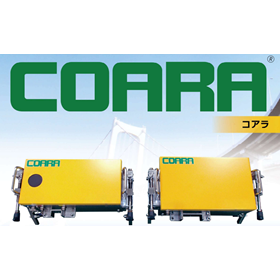
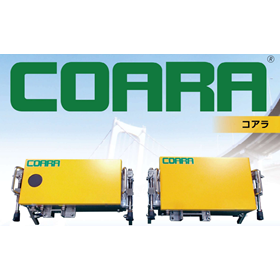
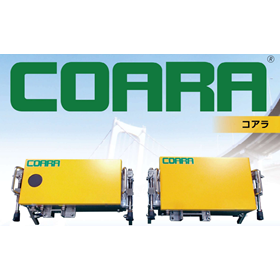
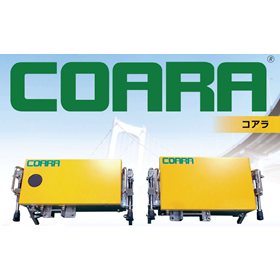
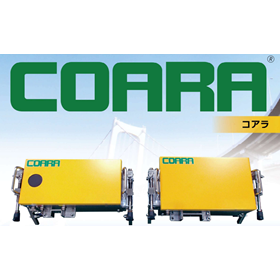
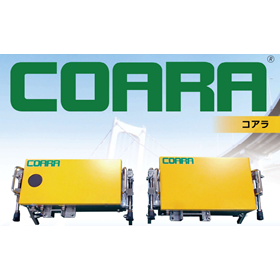
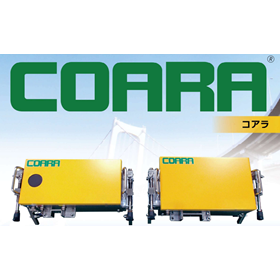
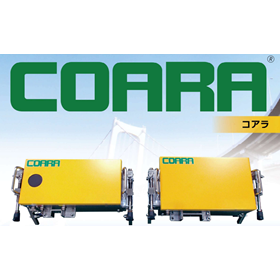
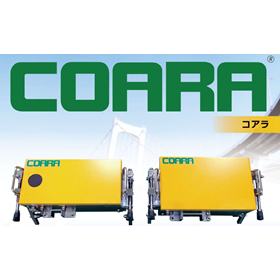
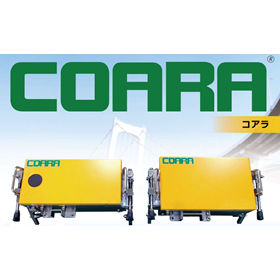
The continuous RI concrete moisture meter "COARA" can be installed in the piping section of a concrete pump truck to continuously measure the unit water volume of fresh concrete in real-time. 【Features】 ■ In concrete structures such as public civil engineering works and 200-year houses, where long-term durability is required, ensuring the quality (unit water volume) of the total poured quantity is extremely useful. ■ Measurement data can be transmitted via communication lines, allowing simultaneous verification at both the site office and the ready-mix concrete plant. This enables immediate action to be taken if any abnormal values are detected, ensuring the quality of the concrete. ■ The measured unit water volume data is stored as electronic data, which can be utilized as traceability documentation for the maintenance management of concrete structures in the future.
Added to bookmarks
Bookmarks listBookmark has been removed
Bookmarks listYou can't add any more bookmarks
By registering as a member, you can increase the number of bookmarks you can save and organize them with labels.
Free membership registration
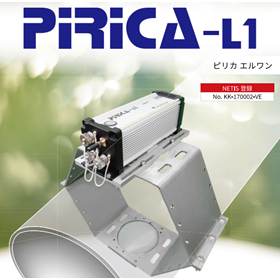
The piping RI density meter "PIRICA-L1" is a measurement device that utilizes radioactive isotopes (RI) to continuously measure the density of substances (liquids, slurries, etc.) flowing within pipes in a non-destructive and non-contact manner. The PIRICA-L1 is a model that enables measurements in large diameter pipes (10 to 16 inches) while maintaining the performance of the PIRICA-S1. 【Features】 ■ Compatible with pipe diameters of 10 to 16 inches (* For 1 to 8 inch pipes, please consider the PIRICA-S1.) ■ Uses sealed sources of cesium-137 or cobalt-60 as the radiation source * Notification procedures to the Nuclear Regulation Authority are required ■ Mechanical specifications are designed for field use, featuring waterproof and dustproof (IP65) construction ■ Capable of measurement without a 100V power supply using an internal rechargeable battery ■ Wireless remote measurement (up to 100m) enabled by Bluetooth Class 1 ■ Supports remote monitoring via internet connection (optional: SRENET) * For more details, please download the PDF or contact us.
Added to bookmarks
Bookmarks listBookmark has been removed
Bookmarks listYou can't add any more bookmarks
By registering as a member, you can increase the number of bookmarks you can save and organize them with labels.
Free membership registration