- Publication year : 2026
1~6 item / All 6 items
Displayed results

Added to bookmarks
Bookmarks listBookmark has been removed
Bookmarks listYou can't add any more bookmarks
By registering as a member, you can increase the number of bookmarks you can save and organize them with labels.
Free membership registration
Contact this company
Contact Us Online1~6 item / All 6 items
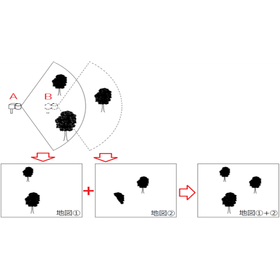
When obtaining point clouds using a SLAM scanner, it is essential to consider the technology and principles being used. I have summarized the key points of the observation work along with the basic principles. It is published on our company blog.
Added to bookmarks
Bookmarks listBookmark has been removed
Bookmarks listYou can't add any more bookmarks
By registering as a member, you can increase the number of bookmarks you can save and organize them with labels.
Free membership registration
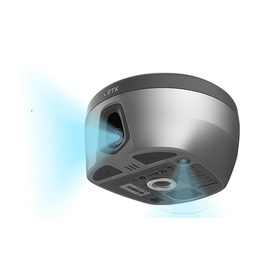
Hi-Target vRTK is a visual RTK/GNSS receiver equipped with dual cameras. By utilizing the cameras, it enables AR measurement and setup, image positioning, and 3D modeling, among other functions. We will explain the introduction of each feature and the evaluation and verification of point clouds created through 3D modeling on our company blog.
Added to bookmarks
Bookmarks listBookmark has been removed
Bookmarks listYou can't add any more bookmarks
By registering as a member, you can increase the number of bookmarks you can save and organize them with labels.
Free membership registration
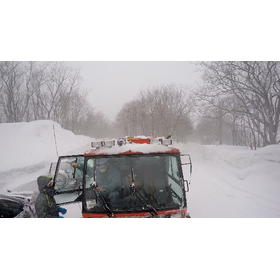
The National Route 103 in the Hakkoda Mountains of Aomori Prefecture is partially closed during the winter months. This section is opened every year on April 1 as the "Snow Corridor." With nearly 4 meters of snowfall, we first perform "pilot snow removal," which involves cutting down several tens of centimeters. Traditionally, we have identified the edges of the road and the boundary between the road surface and the shoulder by probing with a stick, assuming that the midpoint is the center of the road for snow removal. We are exploring whether this can be replaced with a method utilizing GNSS. The results of our verification are published on our company blog.
Added to bookmarks
Bookmarks listBookmark has been removed
Bookmarks listYou can't add any more bookmarks
By registering as a member, you can increase the number of bookmarks you can save and organize them with labels.
Free membership registration
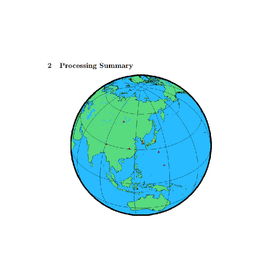
We received an inquiry about whether it is possible to establish a reference point in Africa and the Middle East. The condition is to conduct the survey with only one GNSS receiver, but there is no network RTK service available on-site. Can we obtain accurate coordinates using just one receiver with the Australian government's service "AUSPOS"? We have published the verification results on our company blog.
Added to bookmarks
Bookmarks listBookmark has been removed
Bookmarks listYou can't add any more bookmarks
By registering as a member, you can increase the number of bookmarks you can save and organize them with labels.
Free membership registration
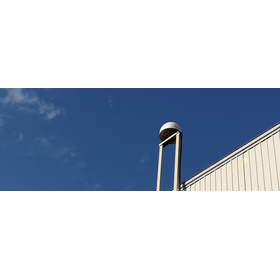
We installed a GNSS reference station at our company building and determined the coordinates of the reference station according to the "Manual for Reference Point Surveying Using Only Electronic Reference Points" (hereinafter referred to as the Manual). The configuration and surveying procedures of the reference station are explained on our company blog.
Added to bookmarks
Bookmarks listBookmark has been removed
Bookmarks listYou can't add any more bookmarks
By registering as a member, you can increase the number of bookmarks you can save and organize them with labels.
Free membership registration
We conducted an RTK accuracy verification of the GNSS reference station (Hi-Target Vnet6plus receiver + choke ring antenna) installed at our company building. Generally, with a single-frequency GNSS, once the baseline length exceeds 10 km, it becomes impossible to consider the path through the ionosphere as the same, and the difference in ionospheric delay becomes a significant source of error. By using dual-frequency GNSS, it is possible to correct the delay based on the differences in delay caused by the frequency of the radio waves; however, it is still said to be effective only up to about 10 km. Why is that? We have published the verification results on our blog.
Added to bookmarks
Bookmarks listBookmark has been removed
Bookmarks listYou can't add any more bookmarks
By registering as a member, you can increase the number of bookmarks you can save and organize them with labels.
Free membership registration