Photocatalytic coating Product List and Ranking from 50 Manufacturers, Suppliers and Companies | IPROS

Last Updated: Aggregation Period:Oct 21, 2026~Nov 17, 2026
This ranking is based on the number of page views on our site.

Photocatalytic coating Manufacturer, Suppliers and Company Rankings

Last Updated: Aggregation Period:Oct 21, 2026~Nov 17, 2026
This ranking is based on the number of page views on our site.

  1. チタンネクストジャパン Tokyo//Other construction industries
  2. 能登 Ishikawa//Building materials, supplies and fixtures manufacturers
  3. ミズケイ Okayama//others
  4. 4 岩瀬生コン Ibaraki//Building materials, supplies and fixtures manufacturers
  5. 5 日本ジェット・オン 本社 Tokyo//Building materials, supplies and fixtures manufacturers

Photocatalytic coating Product ranking

Last Updated: Aggregation Period:Oct 21, 2026~Nov 17, 2026
This ranking is based on the number of page views on our site.

  1. Guidance Light "S Series" 能登
  2. This is a case study of photocatalytic treatment for stain prevention and odor removal in smoking rooms of resort hotels. チタンネクストジャパン
  3. This is a case study of photocatalytic treatment (anti-soiling) for a camper van body. チタンネクストジャパン
  4. Traffic cone 岩瀬生コン
  5. 4 This is an example of photocatalyst application in a private car (for deodorization and antibacterial measures). チタンネクストジャパン

Photocatalytic coating Product List

61~90 item / All 139 items

Displayed results

Catalog: Solvent Recycler

A lineup of products that contribute to "cost reduction" and "environmental conservation"!

This catalog features the "Solvent Recycler" handled by Yupon Co., Ltd. We introduce products such as the "IST 10C1-15C2," which has a superheating and high-temperature regeneration solvent discharge control function, the "IST 15-22-42-62 N DIGIT/ATEX II 3G," which allows for time setting and automatic setting options, and the "ROTO PLUS/ECO PLUS," which can achieve complete automation. 【Featured Products】 ■IST 10C1-15C2 ■IST 15-22-42-62 N DIGIT/ATEX II 3G ■IST 22-42-62 ATEX II 2G ■ROTO PLUS/ECO PLUS ■Option: FV40-70S Vacuum Generator *For more details, please download the PDF or feel free to contact us.

  • Waste treatment facility
  • Photocatalytic coating

Added to bookmarks

Bookmarks list

Bookmark has been removed

Bookmarks list

You can't add any more bookmarks

By registering as a member, you can increase the number of bookmarks you can save and organize them with labels.

Free membership registration

Building Management Services

Providing one-stop services for highly specialized requests!

Our company provides comprehensive "Building Management" services that are essential for building management, including maintenance, cleaning, environmental hygiene, and security for commercial facilities, sports facilities, hotels and leisure facilities, and office buildings. We possess the know-how to accommodate a wide variety of facilities and are also focused on hospitality for our customers, receiving high praise from our clients. 【Services】 ■ Facility management and maintenance ■ Facility security ■ Daily cleaning and periodic cleaning ■ Environmental hygiene and recycling *For more details, please download the PDF or feel free to contact us.

  • cleaning
  • Security guards and entrance/exit management
  • Other Management Services
  • Photocatalytic coating

Added to bookmarks

Bookmarks list

Bookmark has been removed

Bookmarks list

You can't add any more bookmarks

By registering as a member, you can increase the number of bookmarks you can save and organize them with labels.

Free membership registration

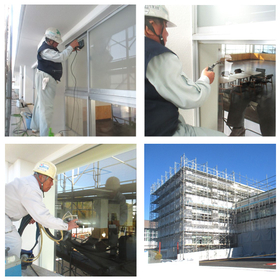
Photocatalytic coating service

It is a technology that demonstrates the effects of air purification and prevents dirt on coated surfaces!

We offer a "Photocatalytic Coating Service" that allows for the application of a colorless and transparent photocatalytic coating without changing the current interior or decor of your residence. The main feature is its ability to provide antibacterial and antiviral measures, making it highly recommended for facilities with a large number of people, such as hospitals, public facilities, and apartments. Please feel free to contact us if you have any inquiries. 【Features】 ■ Guaranteed spraying application by a nationally certified first-class painting technician ■ Use of materials with high safety and reliability certified by the Photocatalytic Industrial Association ■ Issuance of a completion certificate, which can be expected to improve the image *For more details, please download the PDF or contact us.

  • paint
  • Other construction services
  • Other Management Services
  • Photocatalytic coating

Added to bookmarks

Bookmarks list

Bookmark has been removed

Bookmarks list

You can't add any more bookmarks

By registering as a member, you can increase the number of bookmarks you can save and organize them with labels.

Free membership registration

Reception and hospitality services

We provide peace of mind, trust, and a spirit of hospitality.

We offer comprehensive proposals and services for reception operations that instill trust, based on our many years of experience and achievements honed not only at ANA but also in a wide range of industries, including financial institutions. Our services include enhanced service quality through thorough training, reliable backup support systems, security measures, and hygiene management. Please feel free to contact us if you have any requests. 【Services Offered】 ■ Lounge Services ■ Reception Services *For more details, please download the PDF or feel free to contact us.

  • Security guards and entrance/exit management
  • Photocatalytic coating

Added to bookmarks

Bookmarks list

Bookmark has been removed

Bookmarks list

You can't add any more bookmarks

By registering as a member, you can increase the number of bookmarks you can save and organize them with labels.

Free membership registration

Introduction to Aquarium Interior Design

Please feel free to consult us about anything related to aquariums. We will meet your needs!

Our company provides "comfortable spaces" and "services" through aquariums. We install them in various locations such as apartments, offices, restaurants, medical facilities, nursing homes, and beauty salons. Maintenance, including cleaning and equipment management, is handled responsibly by our professional staff. We listen to our customers' requests and budgets to make proposals, so please feel free to consult us when needed. 【Main Services】 ■ Development and sales of aquarium-related products ■ Installation, construction, and production of aquarium tank equipment (small to large and special) ■ Aquarium rental (short-term and long-term) and maintenance ■ Support for various events (such as goldfish scooping) *For more details, please refer to the PDF document or feel free to contact us.

  • Other commercial buildings and service facilities
  • Spatial Design
  • Photocatalytic coating

Added to bookmarks

Bookmarks list

Bookmark has been removed

Bookmarks list

You can't add any more bookmarks

By registering as a member, you can increase the number of bookmarks you can save and organize them with labels.

Free membership registration

Building Management Services

We provide building management that enhances the asset value of buildings.

Our company provides building management services. We carry out detailed management in areas such as building maintenance management, facility management, cleaning management, water supply and sanitation management, and security management. By understanding the current state of the building and implementing accurate maintenance plans against aging deterioration, we continue to maintain the asset value of the building. Please feel free to contact us if you have any requests. 【Services Offered】 ■BM Services  ・Building Maintenance Management  ・Facility Management  ・Cleaning Management  ・Water Supply and Sanitation Management  ・Security Management ■CM Services  ・Construction Management *For more details, please download the PDF or feel free to contact us.

  • maintenance
  • cleaning
  • Other Management Services
  • Photocatalytic coating

Added to bookmarks

Bookmarks list

Bookmark has been removed

Bookmarks list

You can't add any more bookmarks

By registering as a member, you can increase the number of bookmarks you can save and organize them with labels.

Free membership registration

Signal Grip

It is suitable for places where durability and visibility are required, such as stairs and ramps.

We offer a construction method called "Signal Grip," which allows for coloring and clearly recognizing differences in height, while also enabling highly designed processing. A special resin is applied in a line pattern to the nosing of stairs and slopes, providing a slip-resistant effect during walking. The color difference (contrast) between the substrate (tiles, stone, etc.) and the line color allows for clear identification of height differences and slopes, raising awareness. 【Features】 ■ Rich color variations ■ Capable of accommodating designs that were difficult with traditional slip-resistant methods *For more details, please download the PDF or feel free to contact us.

  • Special Construction Method
  • Safety and consumables
  • Photocatalytic coating

Added to bookmarks

Bookmarks list

Bookmark has been removed

Bookmarks list

You can't add any more bookmarks

By registering as a member, you can increase the number of bookmarks you can save and organize them with labels.

Free membership registration

Photocatalytic coating application

Would you like to "reduce the cleaning costs" of solar panels and "maintain power generation efficiency"?

"Photocatalytic coating application" decomposes and removes the causes that reduce power generation efficiency. The effect lasts for 5 to 10 years. It is non-toxic, prevents static electricity, and does not cause plant wilting. It decomposes dirt with ultraviolet light, and the oxidized dirt flows away when it comes into contact with rainwater or spray. 【Features】 ■ Reduces cleaning costs ■ Maintains power generation efficiency ■ Decomposes dirt with ultraviolet light ■ Removes dirt with hydrophilic effect ■ Effect lasts for 5 to 10 years *For more details, please refer to the PDF document or feel free to contact us.

  • Photocatalysts and various wall materials (exterior and interior walls, etc.)
  • Photocatalytic coating

Added to bookmarks

Bookmarks list

Bookmark has been removed

Bookmarks list

You can't add any more bookmarks

By registering as a member, you can increase the number of bookmarks you can save and organize them with labels.

Free membership registration

Photocatalytic Coating "TiO-Barrier"

The way we think about viruses and bacteria changes with "photocatalysts."

"TiO-Barrier" is a photocatalytic coating that exhibits long-term deodorizing, antibacterial, and anti-fouling effects. As long as there is light, it can continue to act for an extended period. Made from very small particles of titanium dioxide, it demonstrates an extremely powerful photocatalytic effect due to its special properties. Additionally, it becomes difficult for substances like tobacco stains, water stains, fingerprints, and dust to adhere, making it suitable for self-cleaning effects and energy-saving measures. [Features] - Decomposes odor-causing substances - Breaks down bacteria and suppresses their occurrence and proliferation - Resistant to dirt and easy to clean even when soiled *For more details, please download the PDF or feel free to contact us.

  • Photocatalysts and various wall materials (exterior and interior walls, etc.)
  • Photocatalytic coating

Added to bookmarks

Bookmarks list

Bookmark has been removed

Bookmarks list

You can't add any more bookmarks

By registering as a member, you can increase the number of bookmarks you can save and organize them with labels.

Free membership registration

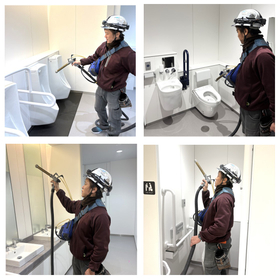
This is a case study of photocatalytic treatment for deodorization and antibacterial measures in public facility restrooms.

The photocatalytic oxidation power suppresses and reduces the substances causing unpleasant odors in the toilet, creating a clean environment.

By coating a titanium dioxide aqueous solution, which serves as the raw material for photocatalysts, on the ceilings and walls of buildings, it exhibits effects such as dirt resistance, deodorization, antibacterial properties, antiviral properties, and mold prevention. When light hits the surface of the indoor photocatalyst, reactive oxygen species are generated, which decompose organic substances that cause dirt and odors into harmless water and carbon dioxide. Additionally, the surface of the outdoor photocatalyst, when exposed to rain, utilizes a hydrophilic effect that allows water to spread thinly beneath the dirt, contributing to self-cleaning as the dirt flows away with the water, thus maintaining the aesthetic of the building and reducing cleaning costs. Since the raw material for the photocatalyst, titanium dioxide, is inorganic, it does not degrade due to ultraviolet rays or other factors, and its effects continue for a long time.

  • Photocatalysts and various wall materials (exterior and interior walls, etc.)
  • Photocatalytic coating

Added to bookmarks

Bookmarks list

Bookmark has been removed

Bookmarks list

You can't add any more bookmarks

By registering as a member, you can increase the number of bookmarks you can save and organize them with labels.

Free membership registration

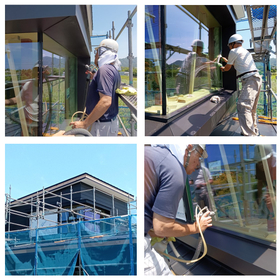
This is a case study of photocatalytic treatment for dirt prevention on glass in detached houses.

The hydrophilic effect of photocatalysts makes it easier for rain to wash away dirt from the glass of detached houses, creating a clean environment.

By coating the titanium dioxide aqueous solution, which is the raw material for photocatalysts, on the ceilings and walls of buildings, it exhibits effects such as dirt resistance, deodorization, antibacterial properties, antiviral properties, and mold prevention. The surface of the outdoor photocatalyst, when exposed to rain, utilizes hydrophilic effects that cause water to spread thinly beneath the dirt, contributing to self-cleaning as the surface dirt flows away, thus maintaining the aesthetic of the building and reducing cleaning costs. When light hits the surface of the indoor photocatalyst, reactive oxygen species are generated, which decompose organic substances that cause dirt and odors into water and carbon dioxide, rendering them harmless. Since the raw material of the photocatalyst, titanium dioxide, is inorganic, it does not degrade due to ultraviolet rays or other factors, and its effectiveness continues for a long time.

  • Photocatalysts and various wall materials (exterior and interior walls, etc.)
  • Photocatalytic coating

Added to bookmarks

Bookmarks list

Bookmark has been removed

Bookmarks list

You can't add any more bookmarks

By registering as a member, you can increase the number of bookmarks you can save and organize them with labels.

Free membership registration

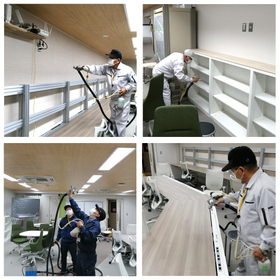
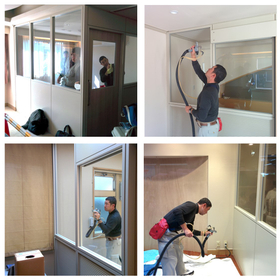
This is a case study of photocatalytic antibacterial and antiviral treatment in the office of a beverage factory.

Using the oxidative decomposition power of photocatalysts, we suppress and reduce the causes of bacteria and viruses in the office, creating a clean environment.

By coating the ceilings and walls of buildings with a titanium dioxide aqueous solution, which is the raw material for photocatalysts, it exhibits effects such as anti-soiling, deodorization, antibacterial properties, antiviral properties, and mold prevention. When light hits the surface of the indoor photocatalyst application, reactive oxygen species are generated on the surface, breaking down organic substances that cause dirt and odors into harmless water and carbon dioxide. Additionally, the surface of the outdoor photocatalyst application has a hydrophilic effect, where rainwater spreads thinly beneath the dirt, contributing to self-cleaning as it washes away the surface dirt, thus maintaining the building's aesthetic and reducing cleaning costs. Since the raw material for the photocatalyst, titanium dioxide, is inorganic, it does not degrade due to ultraviolet rays or other factors, and its effectiveness lasts for a long time.

  • Photocatalysts and various wall materials (exterior and interior walls, etc.)
  • Photocatalytic coating

Added to bookmarks

Bookmarks list

Bookmark has been removed

Bookmarks list

You can't add any more bookmarks

By registering as a member, you can increase the number of bookmarks you can save and organize them with labels.

Free membership registration

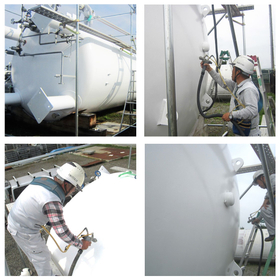
This is a case study of photocatalytic application for anti-fouling measures on industrial gas tanks.

The decomposition of organic dirt using photocatalysts and self-cleaning creates a clean environment by breaking down substances that cause dirt, odors, bacteria, and mold both inside and outside buildings.

By applying a titanium dioxide aqueous solution, which is the raw material for photocatalysts, to the ceilings and walls of buildings, it exhibits effects such as dirt resistance, deodorization, antibacterial properties, antiviral properties, and mold prevention. When light hits the surface of the indoor photocatalyst application, reactive oxygen species are generated on the surface, decomposing organic substances that cause dirt and odors into harmless water and carbon dioxide. Additionally, the surface of the outdoor photocatalyst application has a hydrophilic effect that causes water to spread thinly beneath the dirt when it rains, contributing to self-cleaning as the dirt flows away with the water, thus maintaining the aesthetic of the building and reducing cleaning costs. Since the raw material for the photocatalyst, titanium dioxide, is inorganic, it does not degrade due to ultraviolet rays or other factors, and its effectiveness continues for a long time.

  • Photocatalysts and various wall materials (exterior and interior walls, etc.)
  • Photocatalytic coating

Added to bookmarks

Bookmarks list

Bookmark has been removed

Bookmarks list

You can't add any more bookmarks

By registering as a member, you can increase the number of bookmarks you can save and organize them with labels.

Free membership registration

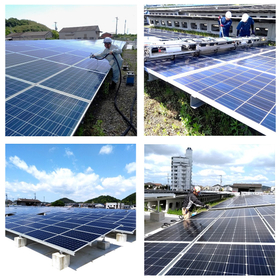
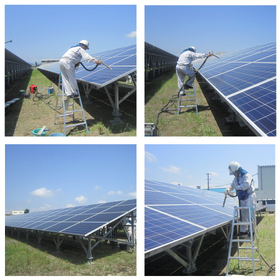
This is a case study of photocatalytic treatment for anti-dirt measures on solar panels.

The hydrophilic effect of photocatalysts (self-cleaning effect) makes it easier for rain to wash away dirt from building exteriors and glass, creating a clean environment.

By applying a titanium dioxide aqueous solution, which serves as the raw material for photocatalysts, to the ceilings and walls of buildings, it exhibits effects such as anti-soiling, deodorization, antibacterial properties, antiviral properties, and mold prevention. When light hits the surface of the indoor photocatalyst, reactive oxygen species are generated, which decompose organic substances that cause dirt and odors into harmless water and carbon dioxide. Additionally, the surface of the outdoor photocatalyst, when exposed to rain, utilizes a hydrophilic effect that allows water to spread thinly beneath the dirt, contributing to self-cleaning as the dirt flows away with the water, thereby maintaining the aesthetic of the building and reducing cleaning costs. Since the raw material for the photocatalyst, titanium dioxide, is inorganic, it does not degrade due to ultraviolet rays or other factors, and its effects continue for a long time.

  • Photocatalysts and various wall materials (exterior and interior walls, etc.)
  • Photocatalytic coating

Added to bookmarks

Bookmarks list

Bookmark has been removed

Bookmarks list

You can't add any more bookmarks

By registering as a member, you can increase the number of bookmarks you can save and organize them with labels.

Free membership registration

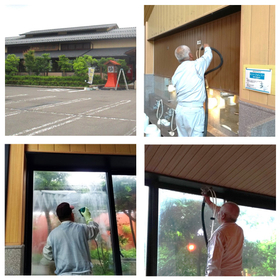
This is an example of photocatalytic treatment for anti-contamination and anti-mold measures in bathing facility premises.

The decomposition of organic contaminants using photocatalysts and self-cleaning creates a clean environment by breaking down substances that cause dirt, odors, bacteria, and mold both inside and outside buildings.

By applying a titanium dioxide aqueous solution, which is the raw material for photocatalysts, to the ceilings and walls of buildings, it exhibits effects such as dirt resistance, deodorization, antibacterial properties, antiviral properties, and mold prevention. When light hits the surface of the indoor photocatalyst, reactive oxygen species are generated, which decompose organic substances that cause dirt and odors into harmless water and carbon dioxide. Additionally, the surface of the outdoor photocatalyst, when exposed to rain, utilizes a hydrophilic effect that spreads water thinly beneath the dirt, allowing for self-cleaning as the dirt flows away with the water, contributing to the maintenance of the building's aesthetics and reducing cleaning costs. Since the raw material for the photocatalyst, titanium dioxide, is inorganic, it does not degrade due to ultraviolet rays or other factors, and its effectiveness continues for a long time.

  • Photocatalysts and various wall materials (exterior and interior walls, etc.)
  • Photocatalytic coating

Added to bookmarks

Bookmarks list

Bookmark has been removed

Bookmarks list

You can't add any more bookmarks

By registering as a member, you can increase the number of bookmarks you can save and organize them with labels.

Free membership registration

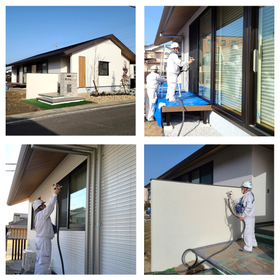
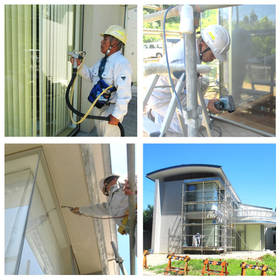
This is a case study of photocatalytic treatment for anti-dirt measures on the exterior walls and glass of detached houses.

The decomposition of organic contaminants using photocatalysts and self-cleaning creates a clean environment by breaking down substances that cause dirt, odors, bacteria, and mold both inside and outside buildings.

By applying a titanium dioxide aqueous solution, which is the raw material for photocatalysts, to the ceilings and walls of buildings, it exhibits effects such as dirt resistance, deodorization, antibacterial properties, antiviral properties, and mold prevention. When light hits the surface of the indoor photocatalyst, reactive oxygen species are generated, which decompose organic substances that cause dirt and odors into harmless water and carbon dioxide. Additionally, the surface of the outdoor photocatalyst, when exposed to rain, utilizes a hydrophilic effect that spreads water thinly beneath the dirt, allowing for self-cleaning as the surface dirt flows away, contributing to the maintenance of the building's aesthetics and reducing cleaning costs. Since the raw material for the photocatalyst, titanium dioxide, is inorganic, it does not degrade due to ultraviolet rays or other factors, and its effectiveness continues for a long time.

  • Photocatalysts and various wall materials (exterior and interior walls, etc.)
  • Photocatalytic coating

Added to bookmarks

Bookmarks list

Bookmark has been removed

Bookmarks list

You can't add any more bookmarks

By registering as a member, you can increase the number of bookmarks you can save and organize them with labels.

Free membership registration

This is a case study of photocatalytic treatment for anti-fouling measures on solar panel glass.

The hydrophilic effect of photocatalysts (self-cleaning effect) makes it easier for rain to wash away dirt from building exteriors and glass, creating a clean environment.

By applying a titanium dioxide aqueous solution, which is the raw material for photocatalysts, to the ceilings and walls of buildings, it exhibits effects such as dirt resistance, deodorization, antibacterial properties, antiviral properties, and mold prevention. When light hits the surface of the indoor photocatalyst application, reactive oxygen species are generated on the surface, decomposing organic substances that cause dirt and odors into harmless water and carbon dioxide. The surface of the outdoor photocatalyst application utilizes a hydrophilic effect, where rainwater spreads thinly beneath the dirt, contributing to self-cleaning as the surface dirt flows away, thereby maintaining the aesthetic of the building and reducing cleaning costs. Since the raw material for the photocatalyst, titanium dioxide, is inorganic, it does not degrade due to ultraviolet rays or other factors, and its effectiveness continues for a long time.

  • Photocatalysts and various wall materials (exterior and interior walls, etc.)
  • Photocatalytic coating

Added to bookmarks

Bookmarks list

Bookmark has been removed

Bookmarks list

You can't add any more bookmarks

By registering as a member, you can increase the number of bookmarks you can save and organize them with labels.

Free membership registration

This is an example of photocatalytic treatment for anti-fouling measures on museum glass.

The hydrophilic effect of photocatalysts (self-cleaning effect) makes it easier for rain to wash away dirt from building exteriors and glass, creating a clean environment.

By coating the titanium dioxide aqueous solution, which is the raw material for photocatalysts, on the ceilings and walls of buildings, it exhibits effects such as anti-soiling, deodorization, antibacterial, antiviral, and mold prevention. When light hits the surface of the indoor photocatalyst, reactive oxygen species are generated on the surface, breaking down organic substances that cause dirt and odors into harmless water and carbon dioxide. The surface of the outdoor photocatalyst, when exposed to rain, utilizes a hydrophilic effect that allows water to spread thinly beneath the dirt, contributing to self-cleaning as the dirt flows away with the water, thus maintaining the aesthetic of the building and reducing cleaning costs. Since the raw material for the photocatalyst, titanium dioxide, is inorganic, it does not degrade due to ultraviolet rays or other factors, and its effects continue for a long time.

  • Photocatalysts and various wall materials (exterior and interior walls, etc.)
  • Photocatalytic coating

Added to bookmarks

Bookmarks list

Bookmark has been removed

Bookmarks list

You can't add any more bookmarks

By registering as a member, you can increase the number of bookmarks you can save and organize them with labels.

Free membership registration

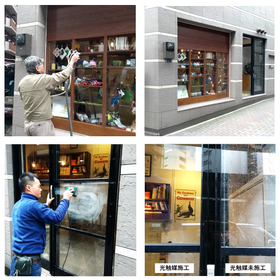
This is a case study of photocatalytic application for anti-dirt measures on store windows.

The hydrophilic effect of photocatalysts (self-cleaning) makes it easier for rain to wash away dirt from glass, creating a clean environment.

By applying a titanium dioxide aqueous solution, which serves as the raw material for photocatalysts, to the ceilings and walls of buildings, it exhibits effects such as dirt resistance, deodorization, antibacterial properties, antiviral properties, and mold prevention. When light hits the surface of the indoor photocatalyst application, reactive oxygen species are generated on the surface, breaking down organic substances that cause dirt and odors into harmless water and carbon dioxide. The surface of the outdoor photocatalyst application utilizes a hydrophilic effect, where rainwater spreads thinly beneath the dirt, contributing to self-cleaning as it washes away the surface dirt, thereby maintaining the aesthetic of the building and reducing cleaning costs. Since the raw material for the photocatalyst, titanium dioxide, is inorganic, it does not degrade due to ultraviolet rays or other factors, and its effects continue for a long time.

  • Photocatalysts and various wall materials (exterior and interior walls, etc.)
  • Photocatalytic coating

Added to bookmarks

Bookmarks list

Bookmark has been removed

Bookmarks list

You can't add any more bookmarks

By registering as a member, you can increase the number of bookmarks you can save and organize them with labels.

Free membership registration

This is an example of photocatalytic treatment in a smoking room of a lodging facility (anti-soiling and deodorization measures).

The photocatalytic oxidation decomposition power (decomposition of dirt) breaks down and suppresses/reduces the harmful substances such as tar stains from smoking, creating a clean environment.

■Raw Material Titanium Dioxide By coating a titanium dioxide aqueous solution, which is the raw material for photocatalysts, on the ceilings and walls of buildings, it exhibits effects such as anti-soiling, deodorization, antibacterial properties, antiviral properties, and mold prevention. ■Indoor Photocatalyst When light hits the surface of the indoor photocatalyst, reactive oxygen species are generated on the surface, decomposing organic substances that cause dirt and odors into water and carbon dioxide, rendering them harmless. ■Outdoor Photocatalyst When rain hits the surface of the outdoor photocatalyst, a hydrophilic effect causes water to spread thinly beneath the dirt, contributing to self-cleaning as the dirt flows away with the water, thus maintaining the aesthetic of the building and reducing cleaning costs. ■Duration of Photocatalyst Effect Since titanium dioxide, the raw material for photocatalysts, is inorganic, it does not degrade due to ultraviolet light or other factors, and the effect continues for a long time as long as the coating substrate's paint surface or wallpaper does not peel off.

  • Photocatalysts and various wall materials (exterior and interior walls, etc.)
  • Photocatalytic coating

Added to bookmarks

Bookmarks list

Bookmark has been removed

Bookmarks list

You can't add any more bookmarks

By registering as a member, you can increase the number of bookmarks you can save and organize them with labels.

Free membership registration

This is a case study of photocatalytic coating (anti-soiling) for glass in detached houses.

The hydrophilic effect of photocatalysts (self-cleaning effect) allows rain to wash away dirt from the glass of detached houses, keeping it clean and reducing the effort required for cleaning.

■Titanium Dioxide Raw Material By coating a titanium dioxide aqueous solution, which serves as the raw material for photocatalysts, on the ceilings and walls of buildings, it exhibits effects such as dirt resistance, deodorization, antibacterial properties, antiviral properties, and mold prevention. ■Indoor Photocatalyst When light hits the surface of the indoor photocatalyst, reactive oxygen species are generated on the surface, which decompose organic substances that cause dirt and odors into water and carbon dioxide, rendering them harmless. ■Outdoor Photocatalyst When rain hits the surface of the outdoor photocatalyst, a hydrophilic effect causes water to spread thinly under the dirt, contributing to self-cleaning as the dirt flows away with the water, thus maintaining the aesthetic of the building and reducing cleaning costs. ■Duration of Photocatalytic Effect Since titanium dioxide, the raw material for photocatalysts, is inorganic, it does not degrade due to ultraviolet rays or other factors, and the effect continues for a long time as long as the coating substrate's paint surface or wallpaper does not peel off.

  • Photocatalysts and various wall materials (exterior and interior walls, etc.)
  • Photocatalytic coating

Added to bookmarks

Bookmarks list

Bookmark has been removed

Bookmarks list

You can't add any more bookmarks

By registering as a member, you can increase the number of bookmarks you can save and organize them with labels.

Free membership registration

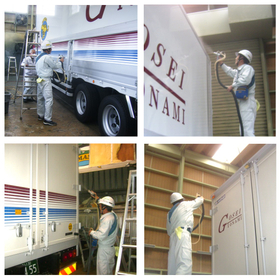
This is an example of photocatalytic application on truck bodies (anti-soiling measures).

We will create a system that decomposes organic dirt on truck bodies through photocatalytic degradation and self-cleaning, making them clean while also reducing cleaning costs.

■Titanium Dioxide Raw Material By coating a titanium dioxide aqueous solution, which serves as the raw material for photocatalysts, on the ceilings and walls of buildings, it exhibits effects such as anti-soiling, deodorization, antibacterial, antiviral, and mold prevention. ■Indoor Photocatalyst When light hits the surface of the indoor photocatalyst, reactive oxygen species are generated on the surface, decomposing organic substances that cause dirt and odors into harmless water and carbon dioxide. ■Outdoor Photocatalyst When rain hits the surface of the outdoor photocatalyst, a hydrophilic effect causes water to spread thinly beneath the dirt, contributing to self-cleaning as the dirt flows away with the water, thus maintaining the aesthetic of the building and reducing cleaning costs. ■Duration of Photocatalytic Effect Since titanium dioxide, the raw material for photocatalysts, is inorganic, it does not degrade due to ultraviolet light or other factors, and the effect continues for a long time as long as the coating substrate's paint surface or wallpaper does not peel off. *For more details, please refer to the PDF document or contact us.*

  • Photocatalysts and various wall materials (exterior and interior walls, etc.)
  • Photocatalytic coating

Added to bookmarks

Bookmarks list

Bookmark has been removed

Bookmarks list

You can't add any more bookmarks

By registering as a member, you can increase the number of bookmarks you can save and organize them with labels.

Free membership registration

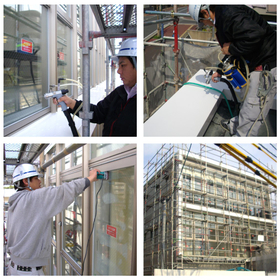
This is a case study of photocatalytic coating on office building glass (anti-soiling measures).

The hydrophilic effect of photocatalysts (self-cleaning effect) makes it easier for rain to wash away dirt from office building glass, creating a clean environment.

■Titanium Dioxide Raw Material By coating a titanium dioxide aqueous solution, which serves as the raw material for photocatalysts, on the ceilings and walls of buildings, it exhibits effects such as dirt resistance, deodorization, antibacterial properties, antiviral properties, and mold prevention. ■Indoor Photocatalyst When light hits the surface of the indoor photocatalyst, reactive oxygen species are generated on the surface, breaking down organic substances that cause dirt and odors into harmless water and carbon dioxide. ■Outdoor Photocatalyst When rain hits the surface of the outdoor photocatalyst, a hydrophilic effect causes water to spread thinly beneath the dirt, contributing to self-cleaning as it flows away with the surface dirt, thereby maintaining the aesthetic of the building and reducing cleaning costs. ■Duration of Photocatalytic Effect Since titanium dioxide, the raw material for photocatalysts, is inorganic, it does not degrade due to ultraviolet rays or other factors, and the effect continues for a long time as long as the coating substrate's paint surface or wallpaper does not peel off. *For more details, please refer to the PDF document or contact us.*

  • Photocatalysts and various wall materials (exterior and interior walls, etc.)
  • Photocatalytic coating

Added to bookmarks

Bookmarks list

Bookmark has been removed

Bookmarks list

You can't add any more bookmarks

By registering as a member, you can increase the number of bookmarks you can save and organize them with labels.

Free membership registration

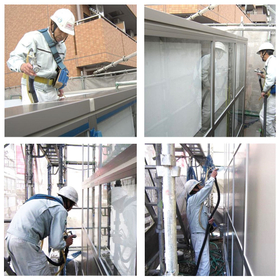
This is an example of photocatalytic treatment on the exterior walls and glass of a facility (anti-soiling measures).

The decomposition of organic contaminants using photocatalysts and self-cleaning creates a clean environment by breaking down the substances that cause dirt on building exteriors and glass.

■Titanium Dioxide Raw Material By coating a titanium dioxide aqueous solution, which serves as the raw material for photocatalysts, on the ceilings and walls of buildings, it exhibits effects such as dirt resistance, deodorization, antibacterial properties, antiviral properties, and mold prevention. ■Indoor Photocatalyst When light hits the surface of the indoor photocatalyst, reactive oxygen species are generated on the surface, which decompose organic substances that cause dirt and odors into harmless water and carbon dioxide. ■Outdoor Photocatalyst When rain hits the surface of the outdoor photocatalyst, a hydrophilic effect causes water to spread thinly beneath the dirt, contributing to self-cleaning as the dirt flows away with the water, thus maintaining the aesthetic of the building and reducing cleaning costs. ■Duration of Photocatalytic Effect Since the titanium dioxide raw material for photocatalysts is inorganic, it does not degrade due to ultraviolet light or other factors, and the effect continues for a long time as long as the coating substrate's paint surface or wallpaper does not peel off. *For more details, please refer to the PDF document or contact us.*

  • Photocatalysts and various wall materials (exterior and interior walls, etc.)
  • Photocatalytic coating

Added to bookmarks

Bookmarks list

Bookmark has been removed

Bookmarks list

You can't add any more bookmarks

By registering as a member, you can increase the number of bookmarks you can save and organize them with labels.

Free membership registration

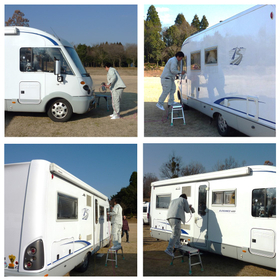
This is a case study of photocatalytic treatment (anti-soiling) for a camper van body.

We decompose organic dirt using photocatalysts and self-cleaning technology to break down substances that cause dirt on camper vans, making it difficult to wash them, and create a clean environment.

■Titanium Dioxide Raw Material By coating a titanium dioxide aqueous solution, which serves as the raw material for photocatalysts, on the ceilings and walls of buildings, it exhibits effects such as dirt resistance, deodorization, antibacterial properties, antiviral properties, and mold prevention. ■Indoor Photocatalyst When light hits the surface of the indoor photocatalyst, reactive oxygen species are generated on the surface, breaking down organic substances that cause dirt and odors into harmless water and carbon dioxide. ■Outdoor Photocatalyst When rain hits the surface of the outdoor photocatalyst, a hydrophilic effect causes water to spread thinly beneath the dirt, contributing to self-cleaning as the dirt flows away with the water, thereby maintaining the aesthetic of the building and reducing cleaning costs. ■Duration of Photocatalytic Effect Since titanium dioxide, the raw material for photocatalysts, is inorganic, it does not degrade due to ultraviolet rays or other factors, and the effect continues for a long time as long as the coating substrate's paint surface or wallpaper does not peel off. *For more details, please refer to the PDF document or contact us.*

  • Photocatalysts and various wall materials (exterior and interior walls, etc.)
  • Photocatalytic coating

Added to bookmarks

Bookmarks list

Bookmark has been removed

Bookmarks list

You can't add any more bookmarks

By registering as a member, you can increase the number of bookmarks you can save and organize them with labels.

Free membership registration

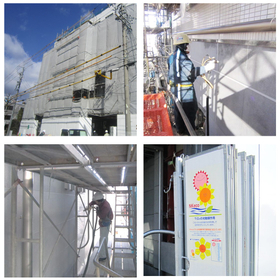
This is a case study of photocatalytic application on the exterior walls of an office building (anti-soiling measures).

The decomposition of organic pollutants using photocatalysts and self-cleaning will break down the substances causing dirt on the exterior walls of office buildings, allowing them to be washed away by rain and creating a clean environment.

The photocatalytic effects of anti-soiling, deodorization, antibacterial, antiviral, and mold prevention are utilized for maintaining the aesthetic appearance and improving the environment both inside and outside buildings. The self-cleaning effect (hydrophilic effect) of exterior photocatalysts, combined with the power of rain, provides anti-soiling effects for buildings. The organic decomposition capability of indoor photocatalysts effectively contributes to deodorization, antibacterial, antiviral, and mold prevention within buildings. *For more details, please refer to the PDF document or contact us.

  • Photocatalysts and various wall materials (exterior and interior walls, etc.)
  • Photocatalytic coating

Added to bookmarks

Bookmarks list

Bookmark has been removed

Bookmarks list

You can't add any more bookmarks

By registering as a member, you can increase the number of bookmarks you can save and organize them with labels.

Free membership registration

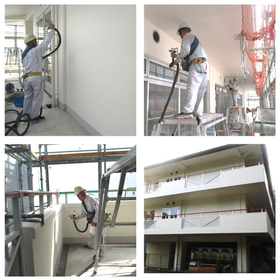
This is a case study of photocatalytic coating on the exterior walls of a nursing home (anti-dirt measures).

The decomposition of organic contaminants using photocatalysts and self-cleaning will break down the exterior wall stains of the old building, allowing them to wash away with rain and create a clean environment.

The photocatalytic effects of anti-soiling, deodorization, antibacterial, antiviral, and mold prevention are utilized for maintaining the aesthetics and improving the environment inside and outside buildings. The self-cleaning effect (hydrophilic effect) of external photocatalysts, combined with the power of rain, provides anti-soiling effects for buildings. The organic decomposition capability of indoor photocatalysts is effective for deodorization, antibacterial, antiviral, and mold prevention inside buildings. *For more details, please refer to the PDF document or contact us.

  • Photocatalysts and various wall materials (exterior and interior walls, etc.)
  • Photocatalytic coating

Added to bookmarks

Bookmarks list

Bookmark has been removed

Bookmarks list

You can't add any more bookmarks

By registering as a member, you can increase the number of bookmarks you can save and organize them with labels.

Free membership registration

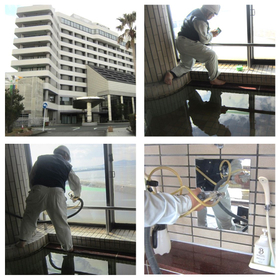
This is a case study of photocatalytic treatment of bathroom glass in a resort hotel (anti-soiling measures).

The hydrophilic effect of photocatalysts (self-cleaning effect) makes it easier for dirt on bathroom glass to be washed away by water, creating a clean state.

The photocatalytic effects of anti-soiling, deodorization, antibacterial, antiviral, and mold prevention are utilized for maintaining the aesthetics and improving the environment inside and outside buildings. The self-cleaning effect (hydrophilic effect) of external photocatalysts, combined with the power of rain, provides anti-soiling effects for buildings. The organic decomposition capability of indoor photocatalysts is effective for deodorization, antibacterial, antiviral, and mold prevention inside buildings. *For more details, please refer to the PDF document or contact us.

  • Photocatalysts and various wall materials (exterior and interior walls, etc.)
  • Photocatalytic coating

Added to bookmarks

Bookmarks list

Bookmark has been removed

Bookmarks list

You can't add any more bookmarks

By registering as a member, you can increase the number of bookmarks you can save and organize them with labels.

Free membership registration

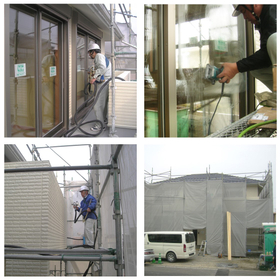
This is a case study of photocatalytic coating on the exterior walls and glass of a detached house (anti-soiling measures).

The decomposition of organic dirt using photocatalysts and self-cleaning will break down the substances causing dirt on the exterior walls and glass of residential houses, allowing them to be washed away by rain and creating a clean environment.

The photocatalytic effects of anti-soiling, deodorization, antibacterial, antiviral, and mold prevention are utilized for maintaining the aesthetic appearance and improving the environment both inside and outside buildings. The self-cleaning effect (hydrophilic effect) of outdoor photocatalysts, combined with the power of rain, provides anti-soiling effects for buildings. The organic decomposition capability of indoor photocatalysts is effective for deodorization, antibacterial, antiviral, and mold prevention inside buildings. *For more details, please refer to the PDF document or contact us.

  • Photocatalysts and various wall materials (exterior and interior walls, etc.)
  • Photocatalytic coating

Added to bookmarks

Bookmarks list

Bookmark has been removed

Bookmarks list

You can't add any more bookmarks

By registering as a member, you can increase the number of bookmarks you can save and organize them with labels.

Free membership registration

Search Keywords Related to Photocatalytic coating