Improved Construction Method Product List and Ranking from 62 Manufacturers, Suppliers and Companies | IPROS

Last Updated: Aggregation Period:Oct 21, 2026~Nov 17, 2026
This ranking is based on the number of page views on our site.

Improved Construction Method Manufacturer, Suppliers and Company Rankings

Last Updated: Aggregation Period:Oct 21, 2026~Nov 17, 2026
This ranking is based on the number of page views on our site.

  1. エルニード協会 Kagawa//Other construction industries
  2. エルフ 本社・高松営業所 Kagawa//General contractors and subcontractors
  3. Taiyo Kisokogyo Co.,Ltd. Aichi//General contractors and subcontractors
  4. 4 美保テクノス Tottori//Construction Consultant
  5. 4 ジオテック Tokyo//Other construction industries

Improved Construction Method Product ranking

Last Updated: Aggregation Period:Oct 21, 2026~Nov 17, 2026
This ranking is based on the number of page views on our site.

  1. Introduction to the ground improvement method "Elmad S Method" エルフ 本社・高松営業所
  2. High Grip Grout Method Taiyo Kisokogyo Co.,Ltd.
  3. Columnar Ground Improvement Method "3S G-cube Method" 美保テクノス
  4. Non-welded joint "Tsuitaro" 千代田工営
  5. 5 Columnar Ground Improvement Method "MRC Method" 本久

Improved Construction Method Product List

91~120 item / All 147 items

Displayed results

[Construction Example] Raised the building by 6 meters to expand the lifting height of the crane inside the factory.

Construction method that does not stop factory operations" Electric Industry Co., Ltd. Kawagoe Factory "Lift-Up Method

The "Lift-Up Method" is a construction technique that raises a building while maintaining seismic strength without dismantling the existing factory structure. In this project, we received a request to increase the crane lifting height due to the aging of the existing traveling crane. First, we conducted an investigation of the seismic resistance and strength of the existing building to confirm its current seismic resistance and strength. We determined that with reinforcement, it could withstand the elevation. During construction, we connected the columns of the raised portion to the existing column tops to enhance strength, and then, using the cover build method, we installed a new roof and walls before dismantling the existing roof from the inside. As a result, the crane lifting height was increased, contributing to improved work efficiency. 【Construction Targets】 ■ There are documents such as drawings and structural calculation sheets. ■ The foundation of the existing building has sufficient strength. *For more details, please refer to the PDF materials or feel free to contact us.

  • Special Construction Method
  • others
  • Improved Construction Method

Added to bookmarks

Bookmarks list

Bookmark has been removed

Bookmarks list

You can't add any more bookmarks

By registering as a member, you can increase the number of bookmarks you can save and organize them with labels.

Free membership registration

High-quality ground improvement method with minimal variation in strength【3S G Method】

Achieving high quality and high strength without being limited by the construction site! A new construction system established with unique technology.

Miho Technos Co., Ltd. is based in Yonago City, Tottori Prefecture, and we grasp the condition of the land through ground surveys, which can be considered a health check for the ground, and propose ground improvement methods suitable for the conditions. Ground improvement, in essence, refers to the artificial enhancement of the ground to maintain stability when constructing buildings, bridges, and other structures on it. The "Three S G Method," a type of ground improvement method, is a technique that achieves safer and more stable foundation construction. Depending on the purpose, various improvement forms can be selected, including pile types (pile arrangement, circular arrangement, lap arrangement), block types, and wall types. By utilizing a specialized mixing blade, we achieve high mixing efficiency, allowing for the construction of stable quality columns, making it applicable to sandy soil, clayey soil, and loamy ground. 【Features】 ■ Applicable to various improvement forms ■ Suitable for diverse soil types ■ Reliable construction management ■ Capable of adapting to various sites ■ Minimal generation of residual soil ■ Minimal impact on the surrounding environment *For more details, please refer to the PDF materials or feel free to contact us.

  • Special Construction Method
  • Ground improvement
  • Improved Construction Method

Added to bookmarks

Bookmarks list

Bookmark has been removed

Bookmarks list

You can't add any more bookmarks

By registering as a member, you can increase the number of bookmarks you can save and organize them with labels.

Free membership registration

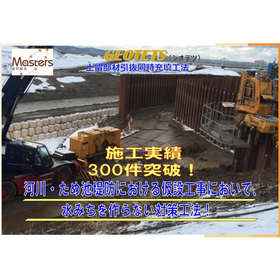
GEOTETS method for soil retention work in agricultural ponds and river embankments.

Temporary construction methods for river and reservoir embankments that do not create water channels! They are also used for the extraction of existing piles and soil contamination measures!

The "GEOTETS method" is a construction technique that allows for the safe removal of materials without significantly impacting the surrounding ground by simultaneously filling the voids left by continuous extraction with a specially developed filler material designed for this method. This technique can highly suppress ground displacement in sandy (gravelly) and soft ground conditions. In recent years, due to the frequent occurrence of major disasters caused by concentrated heavy rainfall, it has gained attention from river management authorities as a method that does not create water channels in temporary construction for river and pond embankments. In the field of soil contamination remediation, its implementation record is increasing as one method to block the movement of contaminants. Even in cases where large volumes of filling are required, such as with steel pipe piles, it has become possible to fill quickly and in large quantities simultaneously. 【Features】 - Construction underwater is possible. - Construction is possible in narrow spaces. - Construction can be done on both small and large scales. - The filling amount can be controlled according to the amount of adhering soil. 【Disaster Recovery Response and Emergency Temporary Measures】 - Steel sheet piles and H-piles can be reused, providing a proven method to alleviate material shortages in temporary construction during large-scale disasters. - It is cheaper than leaving materials in place (we have set a low price!).

  • Ground foundation construction method
  • Improved Construction Method

Added to bookmarks

Bookmarks list

Bookmark has been removed

Bookmarks list

You can't add any more bookmarks

By registering as a member, you can increase the number of bookmarks you can save and organize them with labels.

Free membership registration

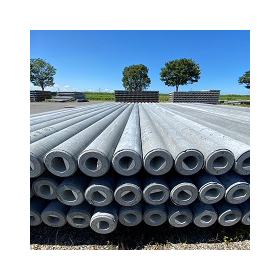
Construction method "Piled Wooden Hybrid Ground Improvement Method"

Ground improvement method using pile-like improvement materials covered with concrete and made of wood!

The "Piled Wooden Hybrid Ground Improvement Method" is a composite material ground improvement technique that enhances the durability of wooden pile improvement materials by covering the wood (mainly cedar lumber) with concrete and shaping the cross-section into a regular octagonal pencil-like form, thereby shutting out the supply of moisture and oxygen necessary for the growth of wood-decaying fungi. It can be constructed at a cost equivalent to existing soft ground improvement methods. *For more details, please download the PDF or feel free to contact us.

  • Ground foundation construction method
  • Ground improvement
  • Renovation and repair methods
  • Improved Construction Method

Added to bookmarks

Bookmarks list

Bookmark has been removed

Bookmarks list

You can't add any more bookmarks

By registering as a member, you can increase the number of bookmarks you can save and organize them with labels.

Free membership registration

Ground Improvement Method: "Chemical Injection Method"

A method that improves, stops water, and strengthens a limited area of the target ground using instant-setting materials.

This method involves drilling to the planned injection depth using double pipe rods, and after completing the drilling, the main agent and the reactive agent are each sent through the inner and outer pipes of the double pipe rods, where they are combined in a monitor at the tip of the rod for injection improvement.

  • Civil Engineering Method
  • Ground improvement
  • Improved Construction Method

Added to bookmarks

Bookmarks list

Bookmark has been removed

Bookmarks list

You can't add any more bookmarks

By registering as a member, you can increase the number of bookmarks you can save and organize them with labels.

Free membership registration

[Construction Case] Sagamihara City, Midori Ward T Column New Construction and Renovation Work

290 construction locations, excavation length of about 10m! A case of columnar improvement work using the T-column method.

We would like to introduce a case study of ground improvement work carried out by our company. In a vast area in Tsukui, Sagamihara City, we performed columnar improvement work using our original deep mixing method and T-column method. Due to the project involving 290 locations and an excavation depth of approximately 10 meters, we installed a 30-ton silo and plant for the solidifying material. Solidifying material was delivered daily, and the work was successfully completed. 【Case Overview】 ■ Project Name: T-Column New Construction and Renovation Work in Midori Ward, Sagamihara City ■ Construction Date: March 16, 2020 ■ Location: Chigira, Midori Ward, Sagamihara City *For more details, please refer to the PDF materials or feel free to contact us.

  • Ground foundation construction method
  • Improved Construction Method

Added to bookmarks

Bookmarks list

Bookmark has been removed

Bookmarks list

You can't add any more bookmarks

By registering as a member, you can increase the number of bookmarks you can save and organize them with labels.

Free membership registration

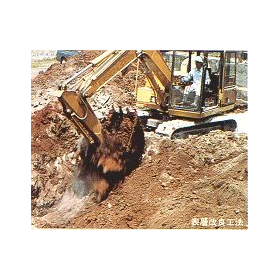
[Construction Example] Atsugi City Surface Improvement Using Mixing Bucket

Introducing a case of surface improvement associated with new construction work conducted in Atsugi City, Kanagawa Prefecture!

We would like to introduce a case study of ground improvement work carried out by our company. In Atsugi City, Kanagawa Prefecture, we performed surface improvement work associated with the new construction of the Atsugi Fire Station South Mohri Branch. A mixing bucket was attached to a 0.7 backhoe, and we mixed 162 tons of solidifying agent for an area of 893 m². 【Case Overview】 ■ Project Name: Surface Improvement in Atsugi City Using a Mixing Bucket ■ Construction Date: October 14, 2020 ■ Location: Nagase, Atsugi City, Kanagawa Prefecture *For more details, please refer to the PDF document or feel free to contact us.

  • Ground foundation construction method
  • Improved Construction Method

Added to bookmarks

Bookmarks list

Bookmark has been removed

Bookmarks list

You can't add any more bookmarks

By registering as a member, you can increase the number of bookmarks you can save and organize them with labels.

Free membership registration

Medium and deep ground improvement methods

The automatic flow recording device controls the discharge amount of the solidifying liquid, allowing for homogeneous ground improvement.

This technology is a ground improvement method that allows for the production of improved soil with a specified strength by setting the additive rate of solidifying agents according to the soil characteristics of the target ground. The improved soil achieves strength in a short period, enabling early use. Since no consolidation settlement occurs, the upper soil does not deform. Additionally, our company can implement both wet and dry improvement methods under a complete construction management system, tailored to various soil and ground conditions. 【Features】 ■ Improved soil with specified strength can be obtained ■ Improved soil achieves strength in a short period, allowing for early use ■ No consolidation settlement occurs, preventing deformation of the upper soil ■ Low vibration and low noise ■ Minimal impact on surrounding areas *For more details, please refer to the PDF materials or feel free to contact us.

  • Ground improvement
  • Improved Construction Method

Added to bookmarks

Bookmarks list

Bookmark has been removed

Bookmarks list

You can't add any more bookmarks

By registering as a member, you can increase the number of bookmarks you can save and organize them with labels.

Free membership registration

Foundation ground improvement method "MMB Method"

Low vibration, low noise, and dust-free! Construction can be carried out while confirming the supporting ground across the entire fabric foundation!

The "MMB Method (Multi-Mixing Bucket Method)" is a block mixing treatment method suitable for supporting buildings and structures, as well as for soft ground countermeasures using a slurry addition approach. It can be implemented on slopes and can accommodate changes in the depth of the supporting ground. It is applicable to independent foundations, strip foundations, and mat foundations. Additionally, with a dedicated management device, reliable construction management and highly dependable ground improvement can be achieved. 【Features】 ■ Applicable to a wide range of geological conditions including sandy soil, clayey soil, and loam ■ Ground improvement can be achieved up to a depth of 5 meters ■ The bearing capacity after improvement can reach approximately 300 kN/m² for the long term ■ The supporting ground and the mixing condition can be visually confirmed directly ■ Low vibration, low noise, and dust-free *For more details, please download the PDF or feel free to contact us.

  • Renovation and repair methods
  • Ground foundation construction method
  • Improved Construction Method

Added to bookmarks

Bookmarks list

Bookmark has been removed

Bookmarks list

You can't add any more bookmarks

By registering as a member, you can increase the number of bookmarks you can save and organize them with labels.

Free membership registration

Soft Ground Improvement Method: "Ultra Surface Improvement Method"

Introduction to Ultra Surface Improvement Method for Ground Reinforcement and High-Quality Improvement!

The "Ultra Surface Improvement Method" allows for uniform improvement in strength. It is suitable for soft ground measures and ground reinforcement. Rias Ground Consulting offers creative proposals that exceed our clients' expectations. [Features] ■ Ground reinforcement ■ High-quality improvement ■ Soft ground measures *For more details, please refer to the PDF document or feel free to contact us.

  • Ground foundation construction method
  • Ground improvement
  • Improved Construction Method

Added to bookmarks

Bookmarks list

Bookmark has been removed

Bookmarks list

You can't add any more bookmarks

By registering as a member, you can increase the number of bookmarks you can save and organize them with labels.

Free membership registration

Ground improvement method "Super RAPL Elneed Method"

Foundation construction method using fluidized treatment soil.

The "Super Rappuru Erunido Method" is a ground improvement technique that utilizes soil generated from excavation down to the supporting ground level. By adding solidifying agents and water to this soil and mixing it with a uniquely shaped bucket, it creates a fluidized treated soil that is formed into block-shaped ground improvement bodies beneath the foundation. This method allows for direct confirmation of the supporting ground, enabling visual inspection of the mixing conditions while appropriately adjusting the amounts of solidifying agents and water, resulting in a high-quality improvement body with minimal variation in strength. 【Features】 ■ Excellent cost-effectiveness ■ Easy confirmation of the supporting layer ■ Shortened construction period and high-quality improvement bodies ■ Minimal excess soil on-site (disposal residual soil volume) ■ Quick response to various site conditions *For more details, please download the PDF or feel free to contact us.

  • Ground foundation construction method
  • Improved Construction Method

Added to bookmarks

Bookmarks list

Bookmark has been removed

Bookmarks list

You can't add any more bookmarks

By registering as a member, you can increase the number of bookmarks you can save and organize them with labels.

Free membership registration

Ground improvement method "Chemical Grouting Method"

Ground improvement work ensures safety and security with chemical injection methods! Leave everything from design to construction to us.

The "Chemical Injection Method" is a technique aimed at injecting a chemical solution (liquid) with coagulating properties into designated areas of the ground through injection pipes, in order to enhance the water-stopping ability or strength of the ground. This method allows for construction in small and narrow spaces with machinery, and it can be executed easily and quickly. Additionally, it helps prevent ground collapse and water inflow, ensuring safety in construction projects such as land improvement. 【Features】 - It hardens to a moderate firmness, not interfering with excavation. - The machinery is compact, allowing for construction in tight spaces. - Only small pipes are needed (subsurface installation pipes). - Construction can be freely performed in any direction, 360°. - Very little industrial waste is generated, considering environmental impact, etc. *For more details, please download the PDF or feel free to contact us.

  • Ground foundation construction method
  • Improved Construction Method

Added to bookmarks

Bookmarks list

Bookmark has been removed

Bookmarks list

You can't add any more bookmarks

By registering as a member, you can increase the number of bookmarks you can save and organize them with labels.

Free membership registration

Flood damage countermeasures - Fill-type elevation method "Bulk Up Method" NETIS registered

A new method for raising buildings in flood-prone areas significantly shortens construction time compared to existing elevation methods, reduces the amount of work required for house relocation, and has a major impact on costs. Registered in NETIS.

Until now, elevation work in flood-prone areas has involved either moving buildings sideways or lifting them up and raising the ground with fill. When moving a building sideways, proper site preparation can be done, but in places where there is no space to move, site preparation is carried out under the lifted building, making construction difficult and often resulting in insufficient compaction. If water seeps in the future, there remains a risk of building settlement. The "Bulk Up Method" involves lifting the building along with its foundation, leveling it to the required height, and fixing it in place, while filling the space between the foundation and the existing ground with bulk-up material as a substitute for fill. **Features:** - NETIS registration KK-220071-A, recommended by the Ministry of Land, Infrastructure, Transport and Tourism - Since water cannot permeate, the ground does not loosen even if it is submerged. - Its lightweight reduces the burden on the original ground. - Reduces the cost burden of elevation work in house-moving projects. - Can be implemented in narrow spaces. - Shortens construction time. - Reduces damage to the building since it is lifted with the foundation. The bulk-up material is a cement-based filler that expands to 1.5 to 1.7 times its original volume after filling, leaving no voids. After elevating the building, surrounding exterior works and retaining walls can be constructed.

  • Special Construction Method
  • Civil Engineering Method
  • Dismantling and moving
  • Improved Construction Method

Added to bookmarks

Bookmarks list

Bookmark has been removed

Bookmarks list

You can't add any more bookmarks

By registering as a member, you can increase the number of bookmarks you can save and organize them with labels.

Free membership registration

Ground improvement method for supporting residential buildings with precast concrete piles.

Achieving low cost and high quality through in-house integrated manufacturing and construction of JIS certified prefabricated RC concrete piles with equivalent or greater bearing capacity than steel pipe piles.

The "Ando Pile Method" is a pre-fabricated RC concrete pile driving method for small-scale buildings such as single-family homes and multi-family residences. (Performance Certification Method GBRC Performance Certification No. 10-07 Rev. 5) 【Strengths】 - The piles used are pre-fabricated concrete piles certified by JIS, ensuring stable quality. - The method allows for pile driving to reach the bearing layer reliably, making it possible to work even on organic soil foundations regardless of soil type. - Using a hydraulic low-noise, low-vibration pile driver enables gentle construction in urban areas and densely populated residential areas. - Since pre-fabricated piles are driven without using mixed materials, there is no generation of excess soil. - The method does not require a curing period due to the use of pre-fabricated piles, allowing for excavation to begin the day after installation, contributing to reduced construction time and costs. 【Construction Procedure】 Check for vertical alignment and align the auger head with the pile center. Excavate at a speed that is manageable according to the ground conditions. After reaching the specified depth, normally reverse and lift while maintaining vertical alignment to drive the pile without excessive load. Then, check the vertical alignment of the lower and upper piles, confirm the construction depth, and verify the stopping load. *For more details, please download the PDF or contact us.

  • Ground improvement
  • Improved Construction Method

Added to bookmarks

Bookmarks list

Bookmark has been removed

Bookmarks list

You can't add any more bookmarks

By registering as a member, you can increase the number of bookmarks you can save and organize them with labels.

Free membership registration

Connection plate - Non-welded joint with fitting method 'T·P JOINT'

Easy to handle! Connection plates with performance equivalent to welded joints and a fitting method without welding joints.

The "T・P JOINT (Triple Plate Joint)" is a non-welded joint that is less affected by weather conditions (such as wind, rain, and temperature) and allows for stable construction. The tightening of the connection bolts is done using a torque wrench, requiring no special tools or skilled workers, making construction management easy. Additionally, the protrusion of the connection plate from the pile body is small, which minimizes the impact on the frictional force around the pile surface. 【Features】 ■ Equivalent performance to welded joints ■ Less affected by weather conditions, allowing for stable construction ■ Safe construction even in areas where open flames are prohibited ■ Shorter construction time compared to welded joints ■ Easy to handle *For more details, please refer to the PDF materials or feel free to contact us.

  • Fittings
  • Improved Construction Method

Added to bookmarks

Bookmarks list

Bookmark has been removed

Bookmarks list

You can't add any more bookmarks

By registering as a member, you can increase the number of bookmarks you can save and organize them with labels.

Free membership registration

Connection plate, non-welded joint method "T・PJOINT"

Tighten the connection bottle using a torque wrench! Reliable, robust, and convenient triple plate joint.

The "T・PJOINT" is a connection plate and joint method that consists of end parts, side plates, reinforcement bands, connection plates, and connection bolts, and is a non-welded joint. The connection plate has a concave shape that fits with the protrusions of the end plate, and by attaching the connection bolts to the screw holes of the side plates, the concave and convex parts are engaged, transmitting the stress acting on the joint through this engagement. Additionally, the connection bolts serve to prevent the connection plate from detaching when tensile forces act on the joint. 【Features】 ■ Has performance equivalent to welded joints ■ Less affected by weather conditions (wind, rain, temperature, etc.), allowing for stable construction ■ Can be safely constructed even in areas where open flames are prohibited ■ Shorter construction time compared to welded joints ■ The connection plate is divided into three parts for weight reduction, making it easy to handle *For more details, please refer to the PDF materials or feel free to contact us.

  • Expansion joint hardware
  • Improved Construction Method

Added to bookmarks

Bookmarks list

Bookmark has been removed

Bookmarks list

You can't add any more bookmarks

By registering as a member, you can increase the number of bookmarks you can save and organize them with labels.

Free membership registration

Ground Improvement Method "Eco Geo Method"

Ground improvement is also entering the era of eco-friendliness.

The "Eco Geo Method" is an environmentally conscious ground improvement technique that uses crushed stone. Since it only uses crushed stone (naturally broken small stones), it not only considers the environment but also features a method that does not lower the value of the land. We provide one-stop service for foundation work. Please feel free to contact us if you have any requests. 【Features】 ■ Short design length, economical ■ Clean site ■ Shortened construction period ■ Consideration for neighboring residents ■ Stable quality *For more details, please download the PDF or contact us.

  • Civil Engineering Method
  • Improved Construction Method

Added to bookmarks

Bookmarks list

Bookmark has been removed

Bookmarks list

You can't add any more bookmarks

By registering as a member, you can increase the number of bookmarks you can save and organize them with labels.

Free membership registration

Geo Double Sand Method for Roads/Parking Lots [NETIS Registered]

We prevent liquefaction while reducing environmental impact. Suitable for narrow spaces! It's a fast, affordable, and strong construction method.

During an earthquake, the ground, which is normally stable due to the interlocking of water and sand particles, becomes unstable as this bond is disrupted. When pressure from above is applied in this state, the heavier sand particles settle, and the liquefied water tries to rise to the surface. This is the phenomenon of liquefaction, which has caused many disasters in past earthquakes. The Geo Double Sand Method prevents the underground water (excess pore water) from rising by blocking it with a waterproof sheet and directing it to drainage pipes for rapid drainage, thereby mitigating liquefaction and preventing ground subsidence. Additionally, in frost heave disasters, the waterproof sheet blocks and disperses moisture, suppressing damage to the road surface caused by moisture freezing and expanding (ice lenses). The reinforcement sheet used in the Geo Double Sand Method minimizes the expansion of the road surface and also prevents cracks in the pavement due to aging deterioration. The Geo Double Sand Method is a completely new construction method that has obtained a patent and certification from the Ministry of Land, Infrastructure, Transport and Tourism (NETIS). It requires no special technology, allows for low construction costs and shortened construction periods, and also enables partial repairs (patch repairs).

  • Civil Engineering Method
  • Improved Construction Method

Added to bookmarks

Bookmarks list

Bookmark has been removed

Bookmarks list

You can't add any more bookmarks

By registering as a member, you can increase the number of bookmarks you can save and organize them with labels.

Free membership registration

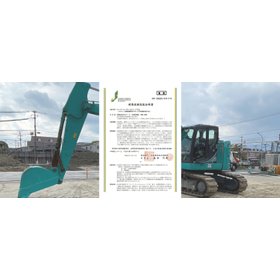
Super Rappuru Erunido Construction Method Building Technology Performance Certificate

【NETIS Registration】A technology that allows for direct confirmation of the supporting ground and enables construction while adjusting the amount of solidifying material and water!

This document is a performance certificate for the Super Rappuru Elniido construction method. It includes an overview of the technology, the purpose of technology development, and details about the application case, as well as the methods and content of the performance certification. This technology is a ground improvement method that involves excavating loosened soil and adding solidifying agents and water, then mixing them with a uniquely shaped bucket to create block-like improved bodies. [Contents] ■ Overview ■ Details of Performance Certification *For more information, please download the PDF or feel free to contact us.

  • Ground foundation construction method
  • Improved Construction Method

Added to bookmarks

Bookmarks list

Bookmark has been removed

Bookmarks list

You can't add any more bookmarks

By registering as a member, you can increase the number of bookmarks you can save and organize them with labels.

Free membership registration

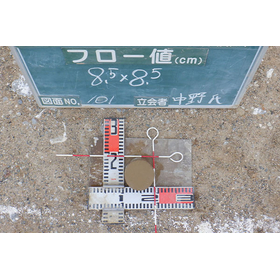
【NETIS Registration】 "Defect Rate 0%" High-density ground improvement for reliable prevention of settlement

"0% defect rate" Reliable ground improvement with high density to prevent sinking.

In response to the risk of re-softening after ground improvement, the "Super Rappu El Nido Method" ensures the stability of high-quality fill. Utilizing years of testing and construction know-how, we achieve construction quality with minimal strength variation. It can be confidently implemented not only immediately after improvement but also in projects requiring long-term ground stability. 【Features】 ■ Construction of high-strength fill ■ Improved stability after improvement ■ Zero risk of settlement after construction ■ High-precision construction management

  • フロー値.jpg
  • Ground foundation construction method
  • Improved Construction Method

Added to bookmarks

Bookmarks list

Bookmark has been removed

Bookmarks list

You can't add any more bookmarks

By registering as a member, you can increase the number of bookmarks you can save and organize them with labels.

Free membership registration

[Column] Visible Support Layers! What Excavation Methods Enhance Ground Reliability?

Visible support layers! What excavation methods enhance the reliability of the ground?

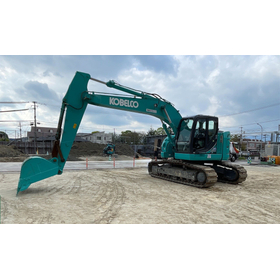
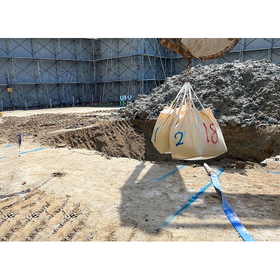
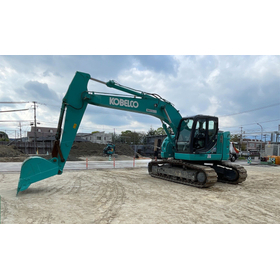
I am anxious about whether we are truly reaching the "support layer" that serves as the foundation of the building. In other methods, the conditions underground can only be estimated from machine readings, making it difficult to determine their accuracy. The Super Rappu Elneed method allows us to "directly see and touch" the most important part of ground improvement. ⬛︎ The challenge of "invisibility" faced by other methods While other methods use specialized large machines to dig underground, the Super Rappu Elneed method employs the most common equipment on site, the "backhoe." Instead of estimating "numbers" like torque values or ammeter readings, we verify with the technician's "eyes." This simple and direct approach creates an overwhelming "certainty" that other methods lack. ⬛︎ "Visible reassurance" achieves optimization of quality and cost The advantage of being able to "visualize" the support layer goes beyond mere peace of mind. - Proof of overwhelming quality - Cost optimization - Prevention of troubles before they occur Because the work underground is invisible, we ensure reliable construction.

  • Ground foundation construction method
  • Improved Construction Method

Added to bookmarks

Bookmarks list

Bookmark has been removed

Bookmarks list

You can't add any more bookmarks

By registering as a member, you can increase the number of bookmarks you can save and organize them with labels.

Free membership registration

[Column] The Problem-Solving Power of the El Niño Method to Avoid Construction Inability on "Vacant Land"

Introducing the capabilities of the Elniido method that overcomes the muddy ground of "vacant land."

Properties that are "vacant land delivery" appear to be ready for immediate construction. However, there are many cases where unexpected softness in the ground is discovered during the ground survey right after construction begins, significantly impacting the budget and schedule. ⬛︎ Why does "vacant land" become muddy? - Demolition contractors are professionals at tearing down buildings, but they are not experts in solidifying the ground. - Many sites are seen where the ground, which has absorbed water and become muddy, has not been properly treated, and only the surface has been leveled. ⬛︎ Three strengths of the Elneed method that is resistant to "mud": 1. An innovative approach to "manage and utilize" water. 2. Real-time responsiveness on site. 3. High mobility using general heavy machinery (backhoes). If you find yourself in a situation where "you bought vacant land, but the ground is mushy and heavy machinery cannot enter," please feel free to consult with us.

  • 01cc8b1475ae063a1cc2b24ad18ad23b5c38ecd5.jpg
  • 226cb92da847e70d8218334e755f7ea877e89fbf.jpg
  • Ground foundation construction method
  • Improved Construction Method

Added to bookmarks

Bookmarks list

Bookmark has been removed

Bookmarks list

You can't add any more bookmarks

By registering as a member, you can increase the number of bookmarks you can save and organize them with labels.

Free membership registration

[Column] A Must-See for Structural Designers! A Thorough Cost Comparison with Columnar Improvement Methods

A must-see for structural design professionals! A thorough cost comparison with columnar improvement methods.

The choice of construction method not only affects the cost of the improved body alone but also changes the size of the foundation itself. The answer to "which is cheaper" varies depending on whether the size of the foundation is already determined. 1. Differences in bearing capacity change foundation design - Column improvement: ~300 kN/m² * Due to low bearing capacity, a large foundation is required. - Super Rappu Elneed method: ~1,000 kN/m² * High bearing capacity allows for a compact foundation design. 2. The competition for comparison occurs before the foundation size is determined Because the high bearing capacity allows for a smaller required foundation area, it becomes easier to achieve cost reductions that exceed the volume increase of the improved body. The Elneed method allows for foundation optimization at 10 cm intervals, which is a feature not available with column improvement. 3. Estimated cost comparison (based on actual results) Instead of using large specialized machines typically used for column improvement, we use a backhoe with excellent mobility. The diagram below compares the column improvement method and the Super Rappu Elneed method under the conditions of RC8F. As a result of optimizing the foundation size from the design stage, all excavation volume, material costs, and working time are compressed.

  • Ground foundation construction method
  • Improved Construction Method

Added to bookmarks

Bookmarks list

Bookmark has been removed

Bookmarks list

You can't add any more bookmarks

By registering as a member, you can increase the number of bookmarks you can save and organize them with labels.

Free membership registration

[Column] The Appeal of the El Niño Method for Pebbles and Boulders on Solid Bedrock

How to absorb risks that are not visible in preliminary surveys through design, such as point-embedded boulders, rolling stones, and solid bedrock?

Boring surveys are an important means of understanding the ground. However, it is realistically difficult to fully capture the scattered boulders and cobbles, as well as the hard and uneven bedrock, from data points collected at only 3 to 5 locations. When unexpected issues arise on-site after the design has been finalized, it leads to a triple burden of changes in construction methods, extended timelines, and additional costs. This time, we will explain how to approach cobbles, boulders, and solid bedrock from the perspective of incorporating "uncertainty" during the design phase. 1. Why are boulders and cobbles "difficult to see in preliminary surveys"? Boulders and cobbles are typically distributed sporadically in river basins, fan-shaped deposits, and old river channels. 2. The significance of choosing a construction method that "allows for unexpected issues" during the design phase. The resilience to unexpected issues varies greatly depending on the construction method. 3. Solid bedrock can also be "cut and leveled." Alongside cobbles and boulders, the unevenness of the bedrock when reaching the support layer is also difficult to see during the design phase. When encountering hard bedrock with slopes and steps, many construction methods find it challenging to adapt. The Elneed method is designed with the assumption of changes occurring on-site. Being able to absorb this uncertainty regarding cobbles, boulders, and solid bedrock on-site directly contributes to the reliability of the design and the stability of the construction timeline.

  • Ground foundation construction method
  • Ground improvement
  • Improved Construction Method

Added to bookmarks

Bookmarks list

Bookmark has been removed

Bookmarks list

You can't add any more bookmarks

By registering as a member, you can increase the number of bookmarks you can save and organize them with labels.

Free membership registration

Ground reinforcement construction RES-P method [Performance certification method]

RES-P method for planar ground reinforcement that has obtained architectural technical performance certification.

This is a type of piled raft foundation method that has obtained the architectural technical performance certification (Performance Evaluation No. 04-02) from the Japan Architectural Comprehensive Testing Institute. It involves driving pipes (thin steel pipes) into weak ground, enhancing the bearing capacity through the combined action of the ground and the pipes, and preventing building settlement. Although this method arranges the pipes in a pile-like manner, it is categorized as a planar ground reinforcement method similar to "surface improvement methods" due to the close placement of the pipes rather than being a pile reinforcement. The design, construction, and supervision are centralized under the "Single-Family Housing Foundation Ground Reinforcement Research Association," and a reliable quality management system is provided under the guidance of Soil Design Office Co., Ltd.

  • Residential foundations
  • Renovation and repair methods
  • Other civil engineering works
  • Improved Construction Method

Added to bookmarks

Bookmarks list

Bookmark has been removed

Bookmarks list

You can't add any more bookmarks

By registering as a member, you can increase the number of bookmarks you can save and organize them with labels.

Free membership registration

Ground improvement work 【Surface improvement method】

Plate-type ground improvement and surface improvement methods that demonstrate excellent effectiveness in shallow soft layers.

This is a ground improvement method that can be selected when weak layers are distributed at shallow depths. It involves uniformly mixing and stirring powdered cement-based solidifying materials with the original ground soil using heavy machinery, and carefully compacting it to construct a strong "slab-like improved body." This method demonstrates extremely excellent engineering effects in preventing differential settlement, increasing ground bearing capacity, and preventing liquefaction, reliably supporting important structures from the ground up. The construction process is characterized by low noise, low vibration, and short construction time, minimizing the impact on the surrounding environment. Through clear construction procedures and engineering approaches, it achieves reliable ground bearing capacity reinforcement as required by designers and supervisors.

  • Ground improvement
  • Ground foundation construction method
  • Pile and foundation work
  • Improved Construction Method

Added to bookmarks

Bookmarks list

Bookmark has been removed

Bookmarks list

You can't add any more bookmarks

By registering as a member, you can increase the number of bookmarks you can save and organize them with labels.

Free membership registration

Ground reinforcement work | Ensuring long-term safety of buildings with high-quality CWC method

The Cross Wing Column Method brings innovation to ground reinforcement work. The patented mixing wings achieve uniform high-quality columns, effectively preventing differential settlement of buildings.

To ensure the long-term safety of buildings and structures, reliable ground reinforcement work is essential. The Cross Wing Column Method (CWC Method) provided by Geotech Co., Ltd. is a deep mixing treatment method that forms uniform and high-quality columnar improved bodies using a patented unique intersecting mixing wing, regardless of soil type. It accommodates various ground conditions such as sandy soil, clayey soil, and loam layers, boasting a high quality stability with a coefficient of variation of 25% or less. This helps to suppress the excessive use of solidifying agents, enabling economical and rational design. Furthermore, it has obtained the GBRC performance certification (No. 12-17 Revision 1) from the General Incorporated Foundation Japan Building Comprehensive Testing Institute, demonstrating reliable bearing capacity verified by a third-party organization. In the case of small-scale buildings, the omission of mixing tests and quality inspections using mold cores are permitted, significantly reducing costs and construction periods. Geotech provides a foundation structure of safety and trust under a strict quality control system. Please feel free to consult us.

  • Ground improvement
  • Ground foundation construction method
  • Pile and foundation work
  • Improved Construction Method

Added to bookmarks

Bookmarks list

Bookmark has been removed

Bookmarks list

You can't add any more bookmarks

By registering as a member, you can increase the number of bookmarks you can save and organize them with labels.

Free membership registration

Ground reinforcement work | Achieving smooth short construction periods with low noise and low vibration Geo-column method.

Safe construction even in densely populated residential areas! The Geo-Column method performs columnar improvements with low noise and low vibration, considering the surrounding environment, typically within a short construction period of 1 to 2 days.

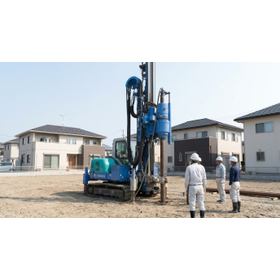
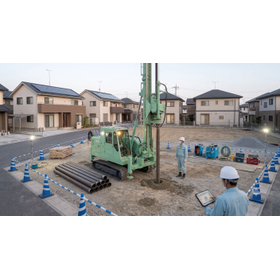
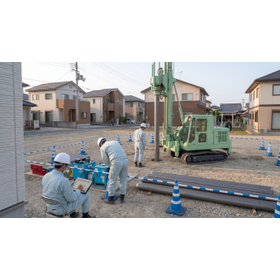
In residential areas and urban construction, the introduction of ground reinforcement techniques to prevent differential settlement, as well as the avoidance of noise and vibration complaints from neighbors and smooth project management, are highly demanded. The Geo-Column method is a deep ground mixing treatment technology that simultaneously performs rotary insertion and cement slurry injection, enabling low-noise and low-vibration work, which effectively reduces the burden on the neighboring living environment. By using specialized construction machinery and plants with excellent mobility, smooth transportation and efficient work can be achieved even in narrow sites or locations with limited access. High-quality soil cement columns (columnar improved bodies) can be constructed in an extremely short construction period of usually 1 to 2 days. Furthermore, by adopting inorganic solidifying agents, the leaching of environmentally harmful substances such as hexavalent chromium is prevented, maintaining the preservation of the surrounding environment and cleanliness of the site. Geo-Tech Co., Ltd. provides consistent support from preliminary site surveys to project completion, ensuring a smooth foundation construction process without neighbor disputes.

  • Ground improvement
  • Ground foundation construction method
  • Pile and foundation work
  • Improved Construction Method

Added to bookmarks

Bookmarks list

Bookmark has been removed

Bookmarks list

You can't add any more bookmarks

By registering as a member, you can increase the number of bookmarks you can save and organize them with labels.

Free membership registration

Ground reinforcement work | Completely avoid excessive design with the GeoColumn method of ISO quality management.

Eliminate excessive design with a strict quality management system compliant with ISO standards! The GeoColumn method achieves both reliable support strength and cost optimization through objective data.

To achieve a high level of reliability and cost performance in ground reinforcement work, a strict quality management system and scientifically based rational design calculations are essential. The Geo-Column method is a highly reliable ground improvement technology that mechanically mixes and stirs locally generated soil with cement slurry to form strong soil-cement columnar improvements underground. Geotech Co., Ltd. has established a quality management system (QMS) based on ISO 9001, operating all processes from the analysis of ground survey data to design planning, site arrangements, and completion inspections under high transparency management. During construction, dedicated automatic management measurement devices are used to continuously record excavation depth, rotation torque, and slurry discharge volume in real-time, visualizing and proving the quality of the underground structures as objective numerical data. By preemptively eliminating unnecessary excessive design while ensuring reliable building support performance over a long period, we provide clients with significant peace of mind and a rational ground reinforcement solution.

  • Ground improvement
  • Ground foundation construction method
  • Pile and foundation work
  • Improved Construction Method

Added to bookmarks

Bookmarks list

Bookmark has been removed

Bookmarks list

You can't add any more bookmarks

By registering as a member, you can increase the number of bookmarks you can save and organize them with labels.

Free membership registration

Geo-column method | Achieving asset value and longevity through ground reinforcement

The Geo-column method prevents sinking accidents before they occur. With strong columnar improvements through cement slurry mixing, it ensures the longevity of buildings and continuously protects their asset value.

As a crucial measure to prevent settlement, which is essential for prolonging the lifespan of buildings and protecting asset value, reliable ground reinforcement serves as the foundation. The Geo-Column method is a technology that constructs high-strength soil-cement columns integrated into the ground by injecting a cement-based solidifying material slurry into weak layers and mixing it powerfully with a specialized drilling and mixing machine. It accommodates weak layers from GL-2m to GL-8m and establishes columns in good ground with cohesive soil N values exceeding 3 and granular soil N values exceeding 4, thoroughly preventing differential settlement caused by self-weight and eccentric loads. Torque and discharge volume are continuously monitored, ensuring strict quality assurance backed by numerical evidence. Utilizing Geo-Tech Co., Ltd.'s comprehensive in-house management system and its capability to respond to various major ground guarantee insurances, we will continue to robustly protect the safety of our clients' valuable assets and lives for the future.

  • others
  • Improved Construction Method

Added to bookmarks

Bookmarks list

Bookmark has been removed

Bookmarks list

You can't add any more bookmarks

By registering as a member, you can increase the number of bookmarks you can save and organize them with labels.

Free membership registration